

Few things are more important than choosing the right footwear for the adventure, whether it be the Himalaya or London. While it would be great to save money and find multipurpose shoes, choosing appropriately will make things much more fun. Make a poor choice in footwear and see how quickly an adventure becomes painful, limited and a bad memory. Keep in mind that the products we show below are a good fit for our feet, but may not be the best brands for you. Seek the advice of a footwear specialist at a store that has serious hikers helping the customers, as the advice of a generalist will get you into trouble.
Hiking
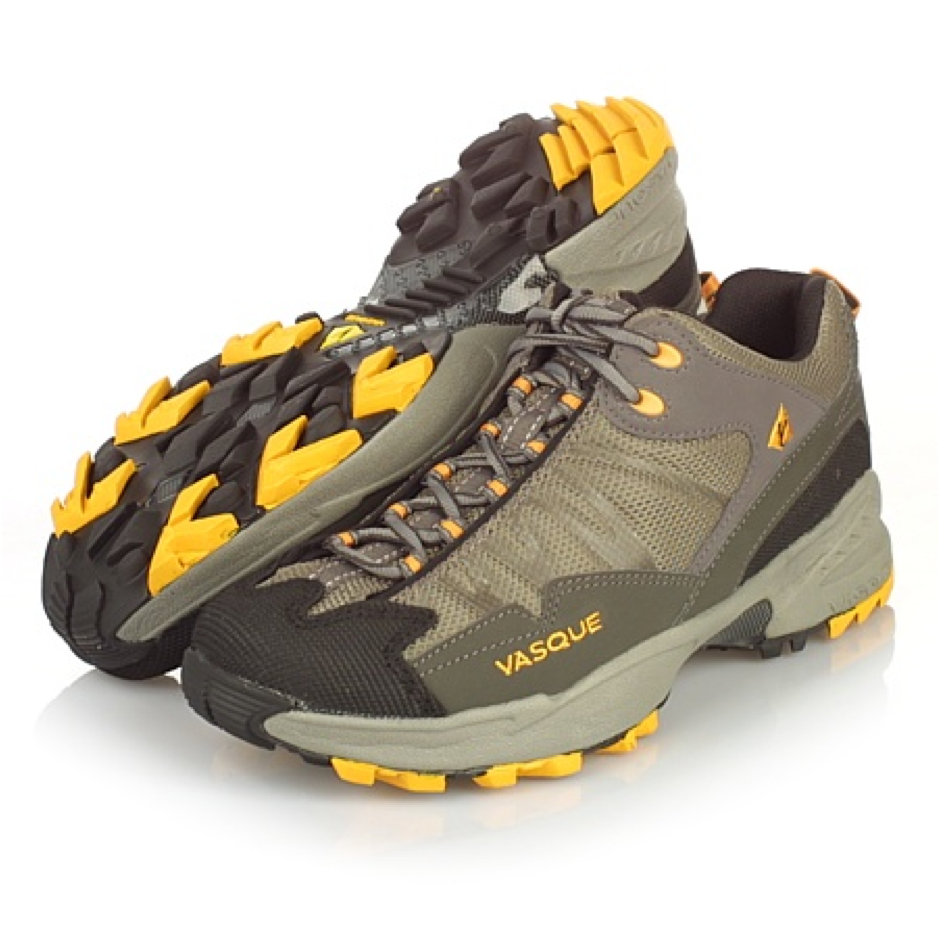 When we hike distances less than 10 km (6 miles), we usually use trail running or approach shoes that are lightweight and have some amount of support. They are infinitely better than running shoes that are made for running in a straight line or tennis/skate shoes that are made for smooth, hard surfaces. We like the Vasque trail running shoes for durability.
Pros: light weight with some support
Cons: Not enough support to prevent ankle roles on downhills. Not good for daily pounding.
Trekking
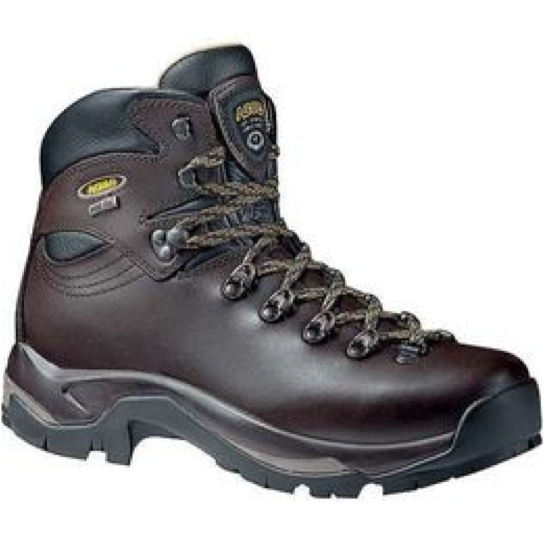 The shoe challenges involved in trekking aren’t just the daily distances, but the accumulation of many kilometers day after day. The rigors of trekking don’t allow for healing time, so having supportive and protective footwear goes up several notches in importance. We love our Asolo TPS 520’s that are leather and at first glance may seem old-fashioned, but are comfortable in a wide of temperatures, extremely durable, and measure up very well against the most modern of man-made materials. We find it to be the best of both worlds.
Pros: Fantastic support for long distances and the rigors of downhill hiking
Cons: Heavier than approach shoes and warmer. Need to be worn with moisture-wicking socks in warmer weather.
Mountaineering
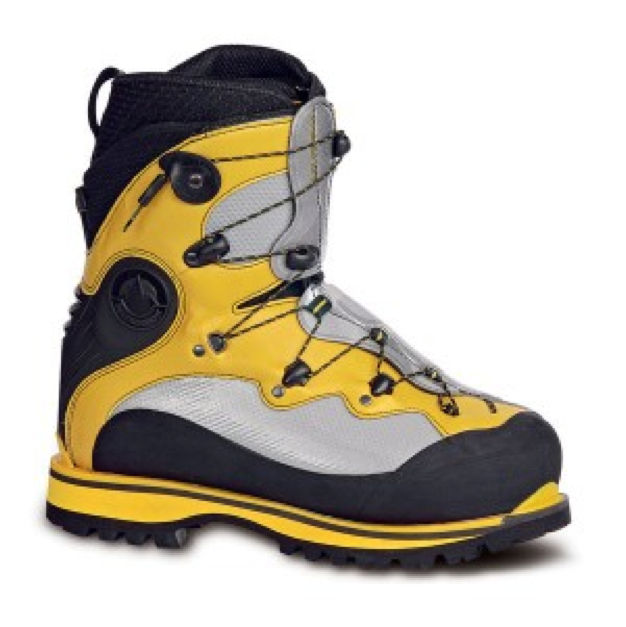 Going up high means having not just great protection from cold, but a way to keep the liner warm during the night. A two-layer boot, also known as a “double plastic boot” allows the inner boot to stay on your foot, even in a sleeping bag, and keeps the feet warm even first thing in the morning. Frozen boots are a sure way to frostbite. We recently used the La Sportiva Spantik on a climb of Mt Shuksan in Washington State, and it was very comfortable and easy to take on and off. We’re looking forward to using the boots in Nepal for Mera Peak in October 2012.
Pros: Warm, separate liner
Cons: Heavy and very specialized (not useful down at low elevations). Mountaineering boots need to be carried to the point where they are used, so weight is a big factor.
Relaxing – warm weather
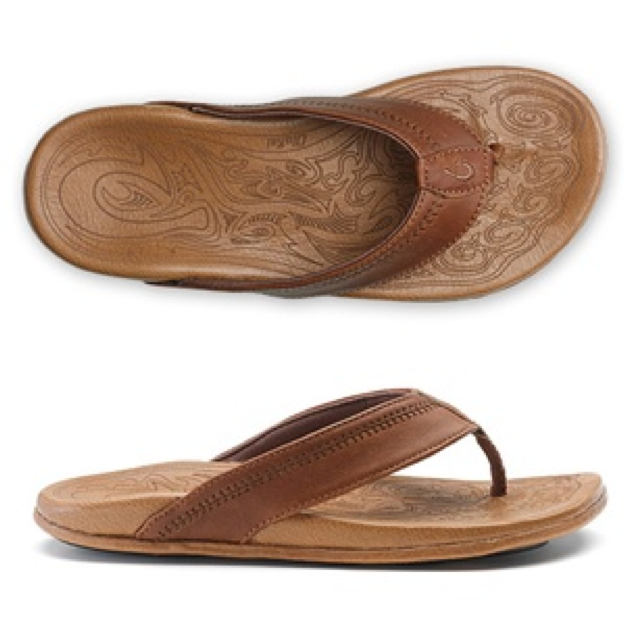 Being able to take off your shoes and let your feet breath is key to enjoying the end of a great adventure. For this, there’s fewer more durable or comfortable sandals than the Olukai. The leather soles and straps make them tough and allow them to break in to your foot’s shape. If you don’t have a sandal at the end of the day, you’ll have serious envy of those who do.
Pros: Bullet-proof, comfortable, light weight
Cons: Not the best way to walk on rocks or deal with cold temperatures
Relaxing – cold weather
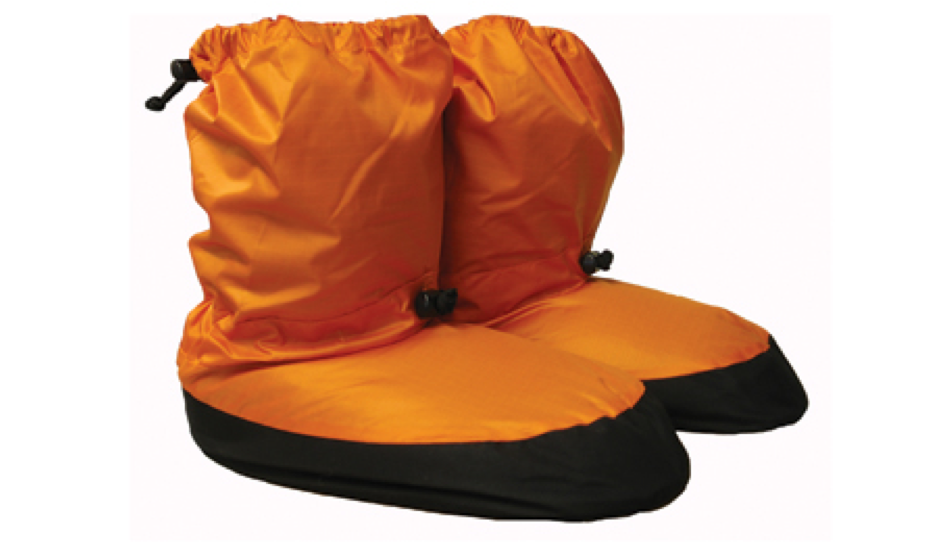 In the “getting more specialized” category, we love down booties for the end of a day when the temperature drops. Your feet can relax, stay warm, and you can feel like an astronaut all at the same time. Light weight and stuffable. We connect ours with heavy rubber bands and they stay together in our packs. Feathered Friends makes one of the more expensive but also more durable versions.
Pros: Warm and very comfortable. So light that they don’t need to be a weight issue.
Cons: Not generally rugged enough for walking on rough ground. Most are not waterproof in their soles.




 maximum adventure
September 16, 2011 at 12:10 pm
Thanks for the info on good hiking boots. I love both Vasque and Asolo boots, too, and find they give excellent support.