

 More than anything else, we drink water. I’m sure you’ve heard about humans surviving 28 days without food but only 3 days without water. Fortunately, I haven’t had a chance to test either one. We live in Southern California (dry) and hike in places like the Eastern Sierras (very dry) and staying hydrated needs to be a top priority. For information on dehydration and it symptoms, check here. In summary, they focus on the four facts below:
- The body needs water to function
- Dehydration occurs when water intake is less than water loss
- Symptoms range from mild to life-threatening
- The young and the elderly are especially susceptible to dehydration
Reservoir versus bottle
There are facts about using a reservoir that make it the preferable choice over carrying water bottles:
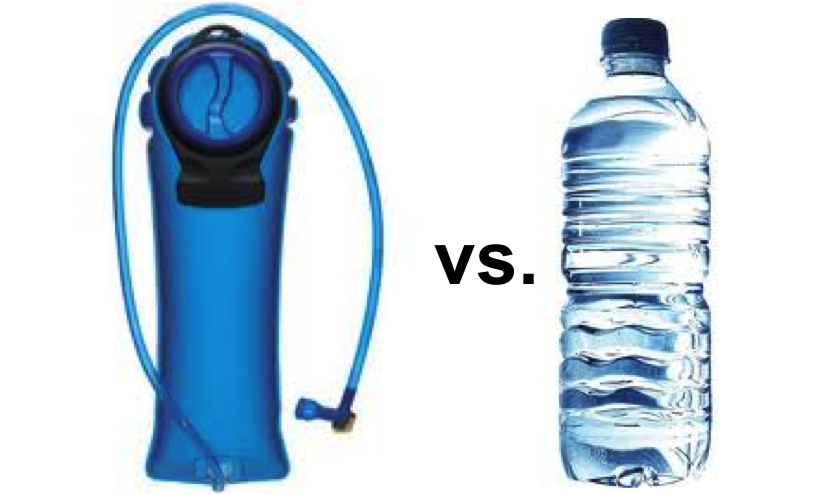 Accessibility: Experience shows that if water is readily accessible, you’re much more likely to drink than if you need to stop, take a bottle out of a bag, drink, and then put it back. We’ve tried bottles for quick convenience but we keep coming back to using our Camelbaks because we know that we simply drink more and have a much faster recovery time.
Volume: A single reservoir typically carries up to three liters of water, as opposed to a water bottle that generally carries one liter at most. You would be surprised how much water you lose when exercising. As we showed earlier, dehydration is as simple as having more water loss than intake. If you don’t drink consistently and sufficiently, you are suffering dehydration almost immediately.
Convenience: Carrying multiple water bottles is unwieldy, so not having a reservoir may tempt you to carry less than you should. Don’t yield to the convenience temptation!
Time of day
 Sweat is your body’s way of cooling off, so at the hottest part of the day, your body will automatically do more to adjust its temperature. Exercising in the cooler temperatures of the morning or evening will cause your body to push less fluids out as sweat, therefore lessening the risk of dehydration. Any exercise that creates exertion, however, will begin the water loss process, so plan to drink at any time of the day (or night), but even more during the heat of the day.
Bringing enough
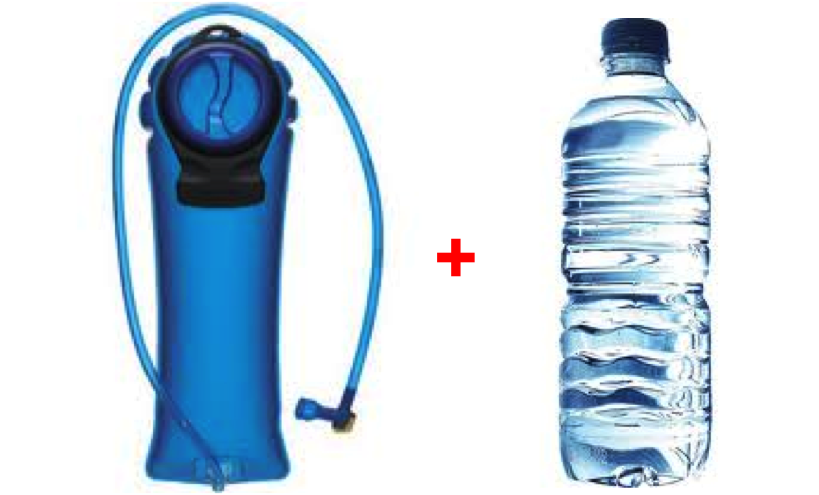 We assume that for a difficult hike, we will drink as much as one liter every thirty minutes. That makes an afternoon hike potentially an exercise in keeping enough water on hand.
In addition to what we think we need, we always bring one extra liter per person, often in a water bottle. We do this for two reasons…one is the comfort of knowing that if our reservoir springs a leak or unexpectedly runs dry, we have a ‘reserve’ option much like a motorcycle’s gas tank. Secondly, we never know when we’ll meet other people on the trail who haven’t prepared sufficiently for their own water needs and we’ll need to give them water. You’d be surprised how often we find people who are lost, miles from the nearest water source, carrying little or no water.
In addition, assume you may end up taking longer on your hike or losing more water than expected so whatever your needs, plan to bring a buffer amount of water for those unexpected situations.
Water sources enroute
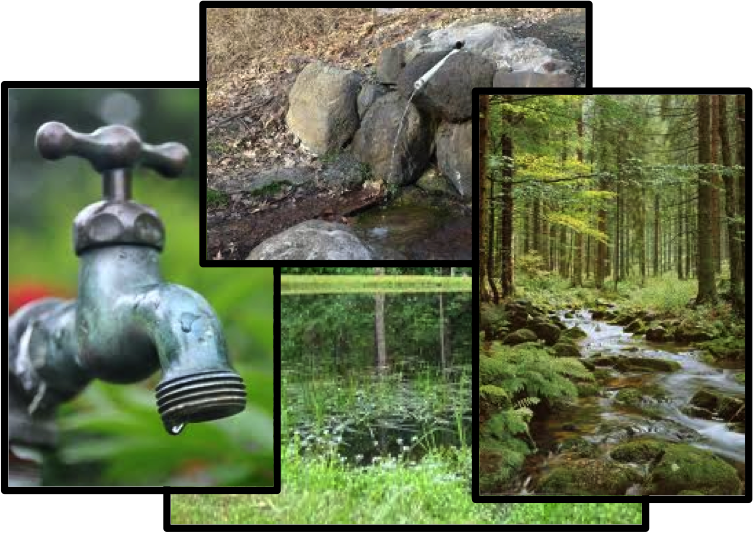 Knowing where to get water along the way is key information that can be ‘discovered’ before the hike. There are many hiking resources online that often list where water can be found on popular routes, so do your homework. Keep in mind that in many places like Southern California, water is very seasonal and also depends on the particular season being more wet or dry. Never assume the water source is available unless you have very sound information and a very reasonable expectation that it is a year-round, every-year source. Lastly, be sure to treat or filter any water that you aren’t sure is safe to drink otherwise. There are viruses and bacteria that are common in California in untreated water but there are also tools for managing these challenges like chlorine tables/drops, iodine, boiling and filtering. To know more about this, check here.
Being prepared is the best way to hike safely, and being hydrated is the key to enjoying the great outdoors.




 maximum adventure
August 24, 2011 at 8:43 am
Good info, Chris. One problem I have seen with Camelbaks is that the tube is at risk of brushing up against foreign objects which could then transmit unwanted germs. There is a similar risk with bottles carried in a way that exposes the top. In Nepal I’m hyper sensitive about avoiding infection, so it might be interesting to compare/analyze that risk bottle vs. reservoir.
August 24, 2011 at 9:14 am
Jeff, very good point. When we’re in Nepal, we’re also very careful, using hand sanitizer before purifying water, wiping down bottles. We should do the same here, in fact, as most sickness can be avoided simply by better habits. Sickness keeps us from doing what we love!