

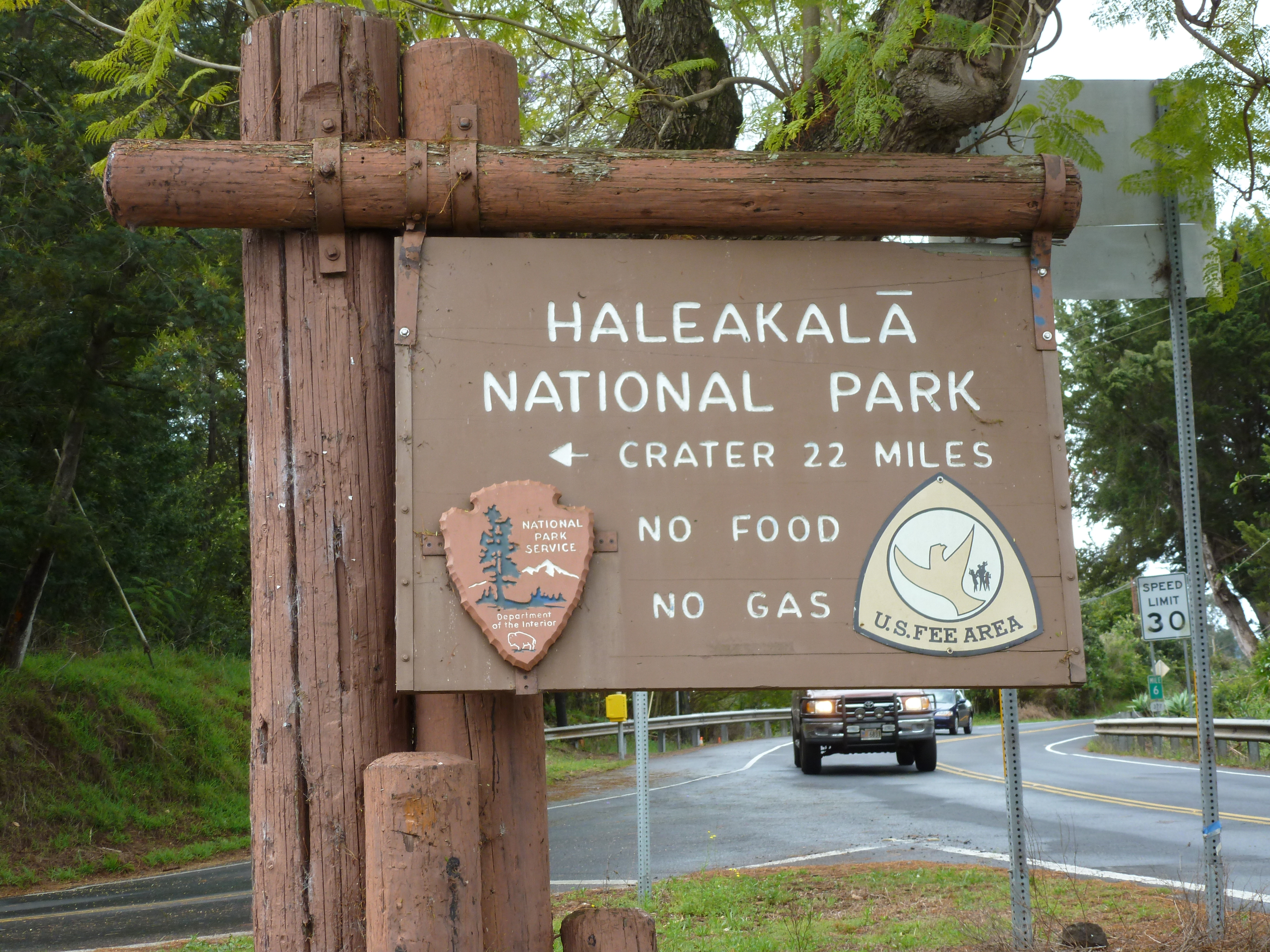
 The Halemauu Trail to the Paliku Wilderness Campsite is not a two-day hike for the casual hiker. Fortunately, we’re no casual hikers and were well-prepared for the altitude, wet, cold and 32.8 km (20.4 miles) round trip. We paid our $10 to enter the park for three days, and made our way to the Haleakala National Park Visitors Center to get our free permits and to watch the mandatory video, “Leave No Trace.” We were skeptical about having to learn again about the philosophy we already practice, but it turned out to be a very good video that every national park should have.
Halemauu Trail
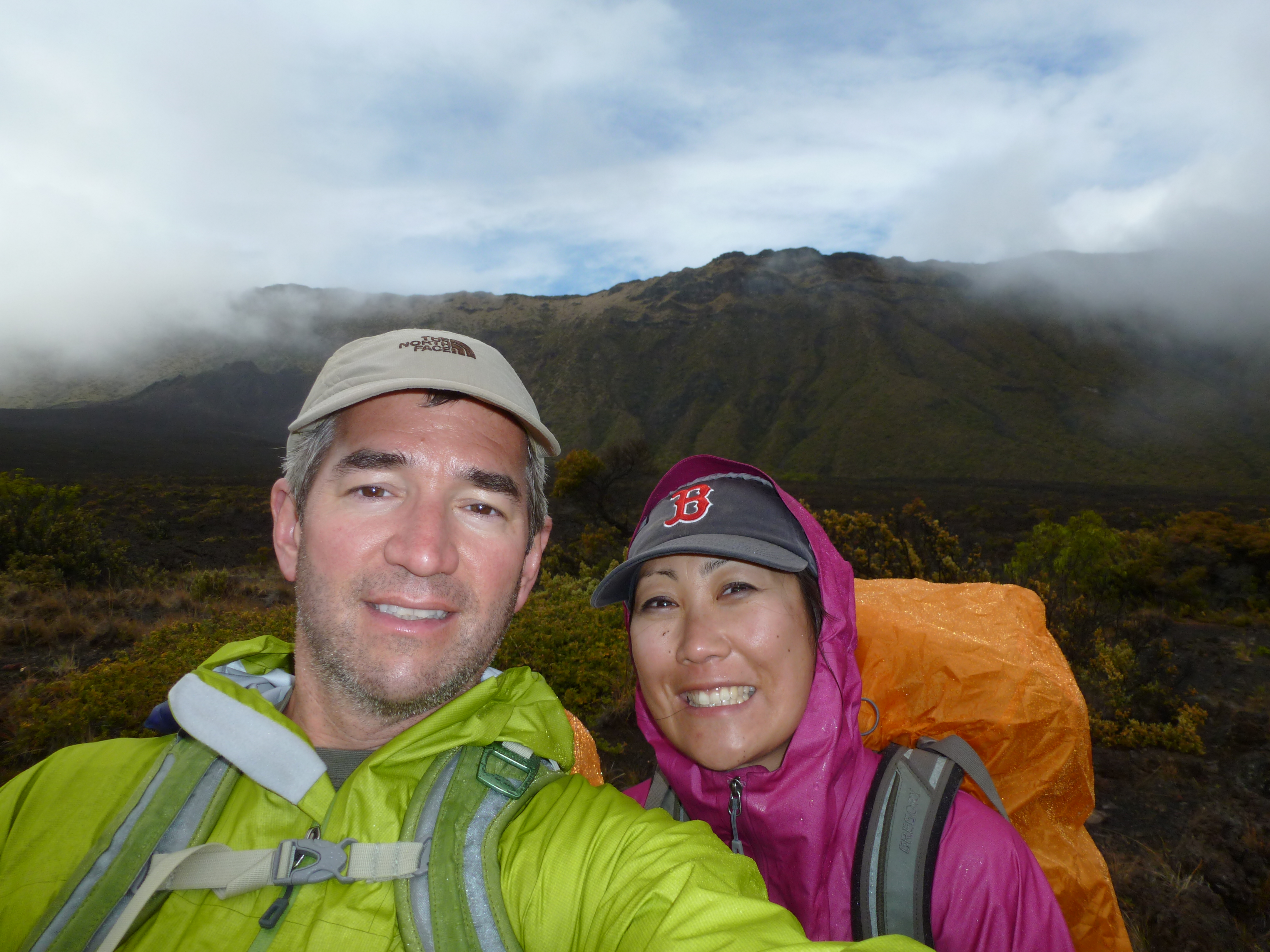
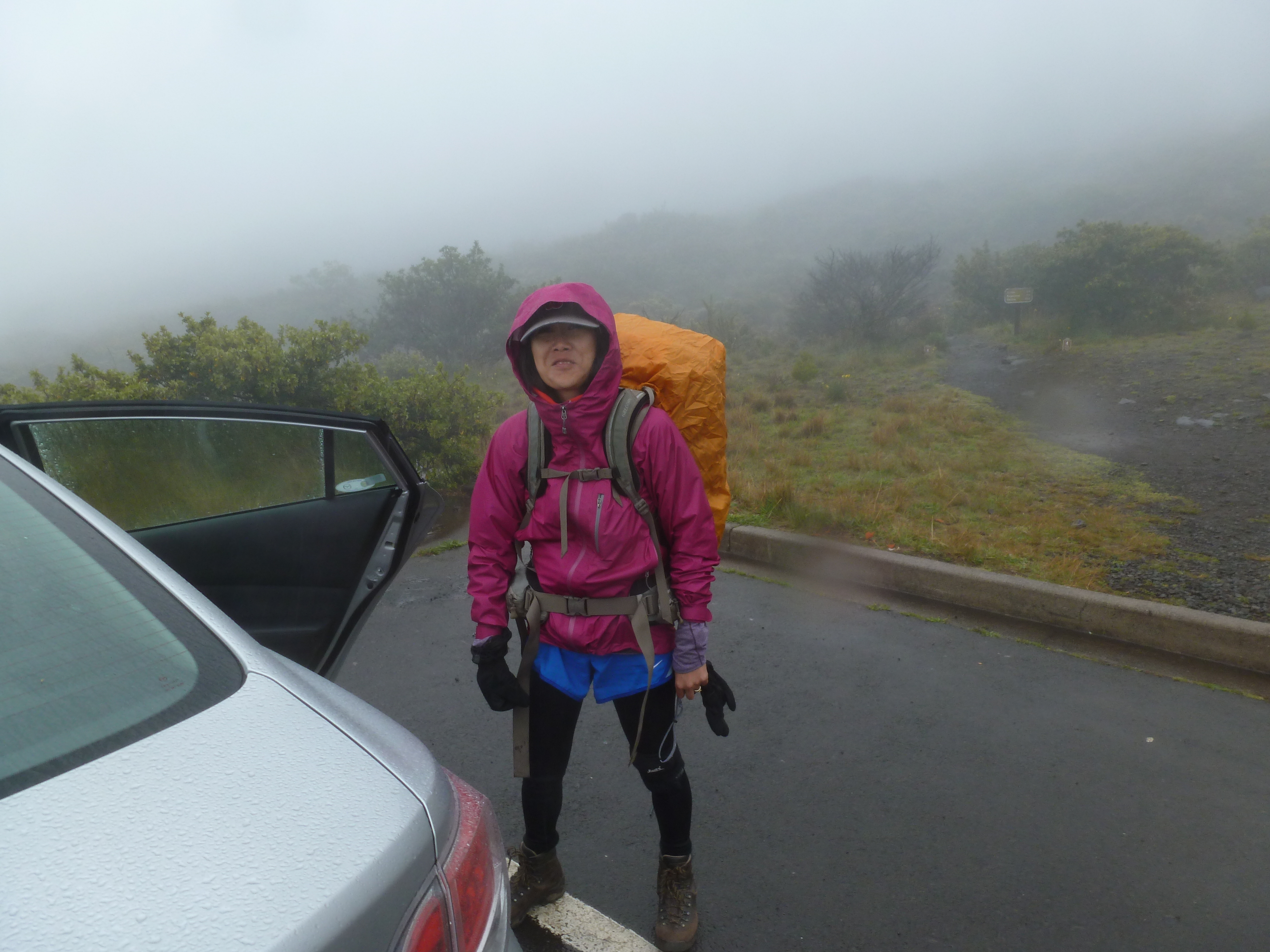 The Halemau’u Trail starts at 2435 m (7,990 ft) on the main road through the park. By the time we grabbed our gear and left our car at the parking lot, we were enveloped in a mist that brought the kind of rain that only happens as clouds try to push over 3,055 m (10,023 ft) Haleakala shield volcano. It is so large that it takes up 75% of the land area of Maui and dictates the weather for most of the island.
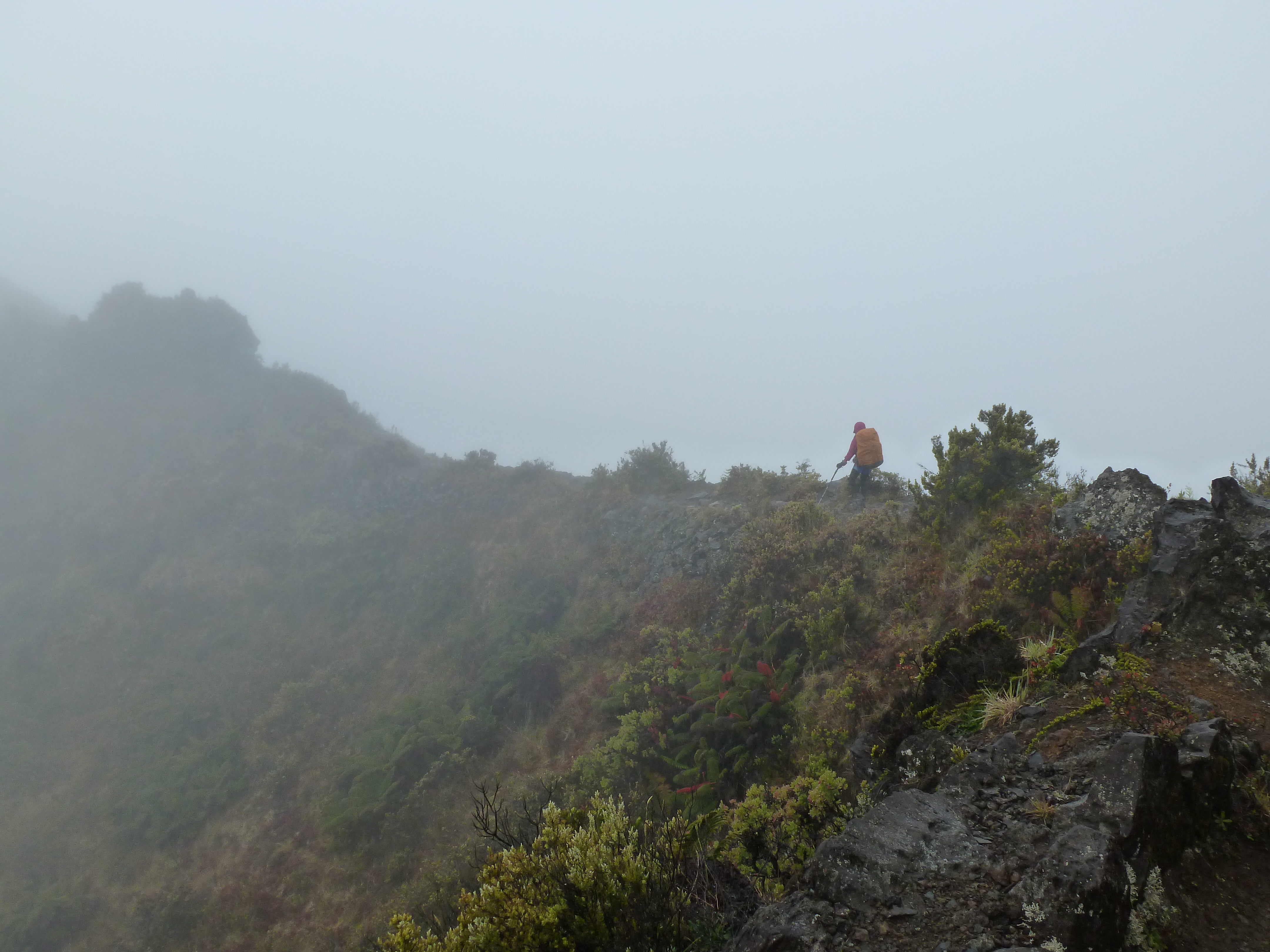 The trail leaves the parking lot as a fairly straight path that passes through scrub before beginning a significant descent of the West Crater Wall to the Ko’olau Gap at the floor of the Haleakala Crater. The trail in places is cut from sheer lava rock cliffs and represents an enormous amount of effort on the part of the National Park Service. Each turn that faced toward the sea brought rainy mist, and each turn away brought relief from the wet.
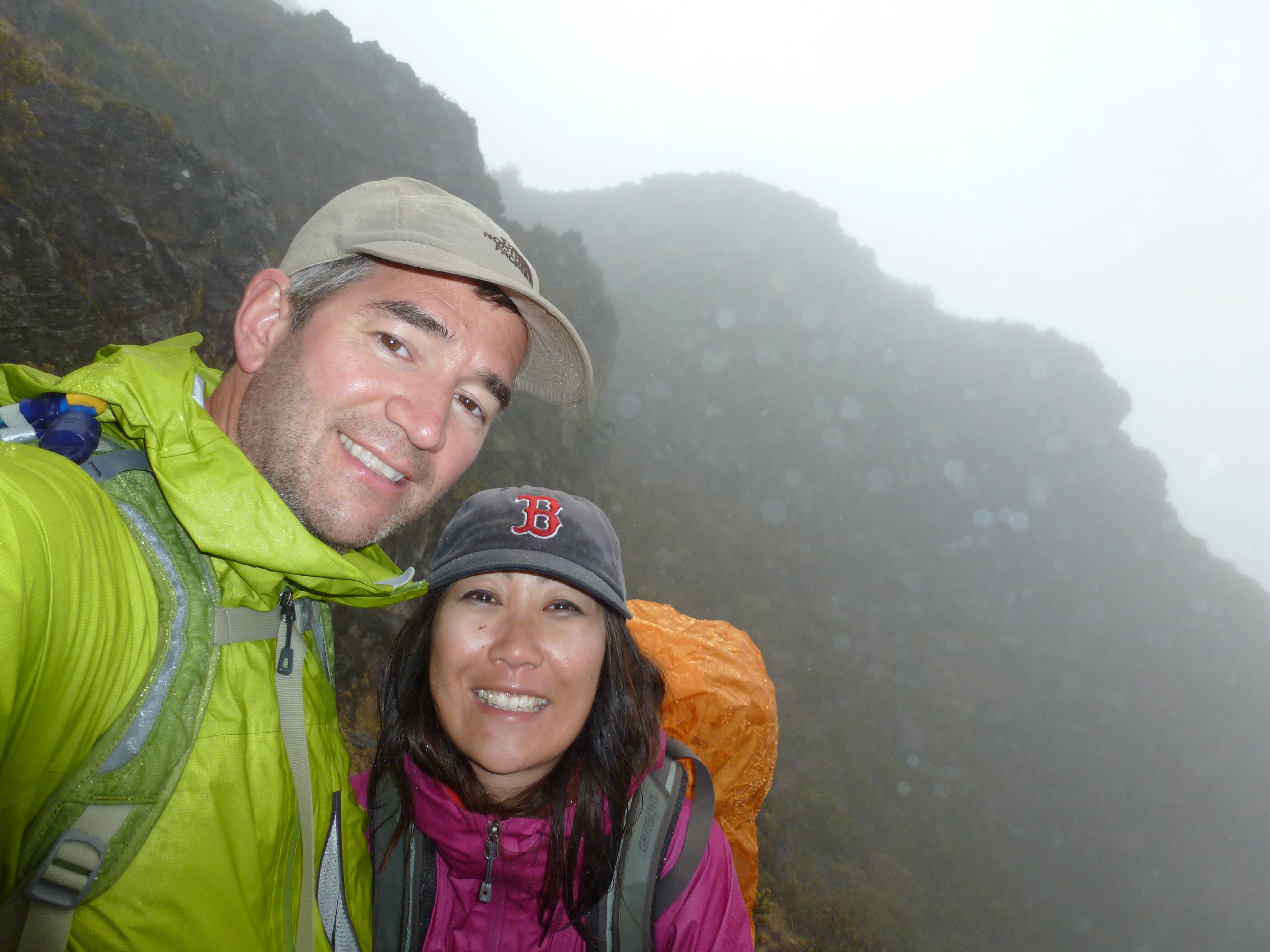 The descent section lasted nearly three miles and left us ready to hike on more level ground. We’ve always found going down to be tougher on our bodies and more risky than climbing even steep trails. Add wet rocks and loose gravel and you have a recipe for injury.
Lunch
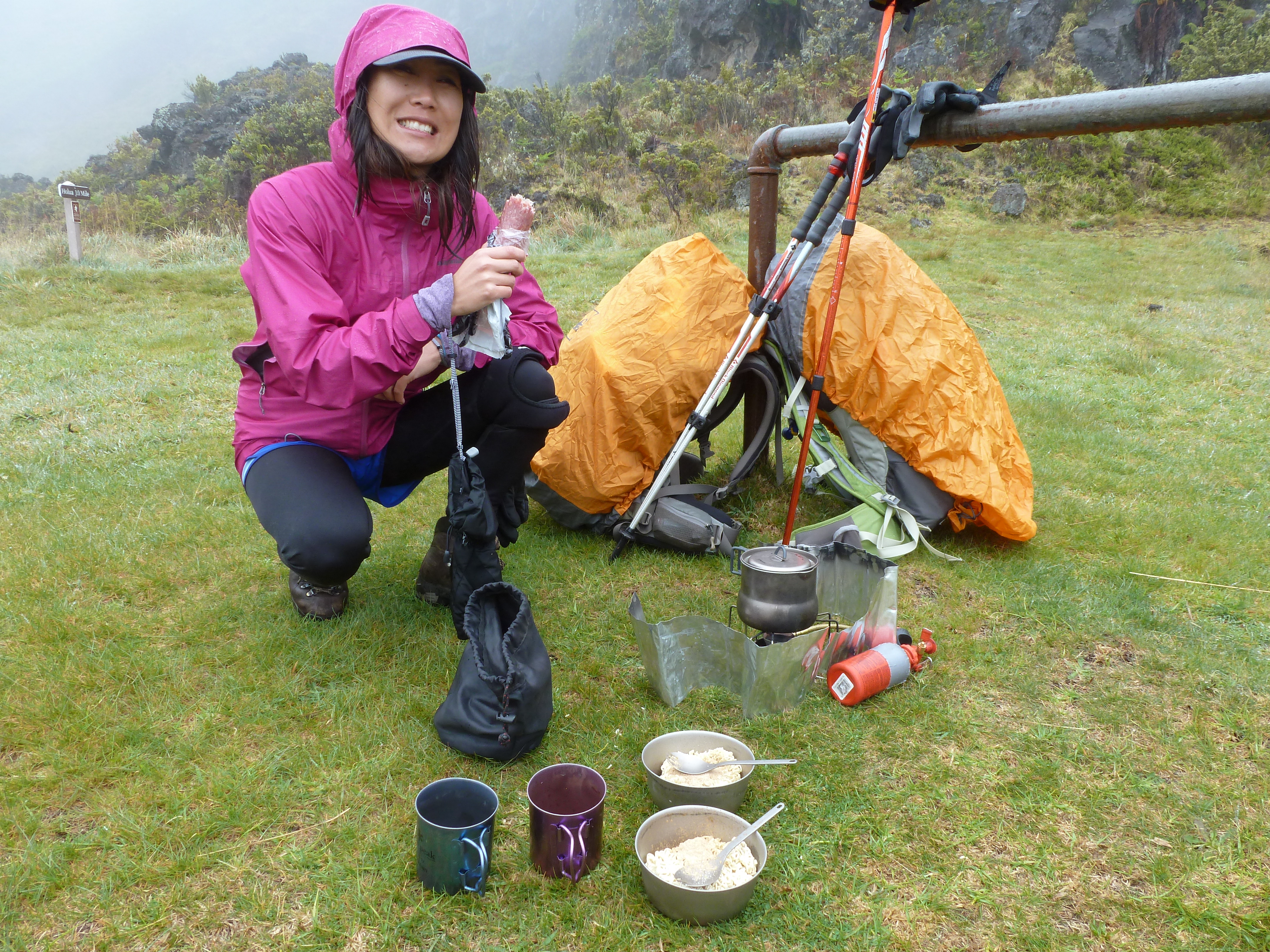 Once off the cliff trail, we found an excellent place to have lunch just inside a gate that was constructed to keep feral goats out of the park and away from the silversword, a plant unique to Haleakala National Park. We made ramen noodles and brewed up tea as we rested our legs and enjoyed taking off our packs for a bit.
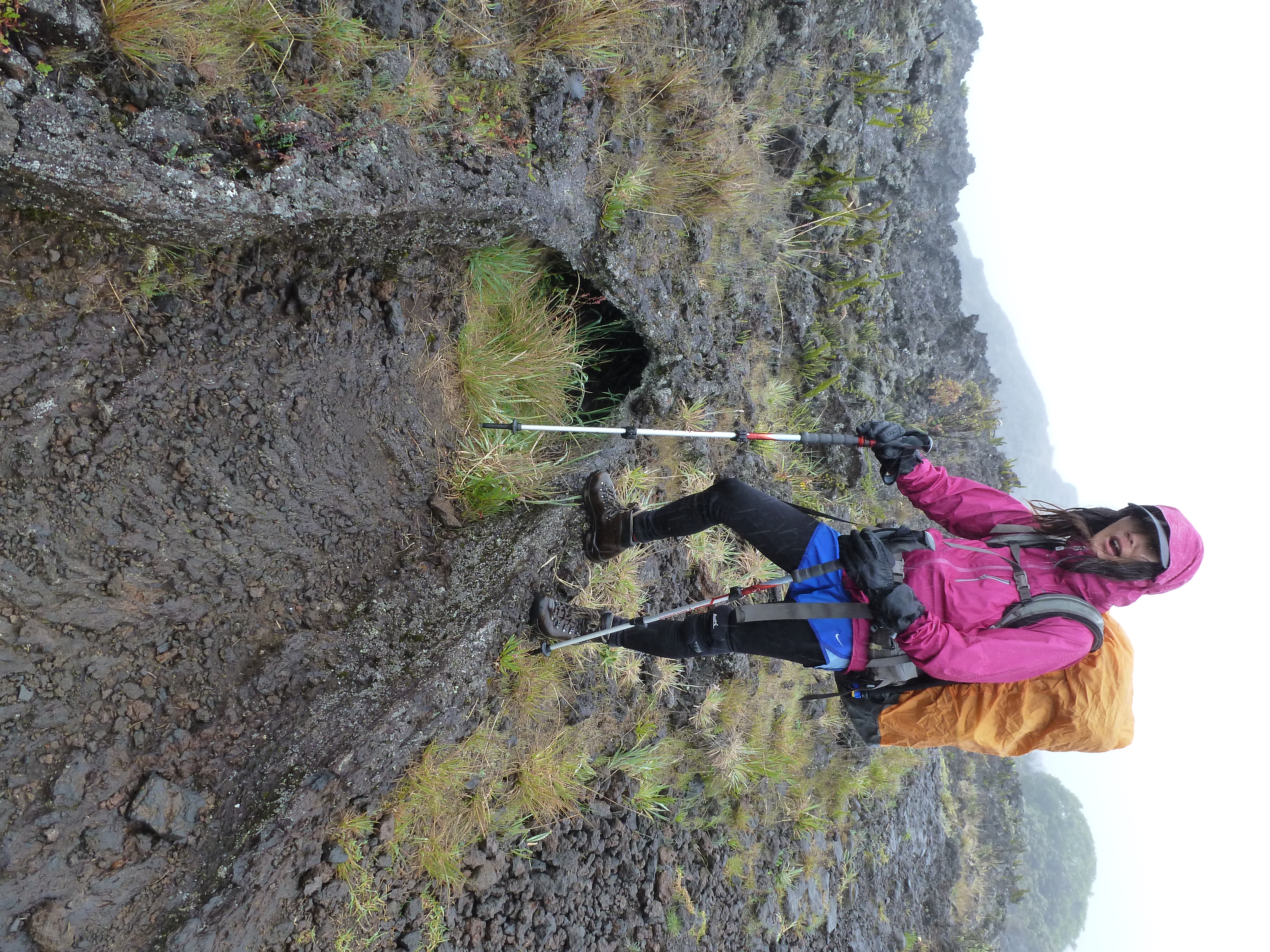 Soon after eating, we started once again down the trail and soon entered an area of lava flows that had remarkable formations that made the landscape appear apocalyptic. There were patches of pahoehoe (smooth, sometimes ropey-looking lava) and a’a, the jagged lava that is nearly impossible to walk across, leading to jokes that a’a is the sound you make when you try. At one point, we found lava chutes that still bore the evidence of lava flowing from underground even centuries after the last eruption.

Soon after the lava flow section, we entered an area that could best be called desert. We were fortunate that it rained recently and the footing was better than usual. Still, we felt our energy slipping away on the soft trail. This section didn’t last very long and we were soon back on hardpack trail.
Lunar
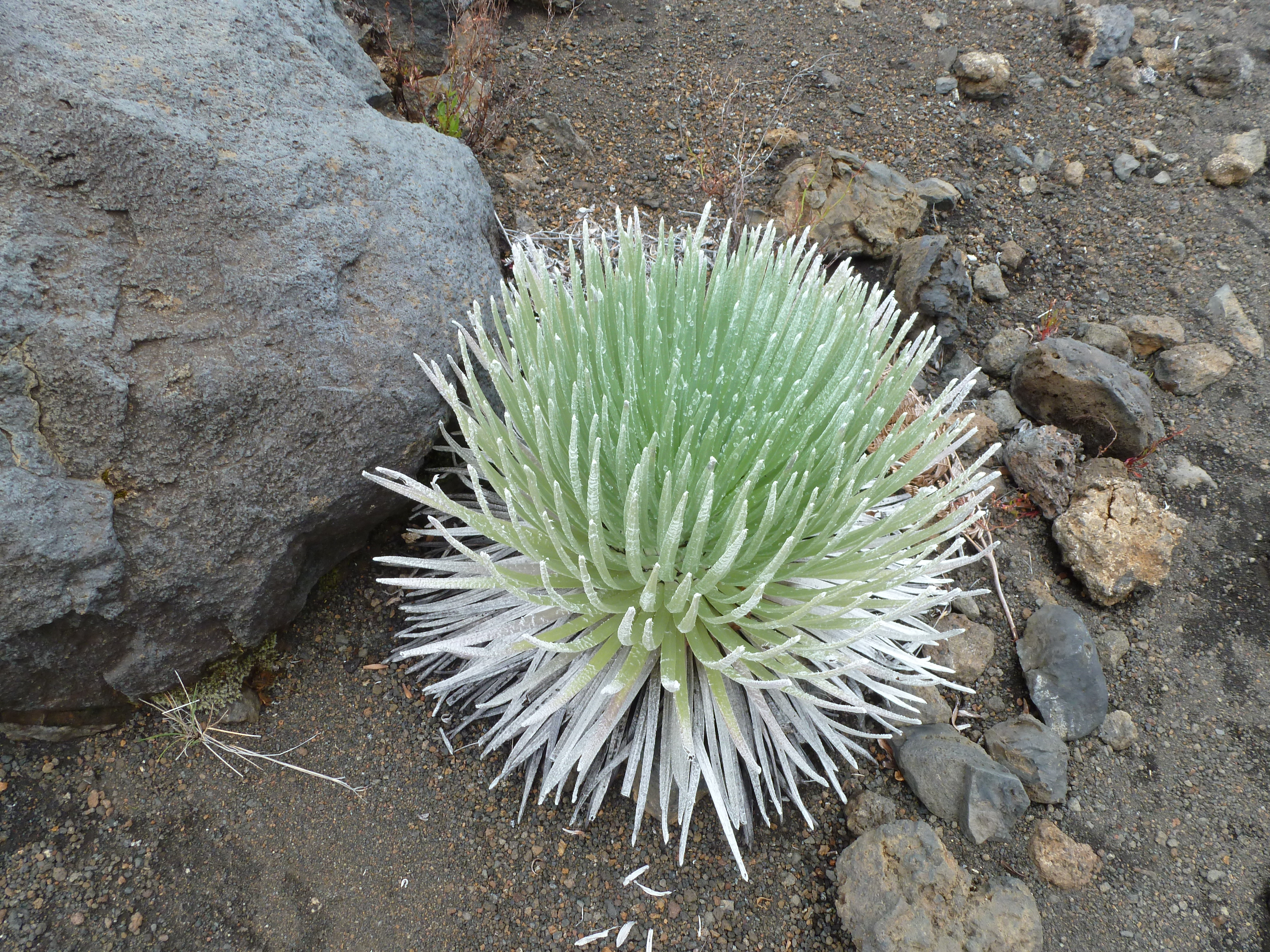 The landscape of the center section of our hike could best be described as lunar. We made our way around several cinder cones that looked like they could have erupted just recently, though we knew that not to be true. Lacking water in the rain shadow of the Crater’s walls, erosion takes place very slowly without vegetation to help break down the rock. In fact, one of the only plants is the silversword, unique to this location and possibly one of the hardiest plants on the planet.
 Leaving the Crater floor meant a return of vegetation, but also of rain. We also reentered an enormous lava flow that managed to wind its way through man-made and natural pathways. The mist became closer as we descended and soon we were again enveloped in the light rain of a cloud.
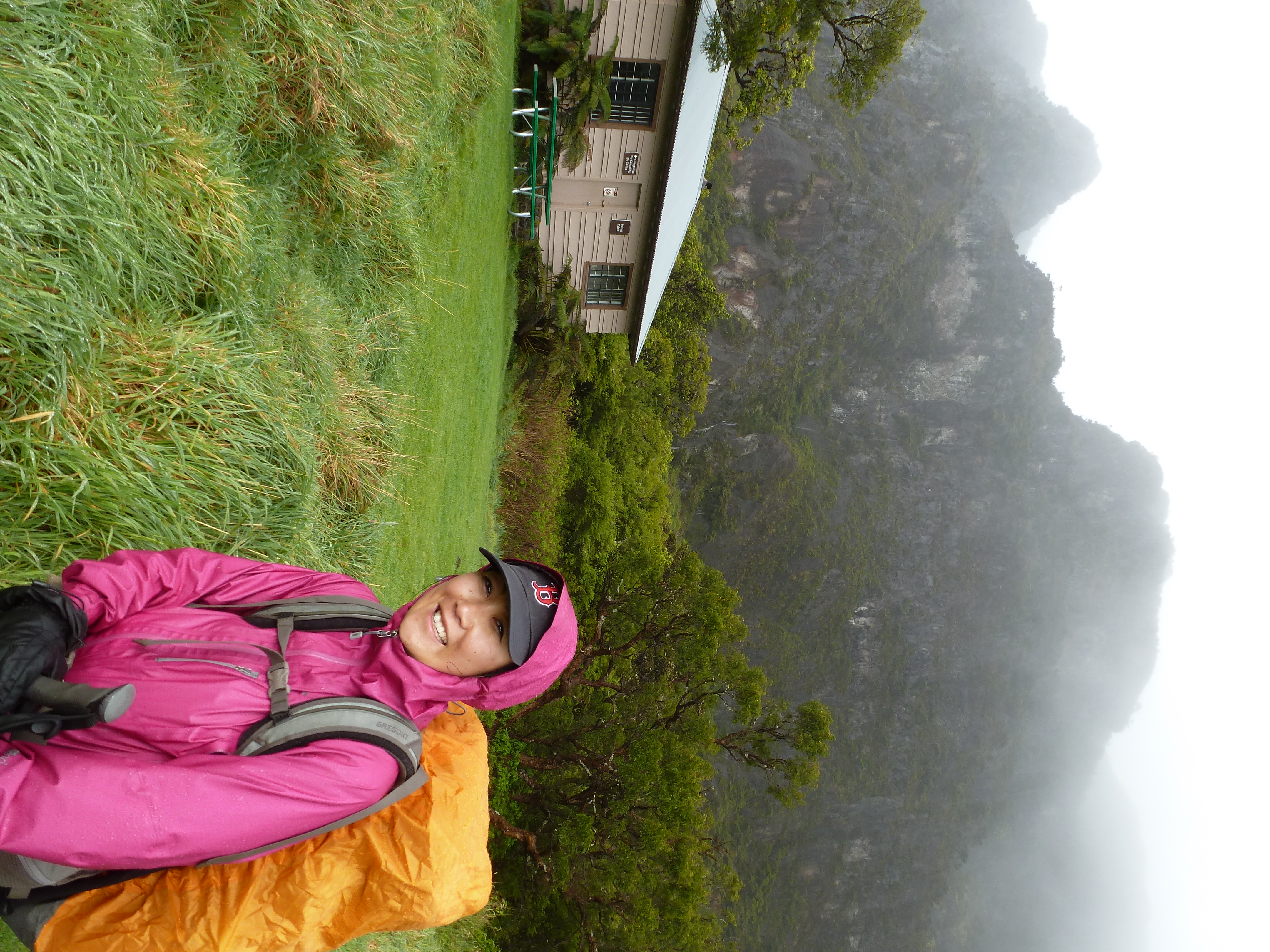 Two hours after finding ourselves back in rain, we arrived at Paliku Campsite.
Paliku Campsite
At 6,380 feet (1,945m), Paliku is located on the east end of a beautiful valley at the base of a rain forest cliff. We were very happy to arrive and quickly looked for a campsite. Unfortunately, just as we began to unpack, the rain started coming down very hard and the inside of our mostly-screen tent was soaked before we could cover it with the rainfly. Jeanne spent the next several minutes drying the tent floor as best she could, but the damage was done and we would have a wet tent for the the night. We spent the next two hours eating salami, our dried mangos and sunflower seeds. Darkness arrived at 7pm, and we were fast asleep minutes later.
Up next: Part 2 of Hiking the Halemau’u Trail to the Paliku Campsite at Haleakala National Park





 maximum adventure
Trackbacks/Pingbacks
[…] 4 and 5 – Hike from the top of the Haleakala Crater at 2435 m (7,990 ft) down to the remote campsite of Paliku at 1,944 m (6380 ft). The campsite is […]
[…] us ← Hiking the Halemauu Trail to the Paliku Campsite at Haleakala National Park […]
[…] a month after hiking the Haleakala Crater to Paliku Campsite, we were back in Maui to hike the remainder of the trail that goes from Paliku Campsite down to the […]
[…] our recent hike from Haleakala Crater to Paliku Campsite in April 2012, we were back to complete the peak-to-ocean journey by completing the lower section from Paliku […]