

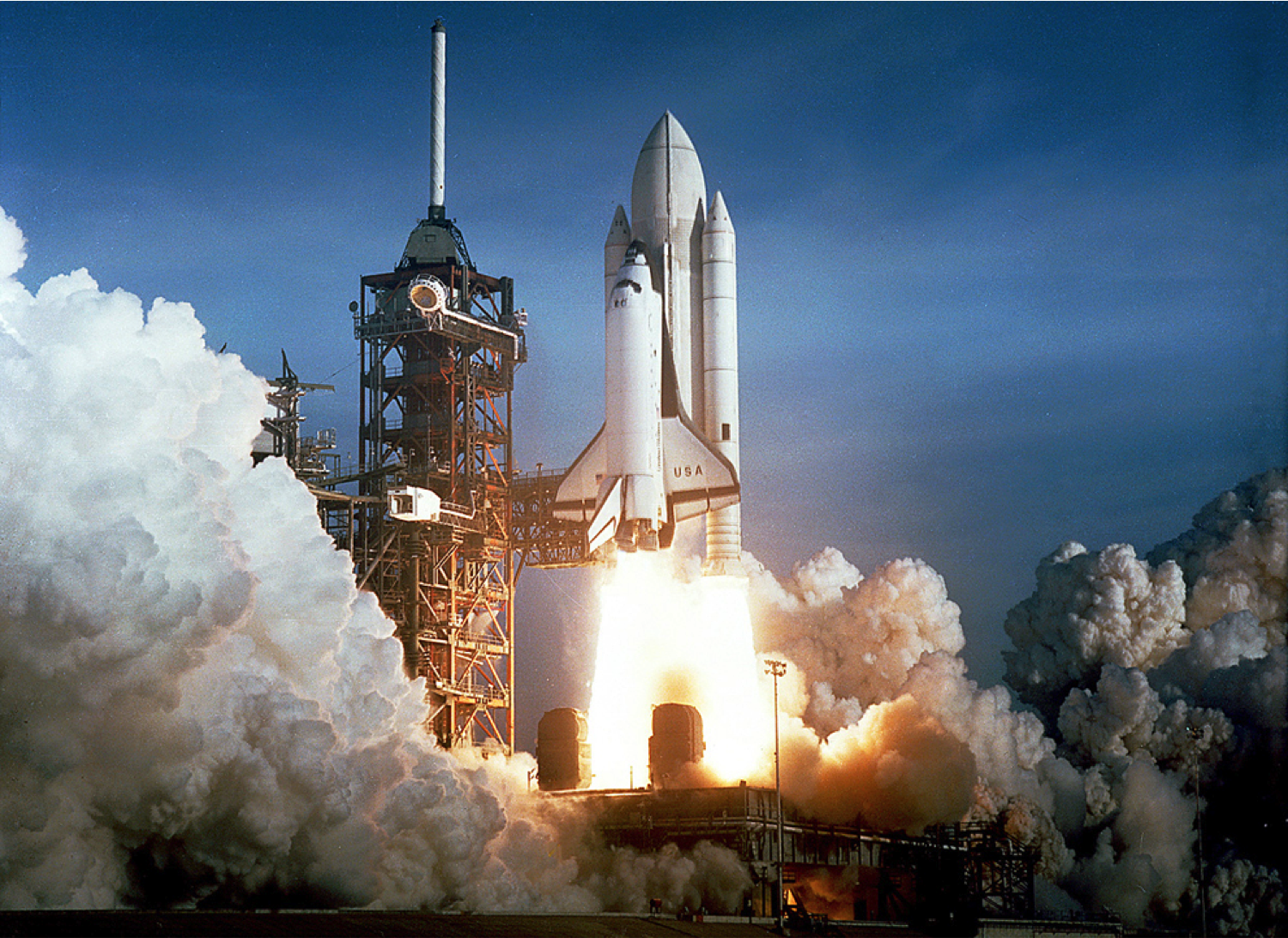
 A business trip to Orlando gave us an excellent opportunity to visit the Kennedy Space Center at Cape Canaveral, Florida. Less than an hour from the Orlando Airport, the Center is an easy day trip into scientific reality so close to a city full of theme parks selling a world of fantasy. Buzz Aldrin and Neil Armstrong instead of Mickey Mouse and Goofy. We stayed at one of the many hotels in nearby Cocoa Beach and planned to spend a full Sunday at the Space Center.
Exploration
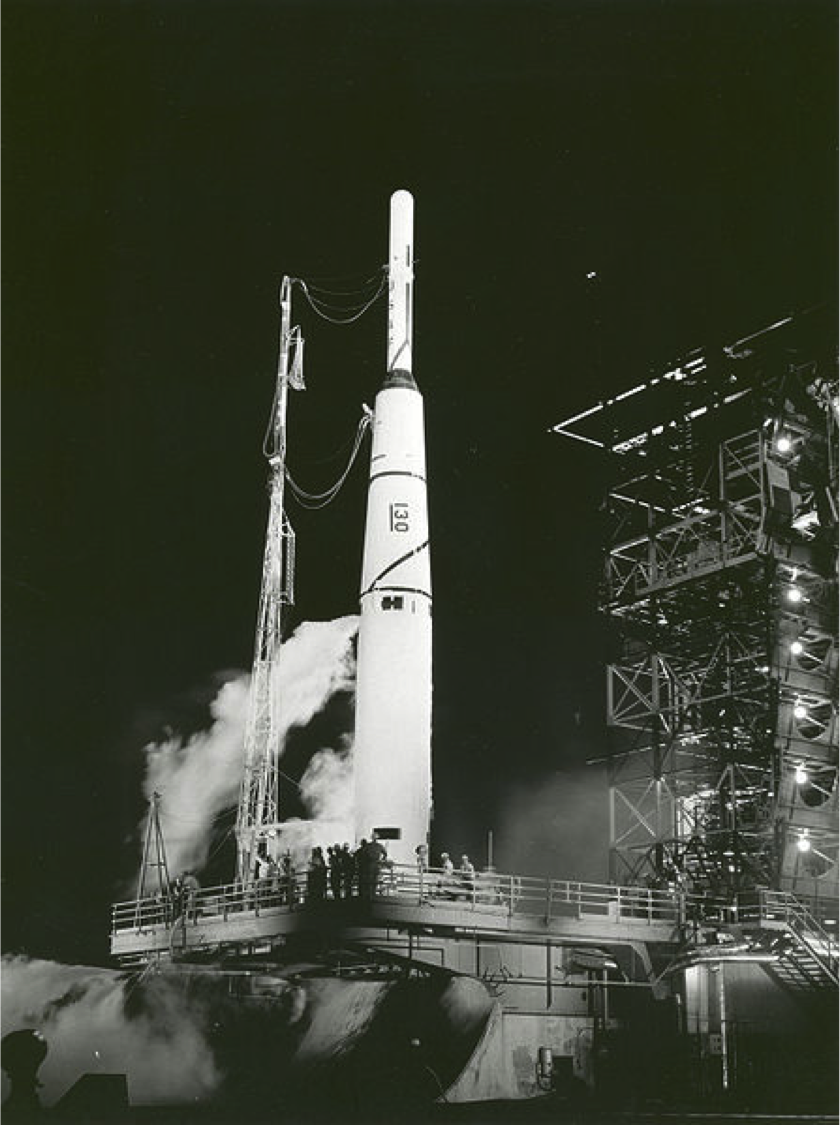 For a government facility, it doesn’t come cheaply; adult tickets are $43 apiece. What you get, on the other hand, is to stand in the place where the greatest explorers of our time launched into Space. This is our modern equivalent of where Columbus departed the Old World, Shackleton stepped off for the South Pole, and Hillary departed for the summit of Mt Everest. Going into the unknown is something only a select few humans have ever done, and not all have returned to talk about it. It is the sort of adventure that is quite different from anything we do on our typical trails and peaks. We needed a visit to the Kennedy Space Center to get an idea of how these things are attempted.
Kennedy Space Center
 The first thing to learn at the Kennedy Space Center (KSC, locally) is the enormity of the property itself. It takes a few miles of driving through Florida scrubland to reach the Visitors Center, which is still a few miles from the Vehicle Assembly Building (VAB), one of the largest buildings in the world. It is large enough that there are coach buses as part of the tour.
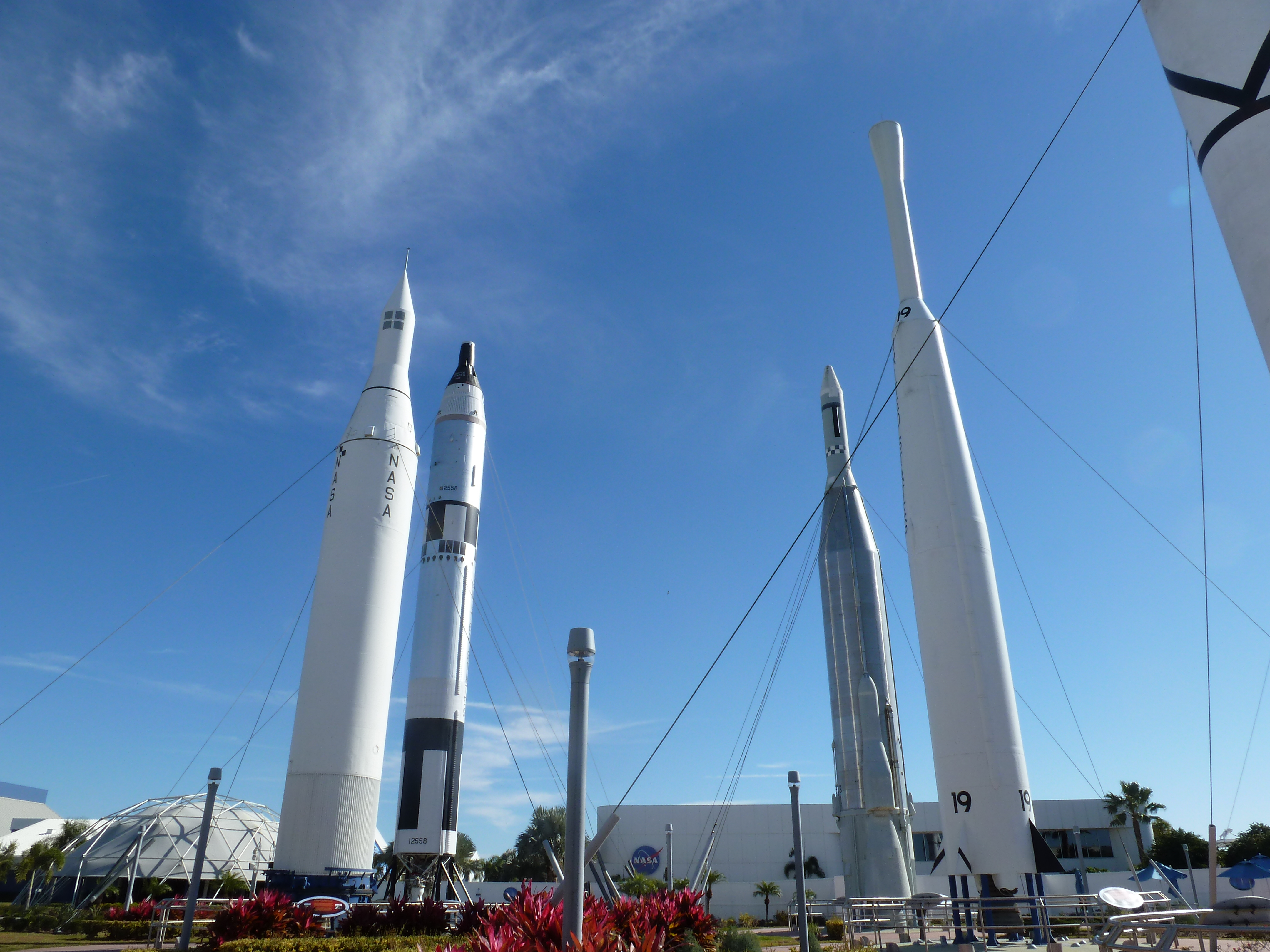
We started with the IMAX Theatre and a surprisingly good film about the history of the Space Shuttle and International Space Station. From there we walked the Rocket Garden with its outdoor display of the various rockets used for space missions from the program’s start in the 50’s.
Launch Center – 39
 Leaving the Visitor’s Center on NASA’s white buses, we made our way to LC-
39, home of the Observation Gantry, where 30 years of Shuttle launches were watched from a safe distance. It was a brief stop with a movie about the dedicated ground crews that made the Space Program so successful despite the difficulty and setbacks.
From there we boarded a different tour bus with a talkative and distracted driver who crossed the center line and nearly went off the shoulder as we careened toward our next stop. He managed to avoid an oncoming bus on the narrow road, and we were relieved to make it to the Apollo/Saturn V Center.
Apollo/Saturn V Center
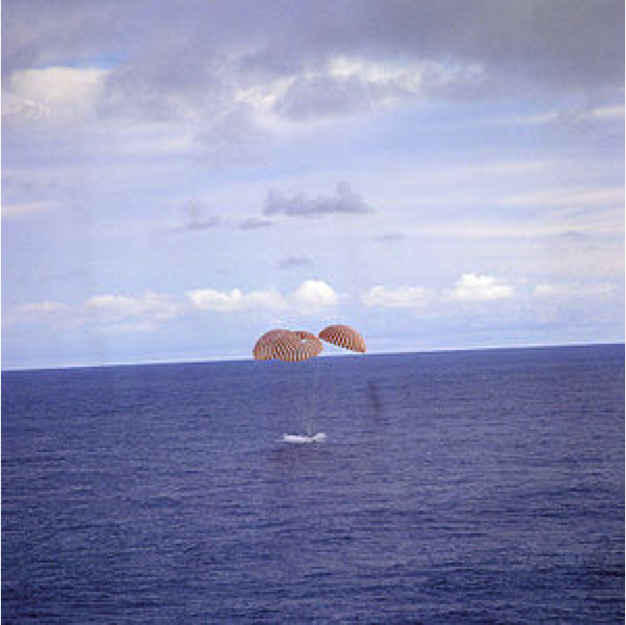 The best film of all was the one we saw upon entering the Apollo/Saturn V Center, our third stop. It was a short but a very inspirational film about the Space Race and Kennedy’s commitment to land a man on the moon (and get him back safely–the part many forget). It covered the triumphs and the terrible tragedies the program experienced on the way to the Moon. There were several clips of rockets blowing up on launch, turning toward the earth just after lift off, and rockets off course needing to be remotely destroyed. They covered Apollo 1‘s tragic fire during a test and Apollo 13‘s “successful failure” when the crew was able to figure out how to survive multiple system failures and make their way back to Earth safely after Lovell’s famous, “Houston, I think we have a problem.” By film’s end, the viewer had a very good idea of just how heroic the engineer’s, mission planners, controllers and the astronauts really were.
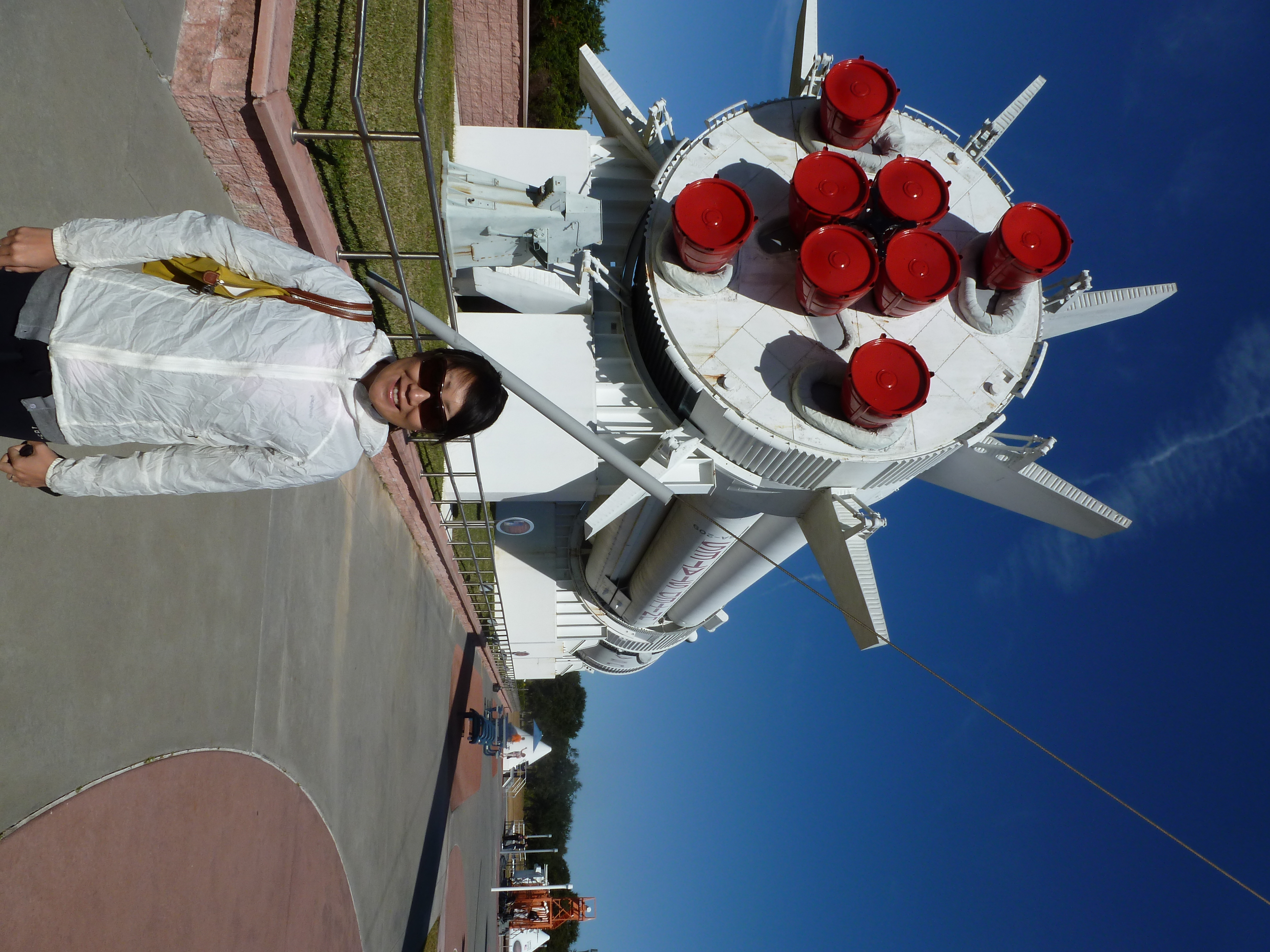
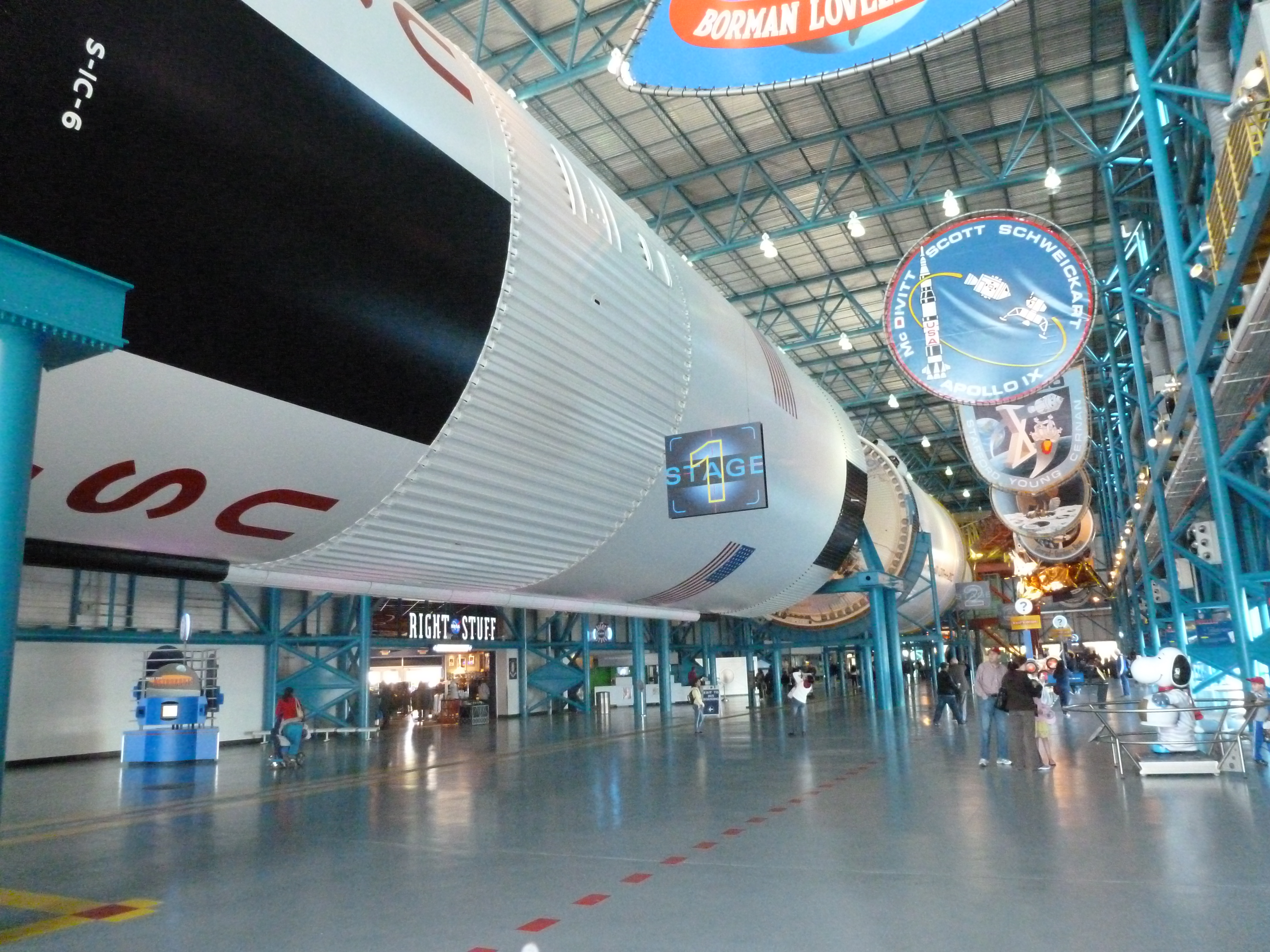
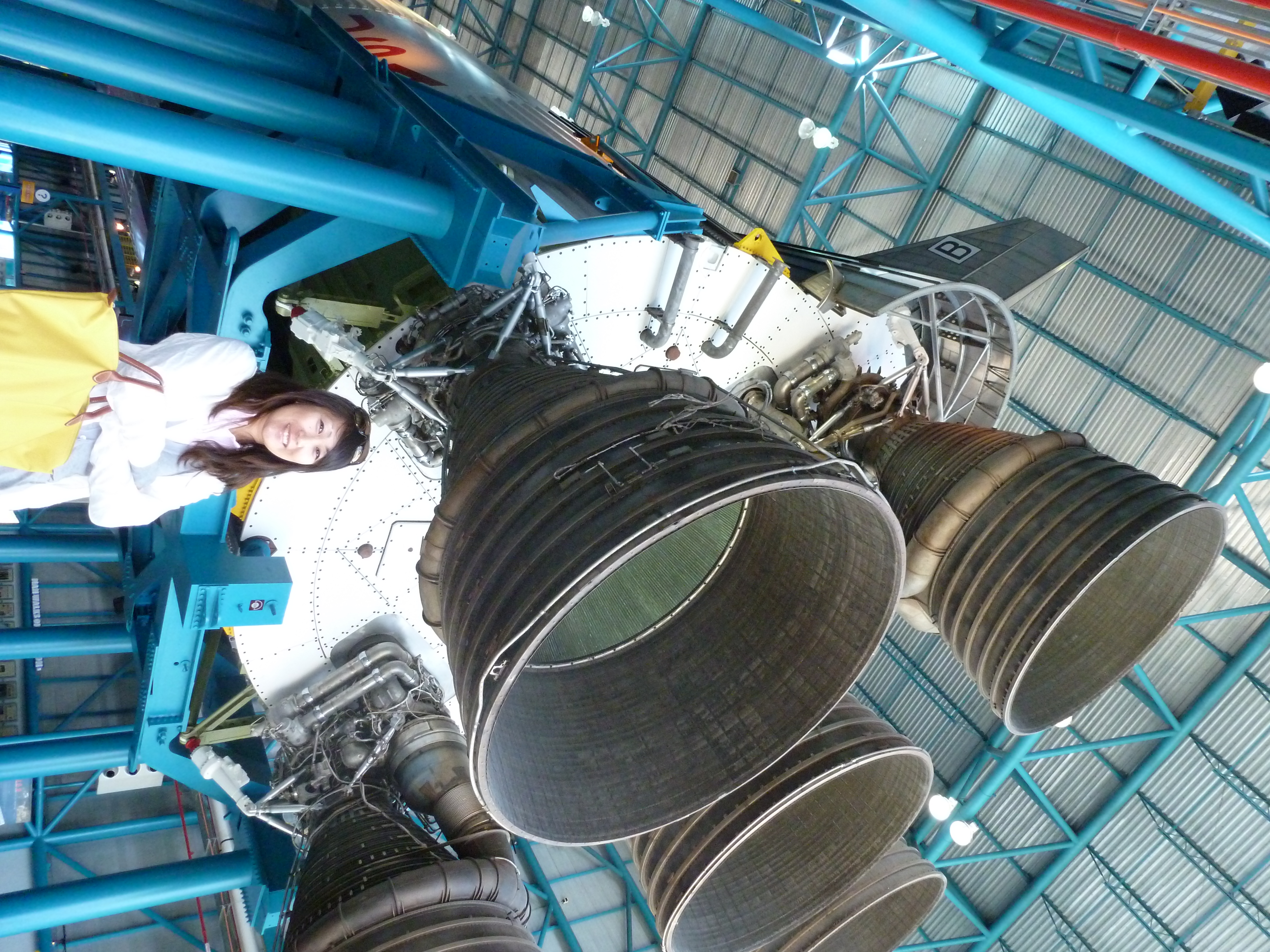 Leaving the small theater gave us a big surprise as we looked up and realized we were at the bottom end of an enormous Saturn V rocket lying on it side…all 111 m (363 ft). Each of its 5 engine nozzles were 6 m (19 ft) across and the nose cone of the rocket was far, far across the building. Walking the length of the rocket and reading the information about each stage and how it fit together as a single spacecraft took around an hour. This was truly the most fascinating part of the day and also the most crowded with tourists.
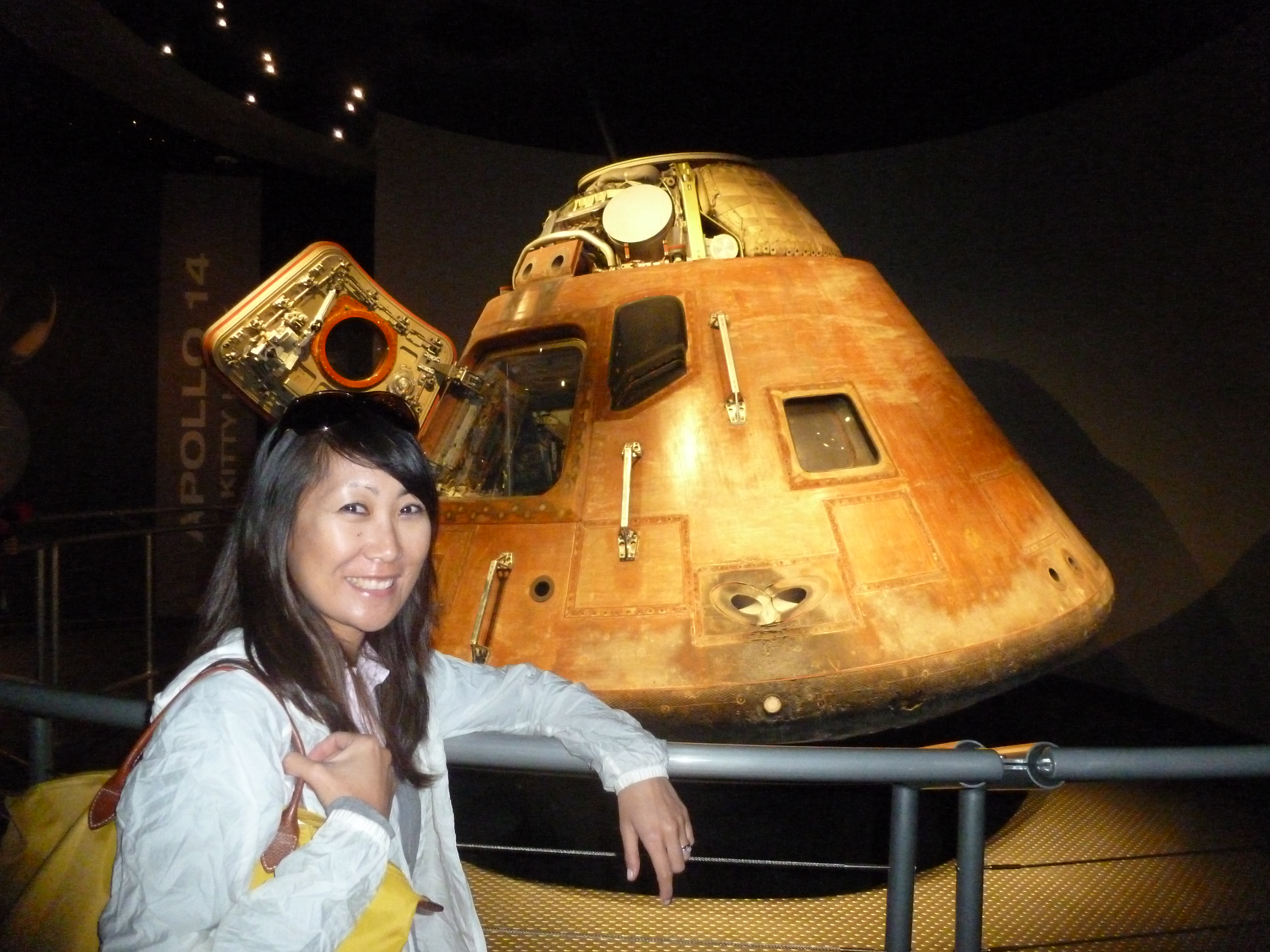
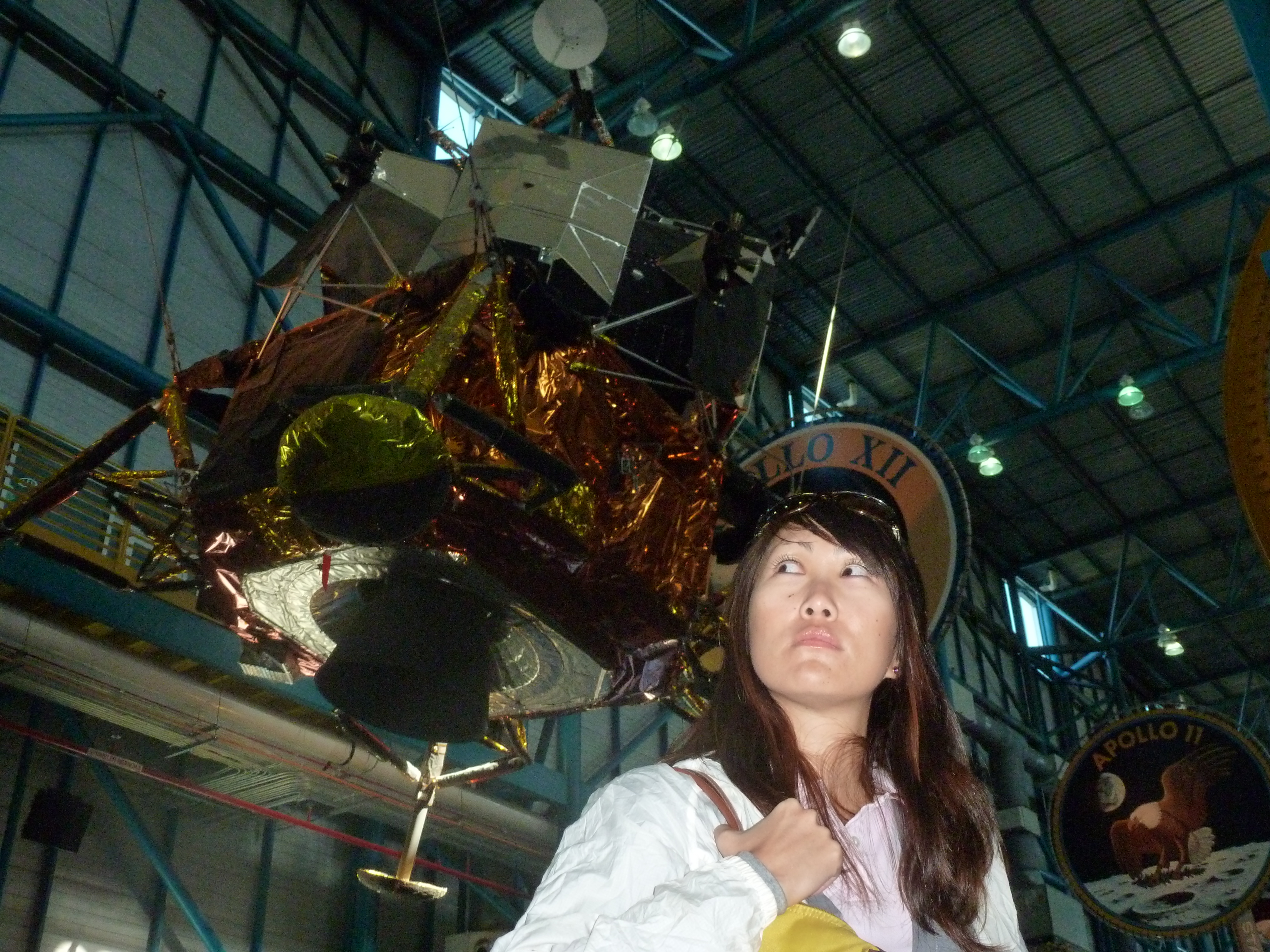
 Besides the rocket, there were also examples of the Moon Buggy, the Lunar Landing Module, Apollo 14’s command module and various versions of spacesuits, including early models looking like they came from Buck Rodgers’ wardrobe. There were moon rocks in glass cases around the facility, including one that visitors could actually touch. These displays, unlike the Space Shuttle, were a part of a glorious past that seemed more from another time than the more recent Space Shuttle missions.
 Far more than a touristy place, the Kennedy Space Center is a very well-documented display of the greatest achievement in exploration. The best time to visit is Sunday morning when the whole story can be digested without distraction and fully appreciated. Save plenty of time for the Apollo/Saturn V Center, too, as it has the most to take in. This is an inspiring place and you will leave with a different perspective on what was truly achieved. Don’t be surprised, however, when you are asked to exit through the gift shop.





 maximum adventure
Trackbacks/Pingbacks
[…] see our personal story on this trip, click here. Advertisement GA_googleAddAttr("AdOpt", "1"); GA_googleAddAttr("Origin", "other"); […]
[…] but not an explorer. The lack of knowledge the explorers had in those first trips is like landing on the moon for us today. They went to the white spaces on the map. Shackleton, Lewis and Clark and the […]
[…] us ← Kennedy Space Center in January 2012 […]