

The following is a continuation of Mera Peak Expedition — Going as high as possible on Mera Peak.
 Sunday, October 23
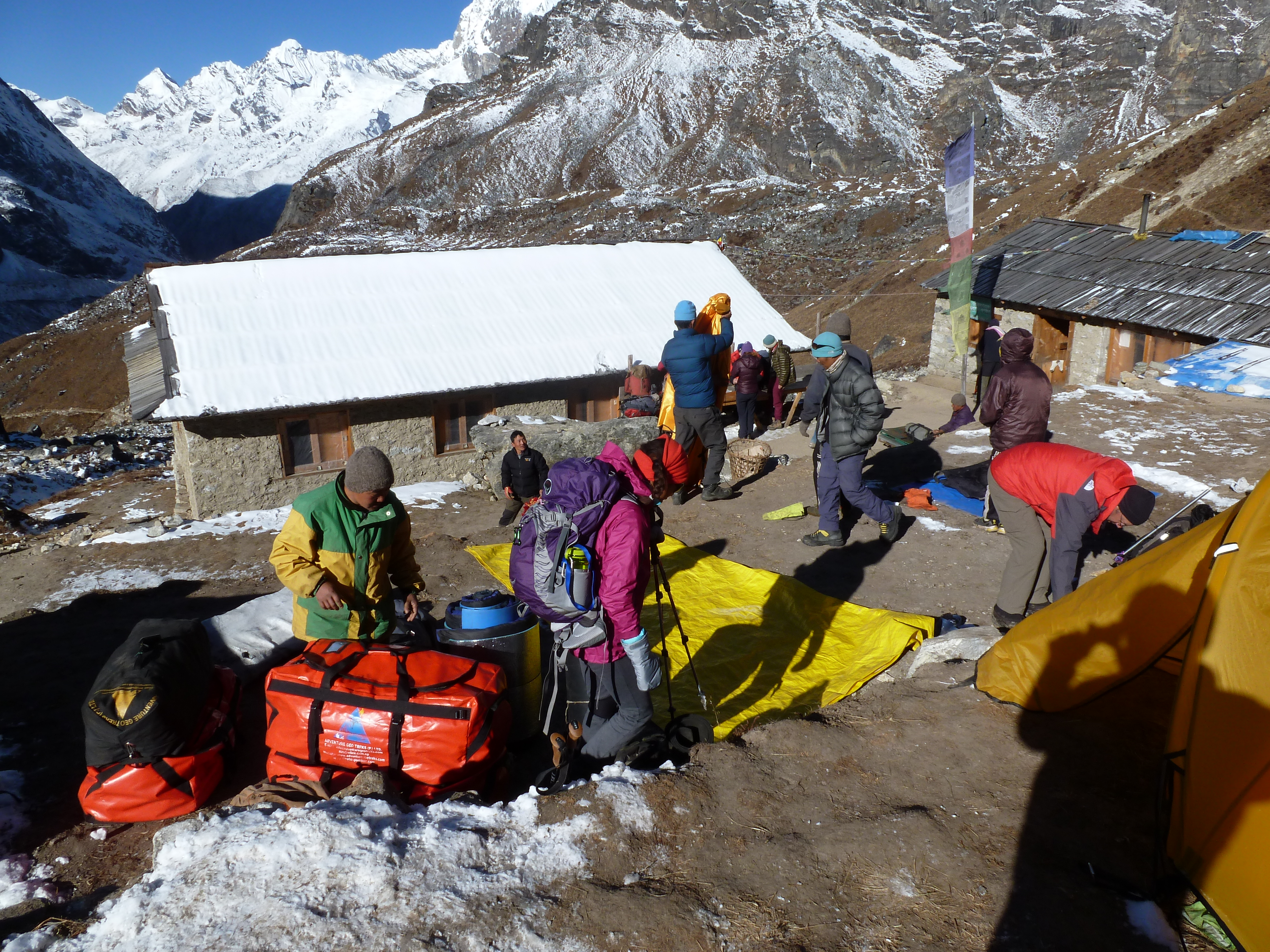
It wasn’t a great night of sleep. We finally figured out a system for keeping warm in our sleeping bags, but it was a night of tossing and turning as we exhausted ourselves on the climb and developed sinus infections. Daylight finally came at 6am and we looked forward to getting lower and warmer. The day began with a two-hour walk down to Tangnag, the last campsite we visited before Khare. We rested in the warm sun and the staff made our lunch.
Tangnag
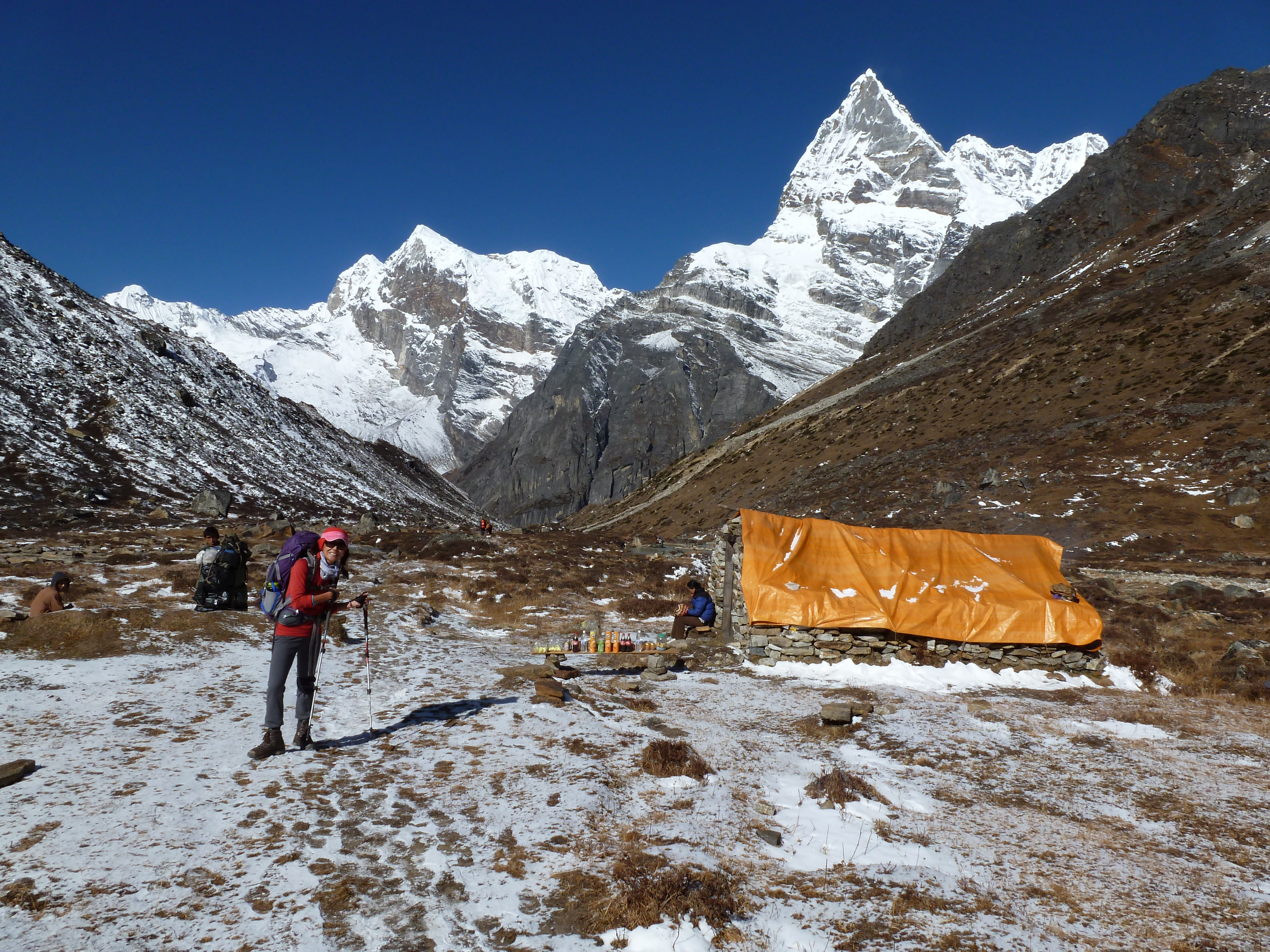 We weren’t in Tangnag long when we asked to continue down the mountain. After four days up high, we were ready to have warmer nights and mornings. The walk to Kote mostly followed the Hinku Khola for three hours, a winding, rocky path that made its way at times high along the bank and at times right next to the water.
 It was notable that on this trek, we only crossed a single suspension bridge after Adheri and ever since, crossed rivers rarely. When we did cross water it was by stones and wooden logs made secure with large rocks wedged among the timbers.
River walking
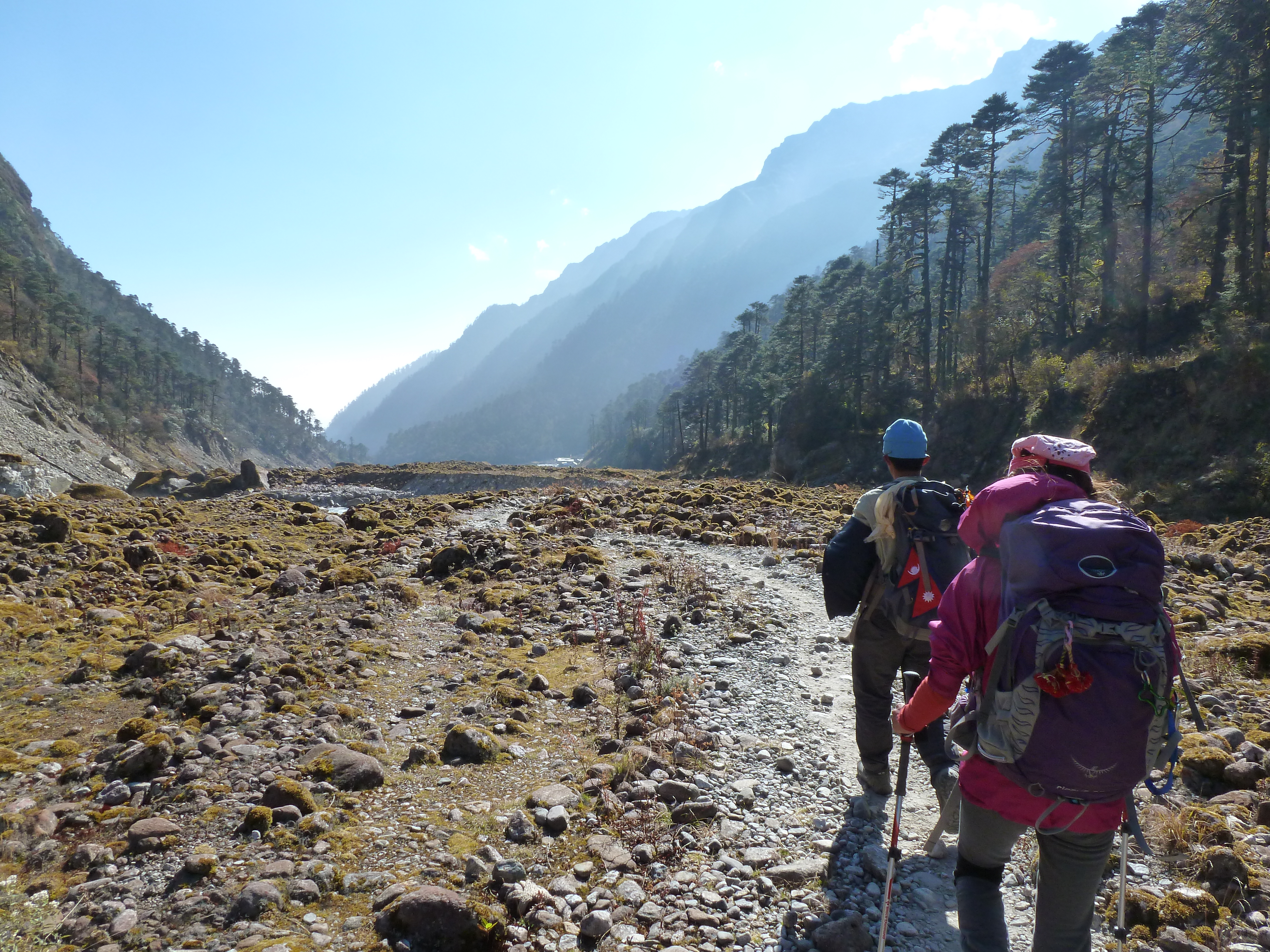 About halfway from Tangnag to Kote we passed again below the timberline and saw mossy pines and rhododendrons along the side of the river. The trail seemed to take a great deal of time and although we came the same way several days ago, it seemed unfamiliar. We were very happy when the blue roofs of Kote came into view about a half kilometer down the river. Jeff and Joel left Khare yesterday and weren’t feeling well and we soon found their tents, Subash the Assistant Guide, and Krisha the kitchen staff, but no sign of our friends.
Kote
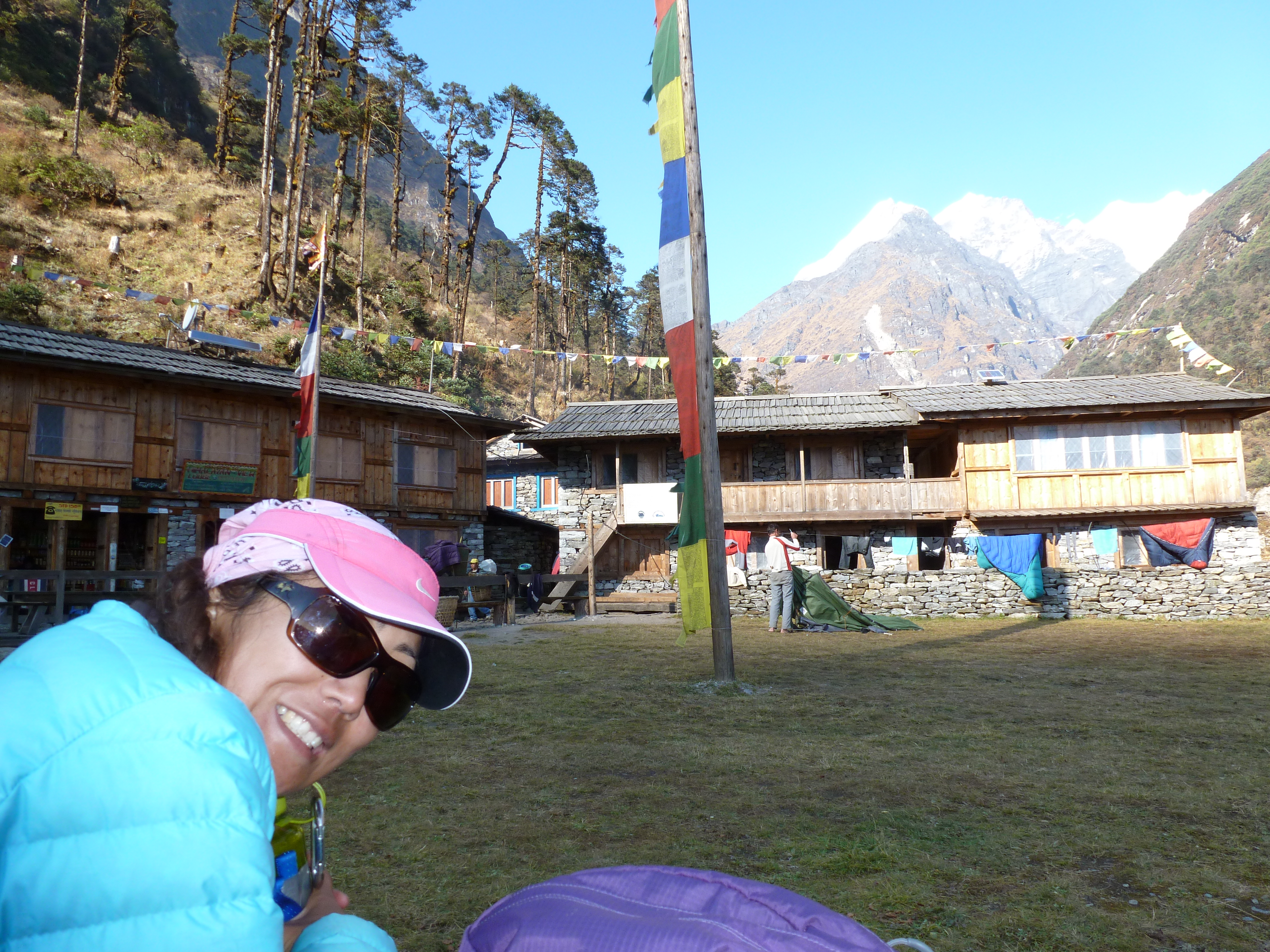 Coming down from Mera, Kote is the first town that appears to have permanent residents, evidenced by nicer buildings and even the presence of children and families. Many of the structures appeared new and the roofs, rather than being of shingles with large gaps, were blue tin and looked significantly more water and weatherproof. Surprisingly, Jeanne and I arrived ahead of the porters, who showed up about thirty minutes later with our personal items and tent.
Death
Despite being much lower, the temperature dropped quickly as soon as the west side of the valley was in shadows, which was very early. We also received the bad news that a porter that we saw carried on another porter’s back through Tangnag actually died at the monastery about halfway to Kote. He had Acute Mountain Sickness (AMS) and was being carried down as quickly as possible but not quickly enough, it would appear. When we saw him at Tangnag, he was conscious and looking around. Later, Karlin saw him laying on the ground and having what looking like a back spasm. We have heard of these things before but never have we been so close to this. It was very, very sobering to know that we were alive and healthy but not because of anything more than chance.
Monday, October 24
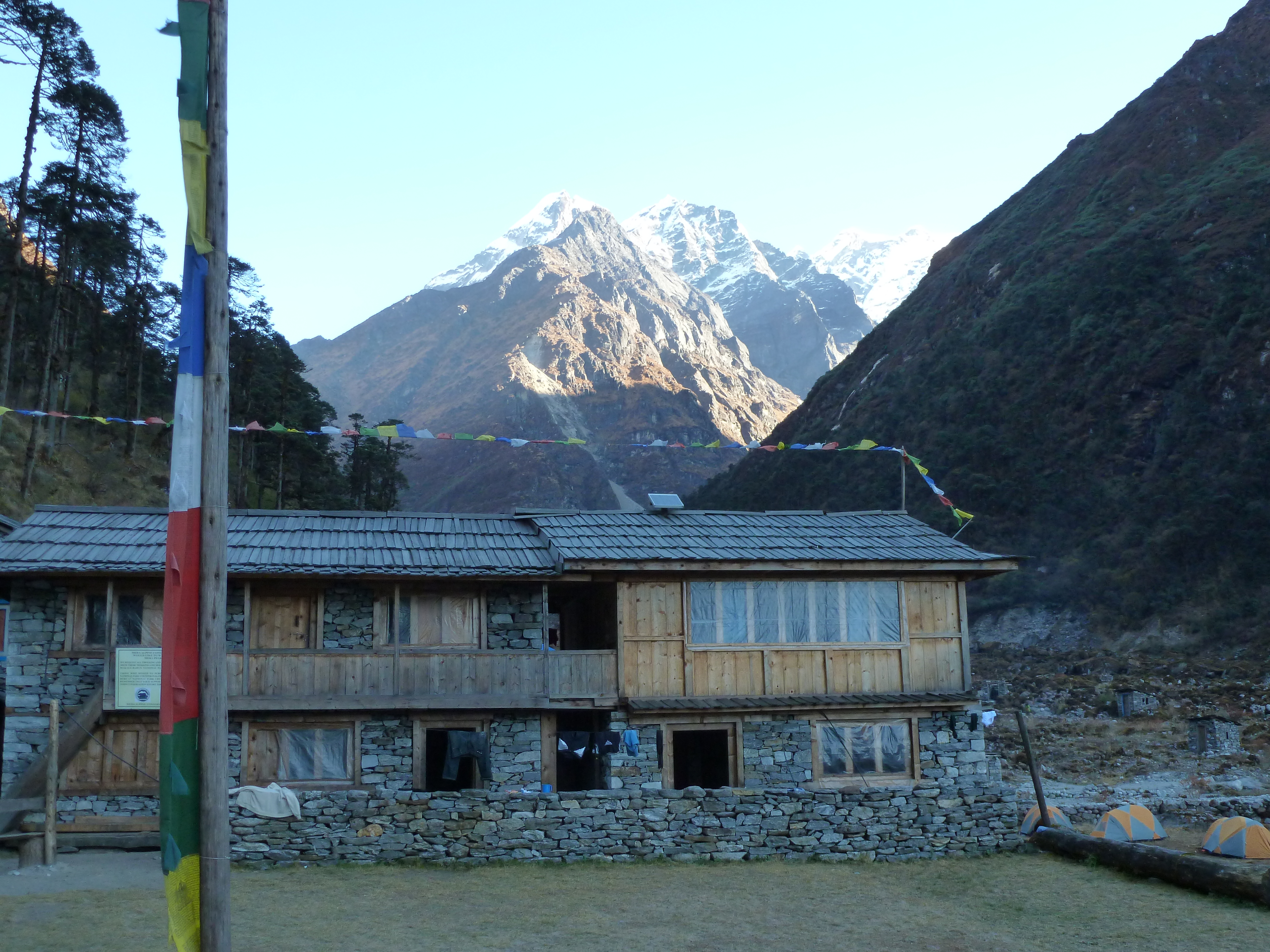 We woke up in a cold (but not nearly as cold as Khare) Kote. Breakfast was a delicious oatmeal with raisins. This is the day we would leave the Hinku Khola Valley and cross the passes that lead back to the valley of the Dudh Khosi, the main watershed for the Khumbu Region.
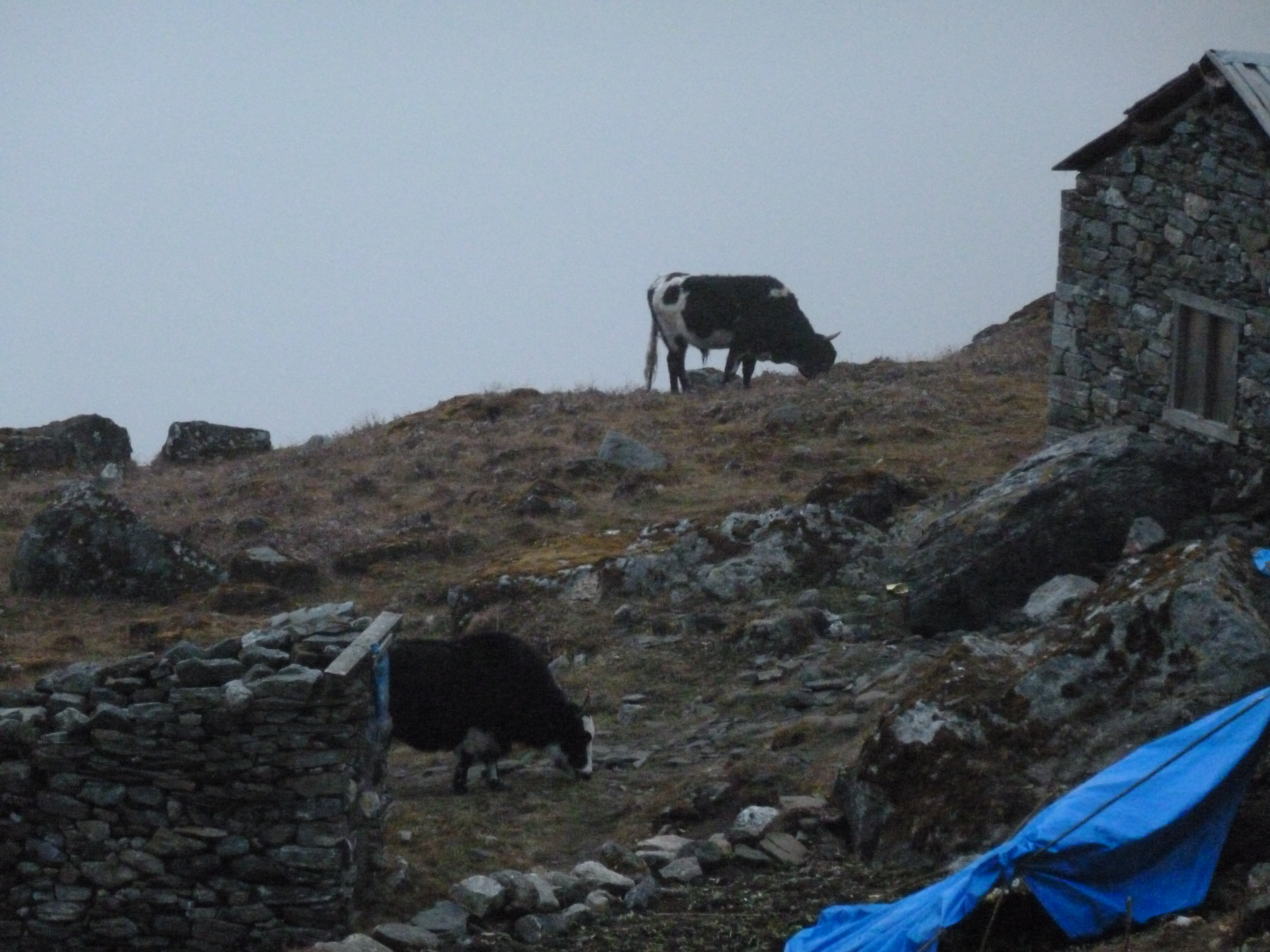
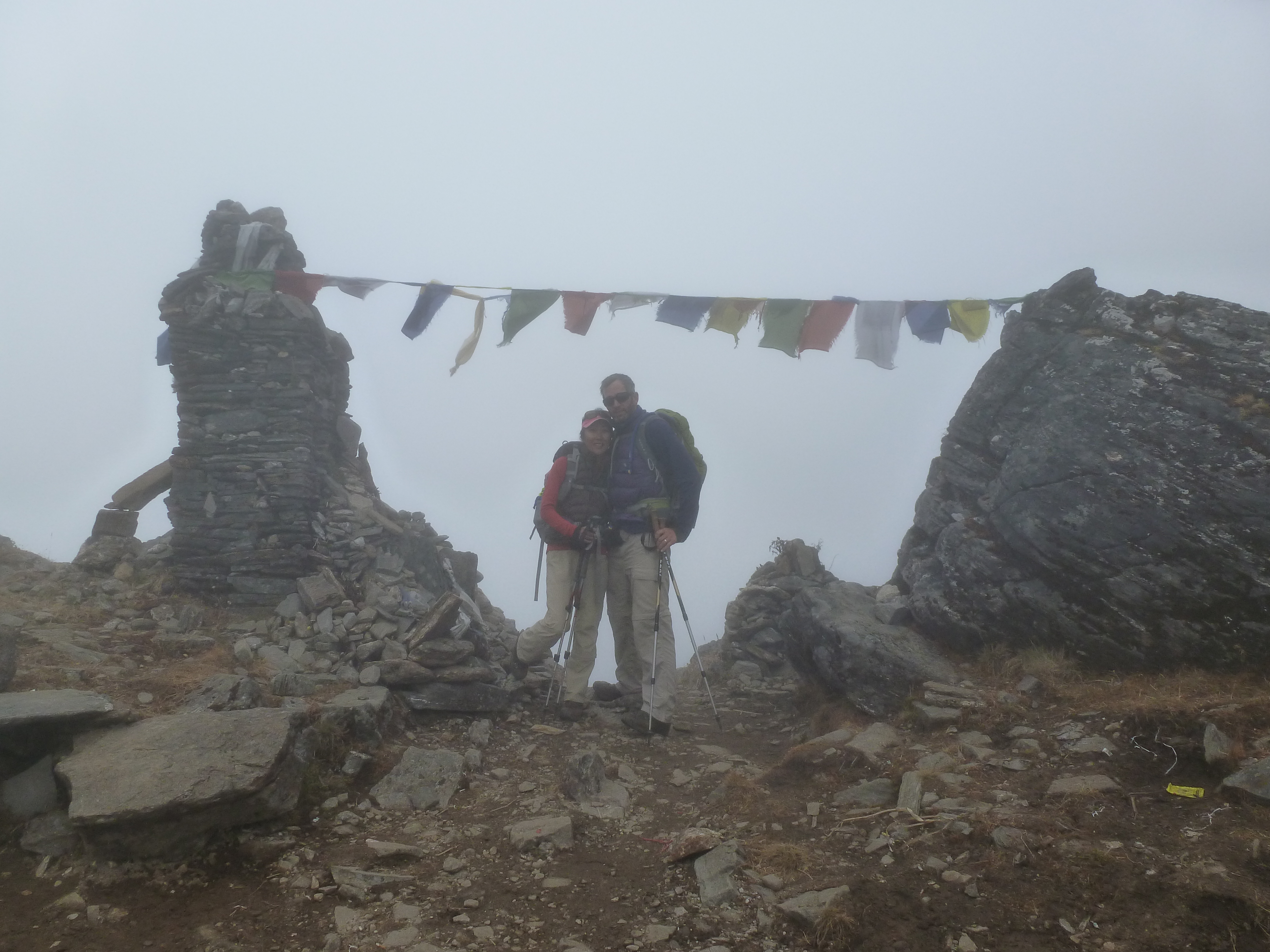 We started by an uphill that took us to the same place we had lunch several days ago near Toctor, but then when the trail forked, rather than taking the left fork toward Basa Village, we took the right fork toward Lukla. From that point, it would be a day of endless uphill trekking until we reached the first of the two passes. Even though we reached a village at only 2:30pm, it was very foggy and cold. We knew we were approaching a village when we heard Yak bells even though we couldn’t see any animals in the thick mist. Our final stop was at a poor-looking cluster of homes and tea houses at 4200 m (13,779 ft) of elevation. The fog combined with the strange rock formations made this site seem like a haunted place.
 We spent time talking to other trekkers, including an Italian couple that climbed K2, Everest and Gasherbrum II without oxygen, and a group of Spaniards who were brought by a travel agency based in Santander. Our crew set up our dining tent for the first time in days, as we had been eating indoors at the various villages. The dining tent was preferable to the smoky interior of the facility where we were camped. At some point, I realized that this was the first time we used the dining tent since we camped at Odare at the giant rock. It was nice to be seated around the table and it was warmer that you’d expect a tent to be.
Yak attack
That night brought our first ever yak attack. We went to bed at the late hour of 8pm, and around 11pm, were awakened by a yak wandering through the campsite. We heard people running and the yak’s bell before hearing Nepali voices as they herded the yak carefully away from the fifteen or so tents that were in the area. A yak walking through a tent could injure someone quite easily and we truly appreciated how seriously our staff took the job of moving the animals along.
Up next: Mera Peak Expedition — Hinku Valley to Lukla




 maximum adventure
Trackbacks/Pingbacks
[…] us ← Mera Peak Expedition — Khare to Mera High Camp Mera Peak Expedition – Heading back down the Hinku Valley → […]
[…] us ← Mera Peak Expedition – Heading back down the Hinku Valley […]