

The following is a continuation of Mera Peak Expedition — Kote to Tangnag.
 Wednesday, 19 October
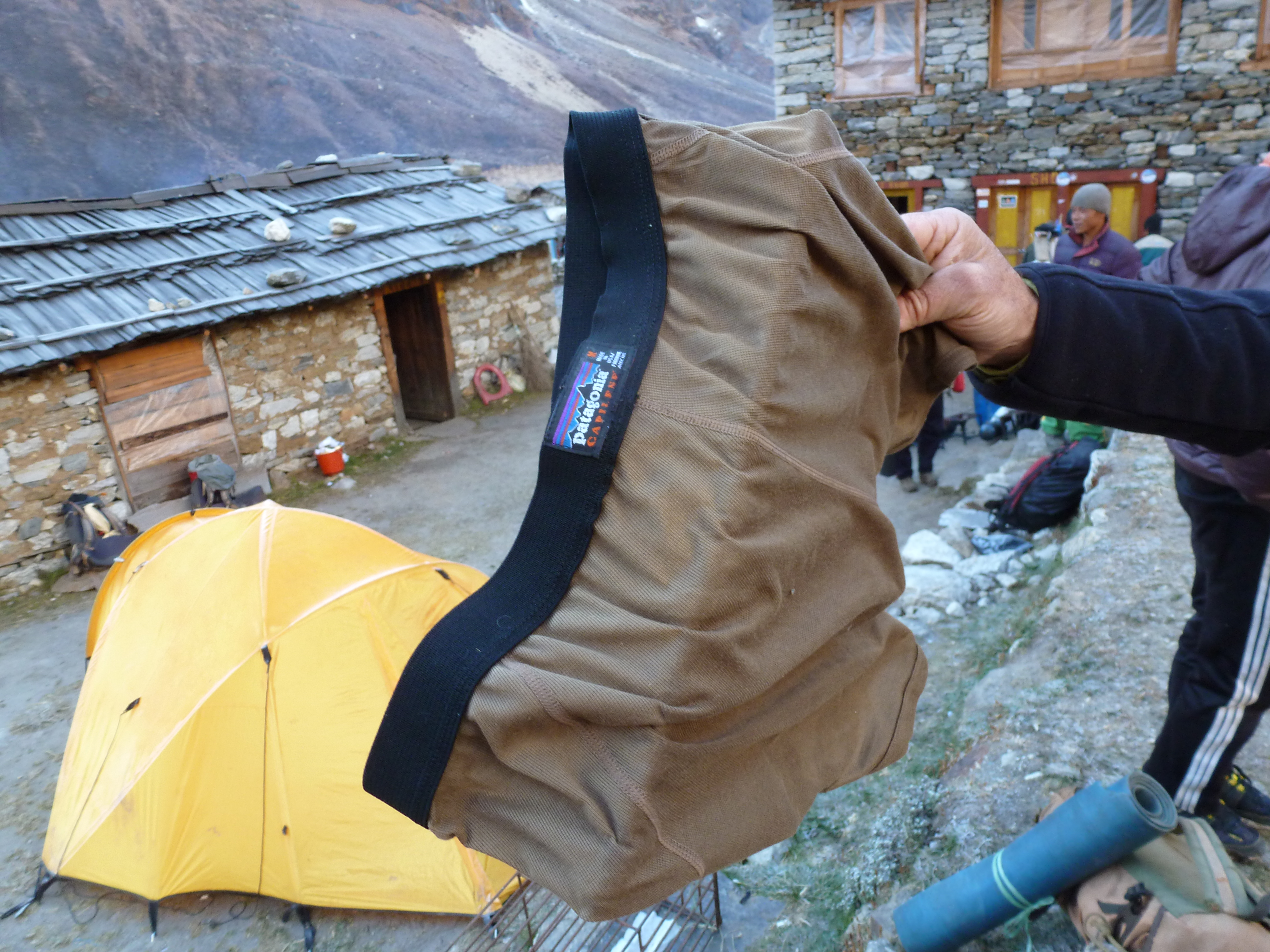
Life is great after 14 hours of deep sleep. The morning was clear though it would be a few hours before the sun would warm the valley as a subsidiary summit of Mera Peak shades Tangnag in the early hours of the day. After sickness, it felt wonderful to get a large basin of warm water, strip down, and wash all of the places that haven’t seen water in a few days. If you feel dirty enough, you don’t care about nudity or freezing temperatures. The wash water doubled as a basin for cleaning clothes, but the temperature was sufficiently low that the clean, wet clothing quickly froze solid on the line.
Avalanche
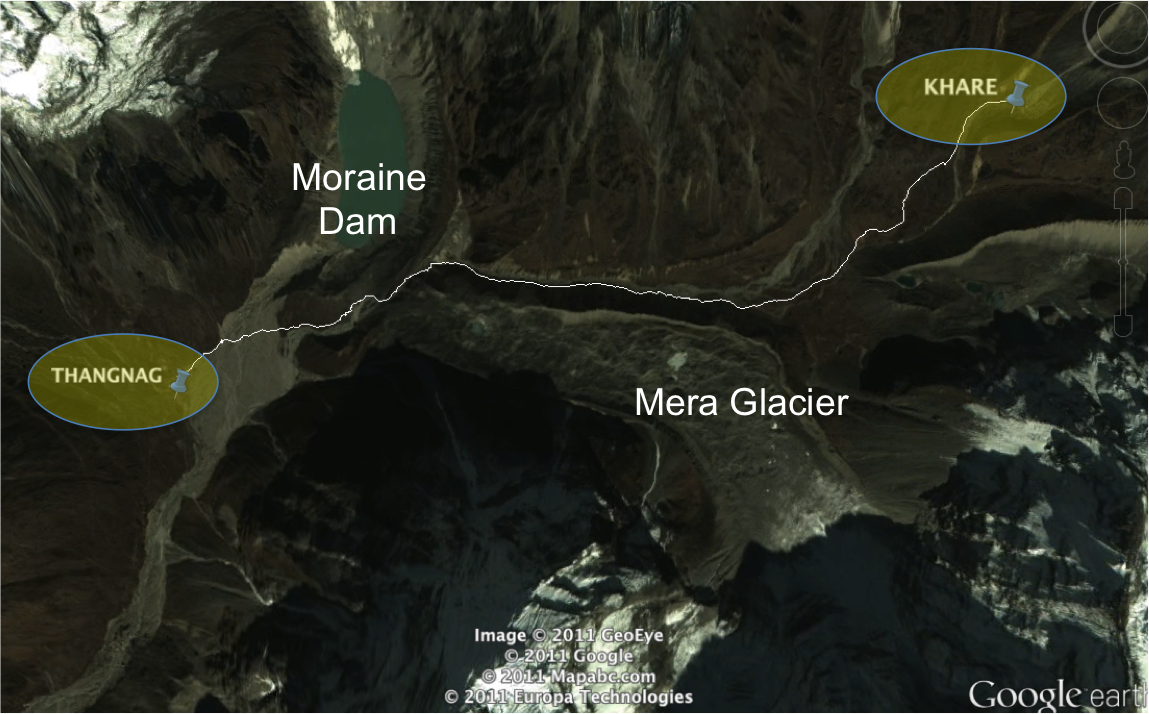
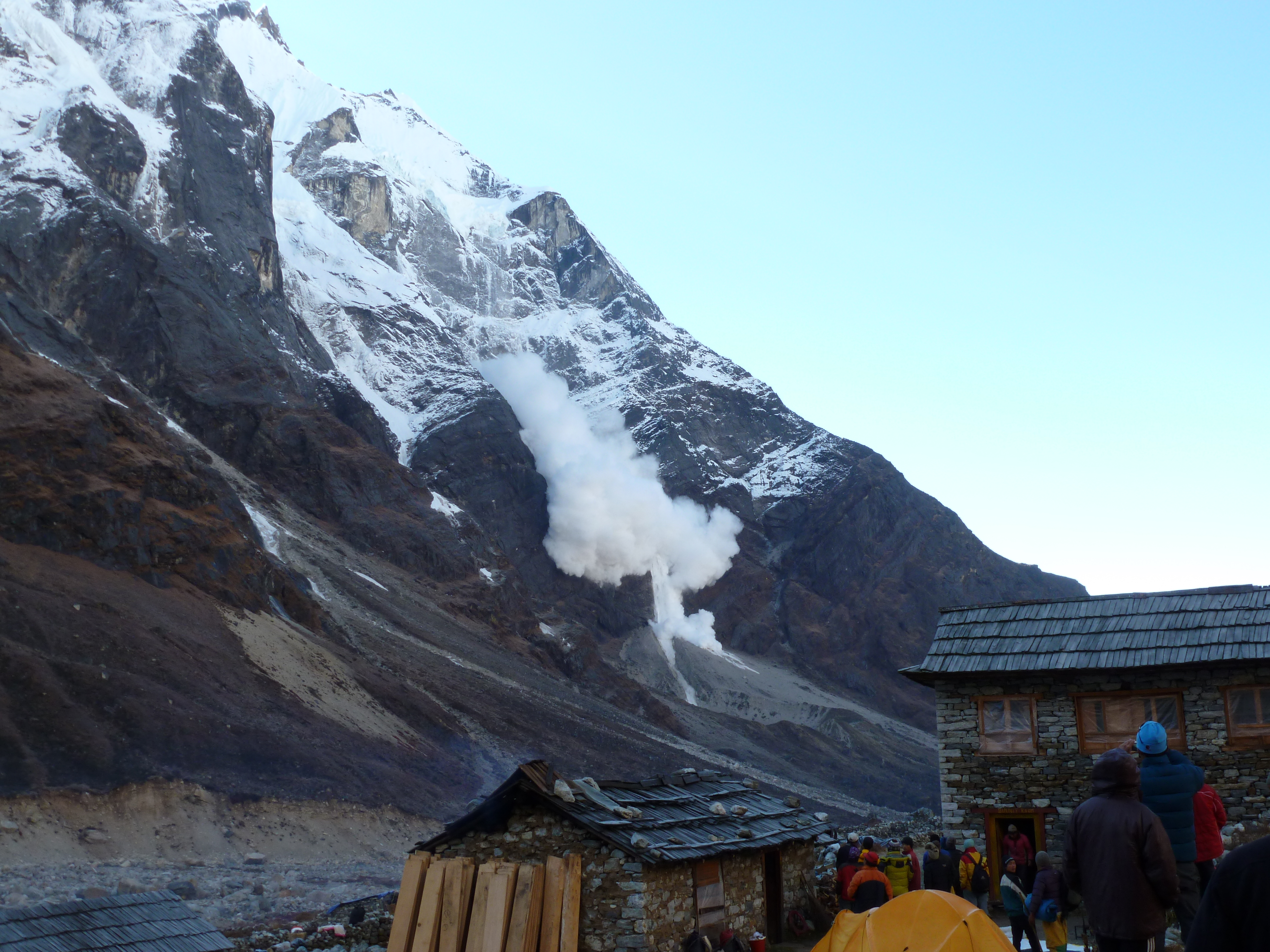 Our plan was to hike to Khare, our last established village before Base Camp, High Camp and Mera Peak. We were told it was a four to five hour hike and we planned a late start so that we would be well recuperated for what would be three very cold days. We planned initially to leave Tangnag at 12:00pm, but a refreshed Ursi and Chris’ much better health changed the plan and we left at 9:30am instead. Just before our departure, we were treated to an enormous avalanche on the high wall to our east, announcing itself with a big roar. Overhanging ice fell onto snow slopes below, building into an enormous, loud freight train of snow that only ended when it became a powdery spray at the Hinku Khola on the valley floor.
Drying out
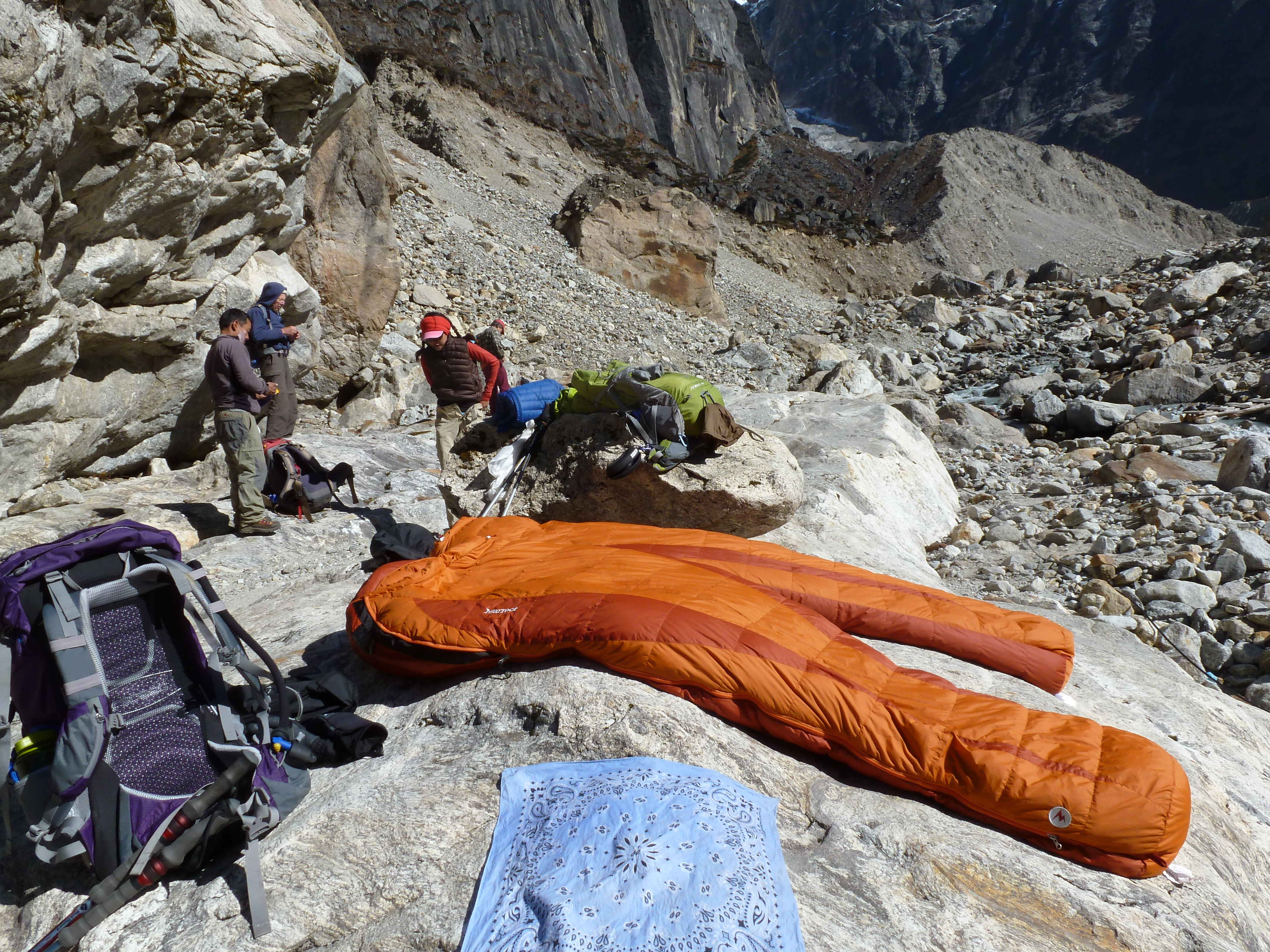 Once underway, our first stop was only a few hundred meters up the trail, where the sunshine wasn’t blocked by the enormous peak above Tangnag. We pulled out our wet sleeping bags and laid them on the rocks to dry for about 45 minutes. At this altitude, the sun is especially strong.
On to Khare
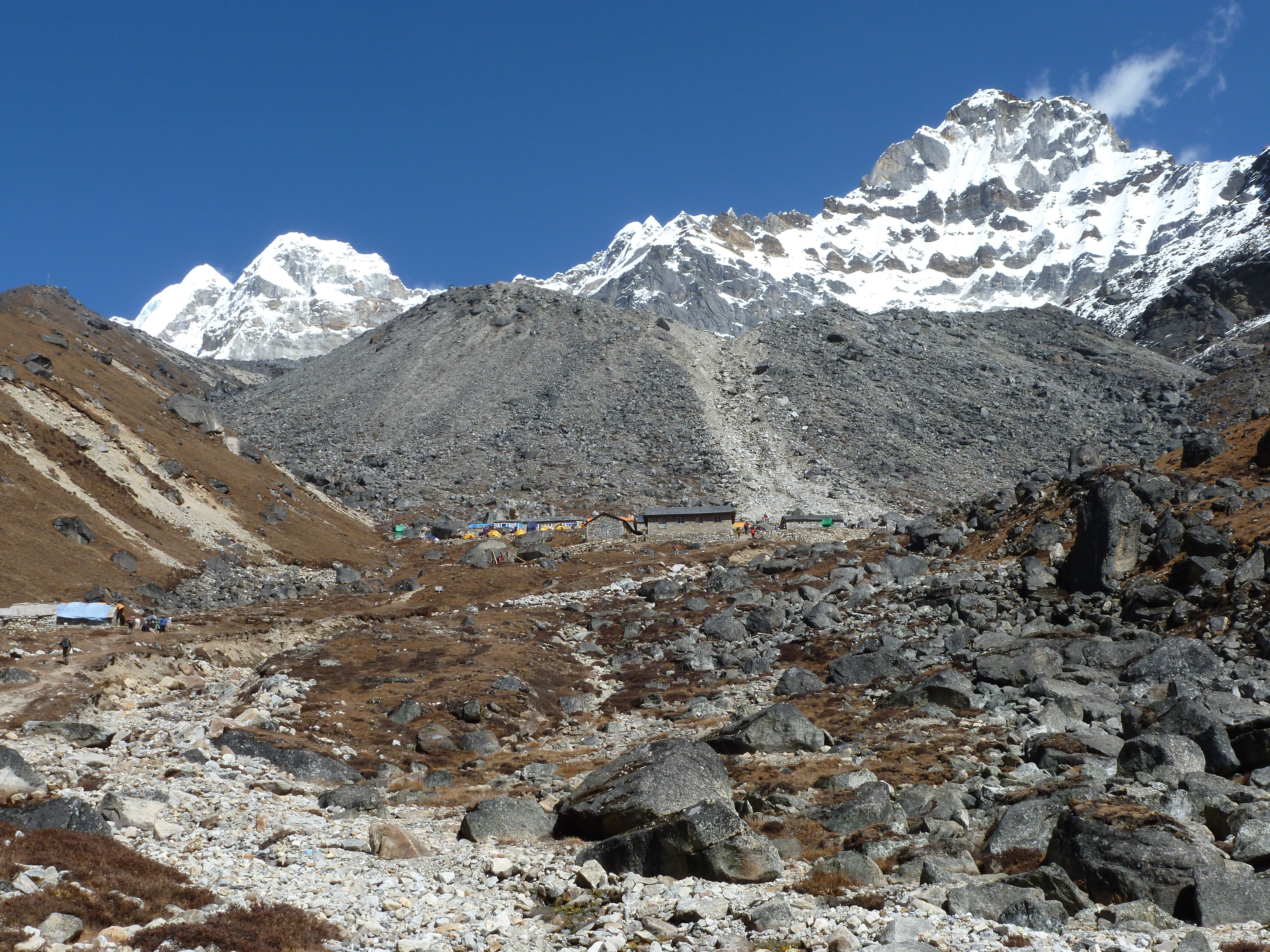
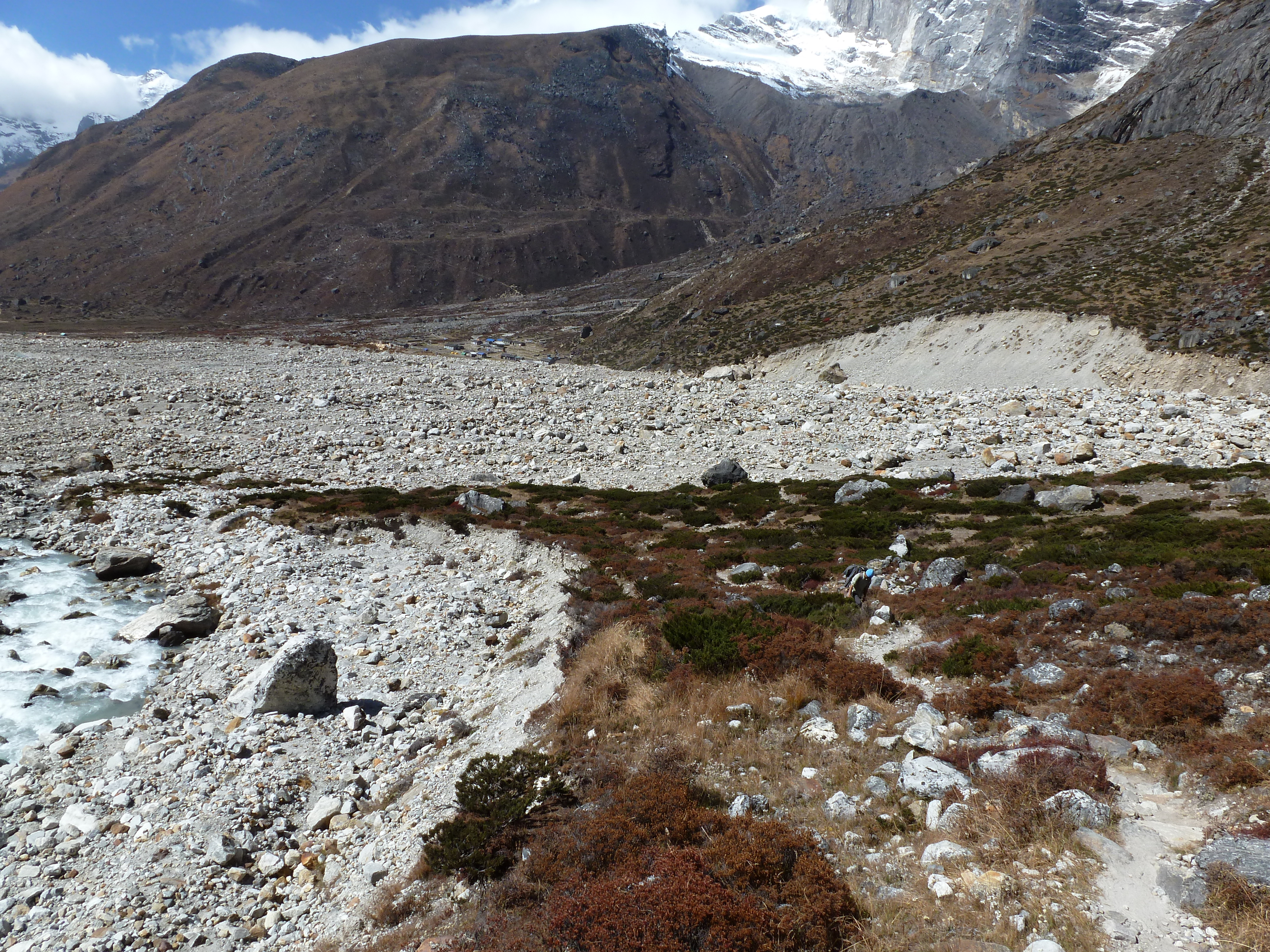 Once we achieved our goal and had light, fluffy bags again, we started up the steep ascent of the moraine slopes that would be our primary geography all day. Soon after cresting the first big rise, we could see Mera Peak for the first time, with its ice and snow ‘dome’ peak and enormous hanging glaciers ending in clear blue serac.
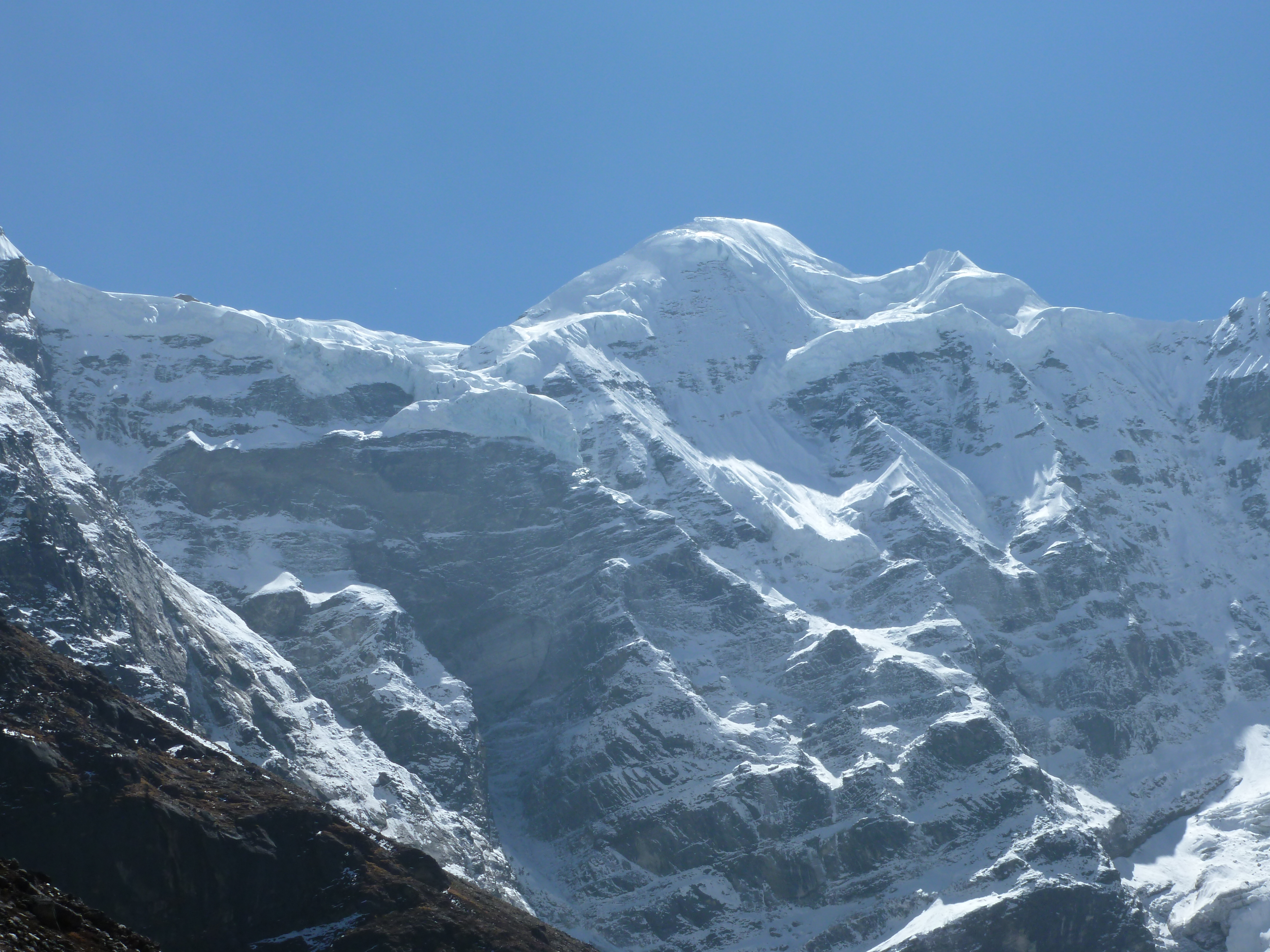 We passed through wet meadows, rocky slopes and then finally saw Khare on a hilltop ahead. It came faster than expected, due mostly to the incorrect altitude on our maps that listed Khare at 5100 m. Even as we came into the town, the “wel-come” sign declared that we were at 5000 m (16,404 ft), while our GPS and the barometric watches of Joel and Karlin both agreed at 4883 m (16,020 ft).
Reaching Khare
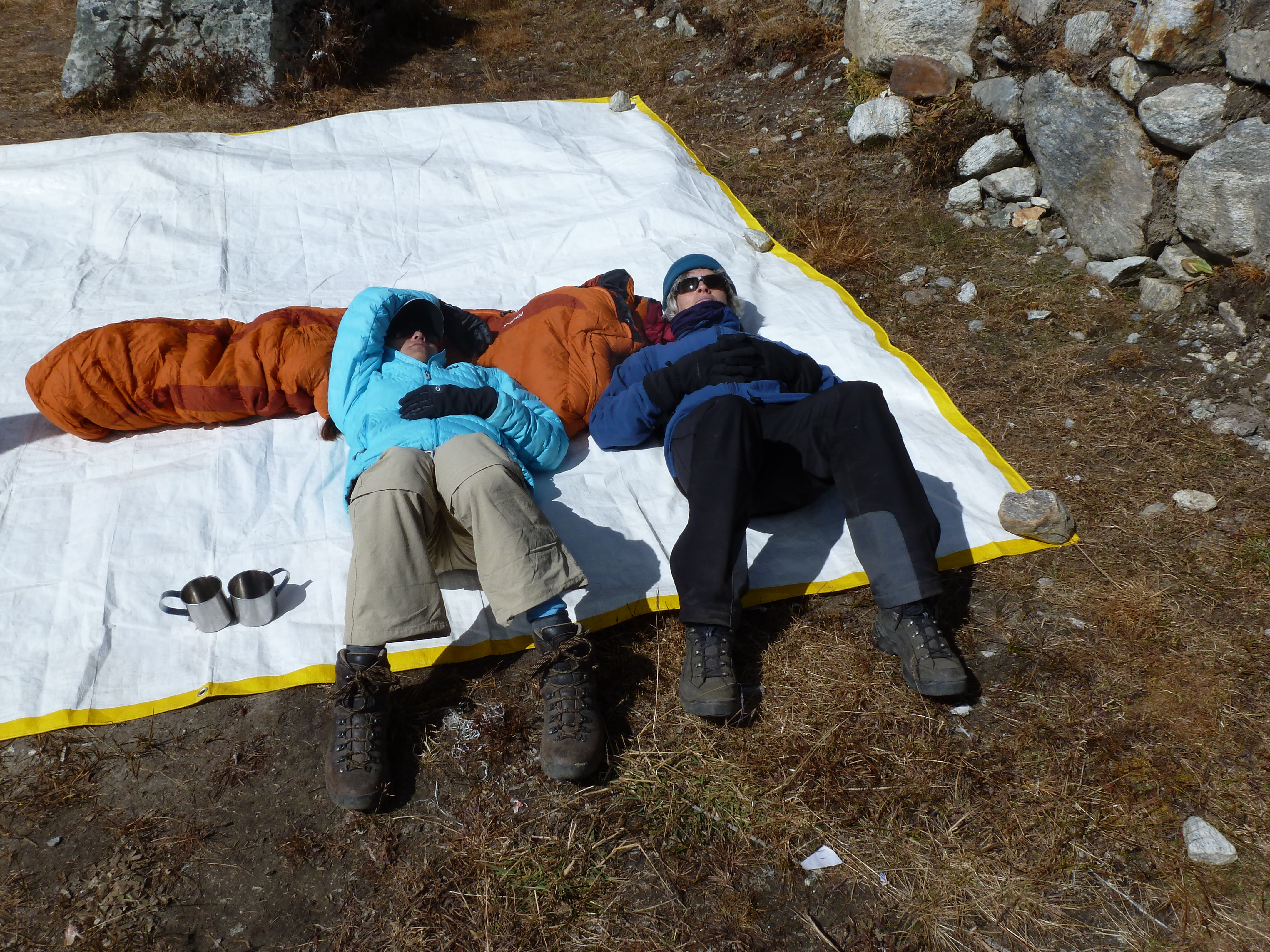 Once in Khare, hot orange juice was passed out and we collapsed on the tarp, soaking in the sun that defeated the cold wind only until mist rolled up the valley once again. The mist was a daily occurrence for the previous five days, rolling in each day at around 2pm and causing the temperatures to plunge very quickly.
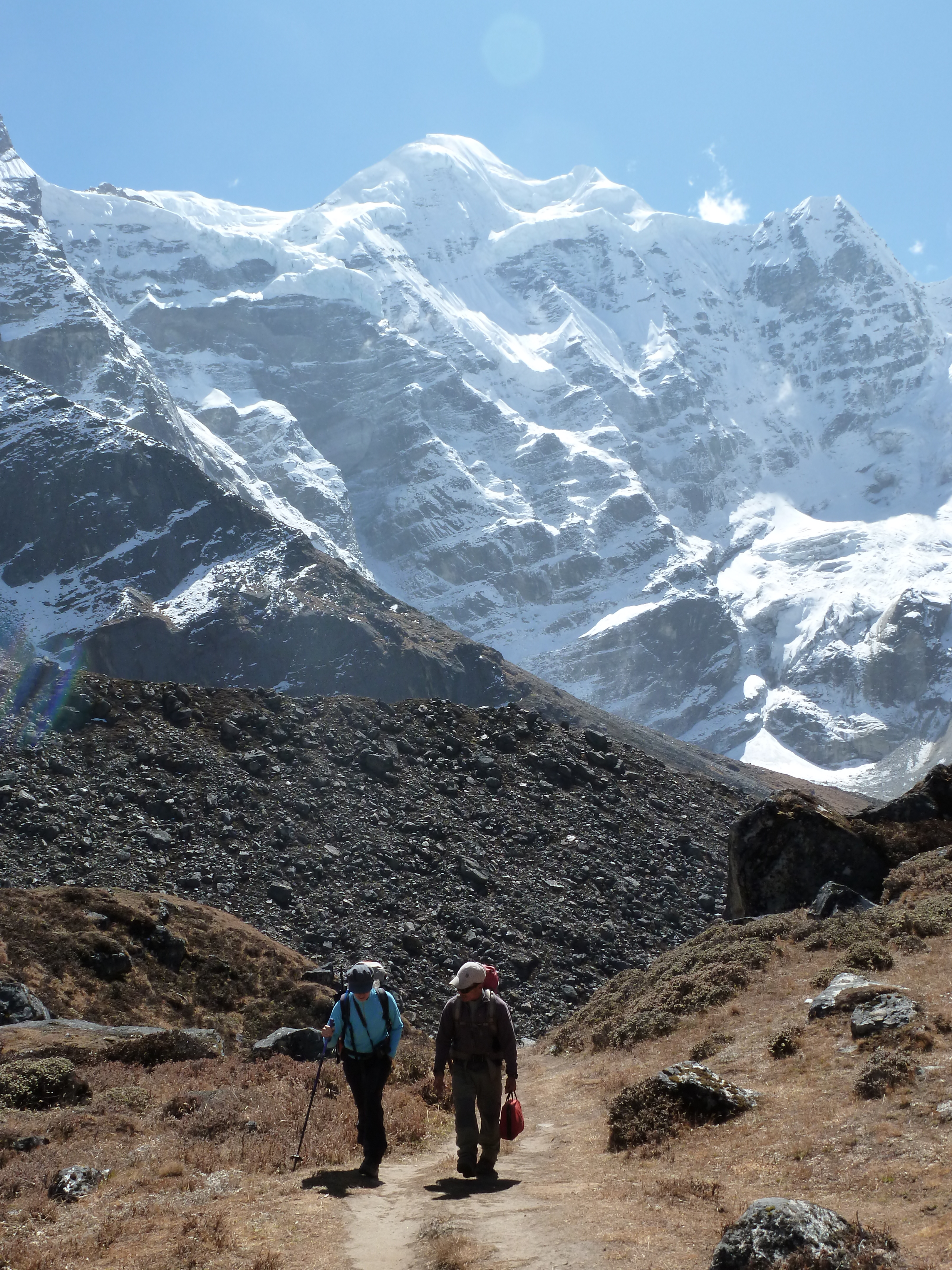 Khare was a true climbers camp as a crossroads for expeditions going over Mera La or climbing Mera Peak. This was also the last hospitable place for people coming from or headed in either direction. A lot of work was done to build hostels, carry in wood, prayer flags, food and drink. Nothing was there that wasn’t carried up steep slopes on porters’ backs other than rocks. The amount of labor that was involved in building and maintaining Khare was remarkable.
Getting ready
A great time to break out the checklist for the two days from Khare to High Camp to Mera Peak:
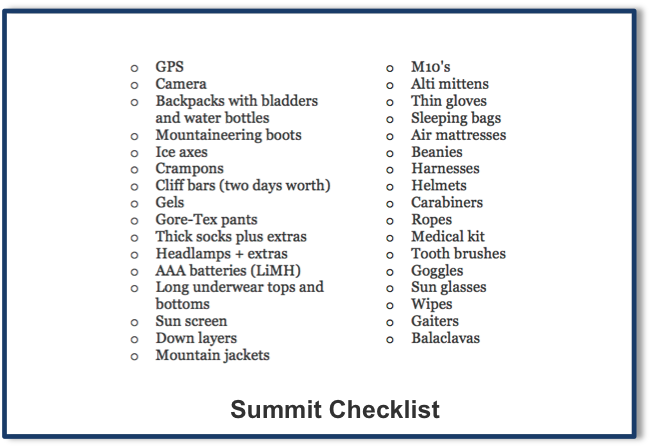
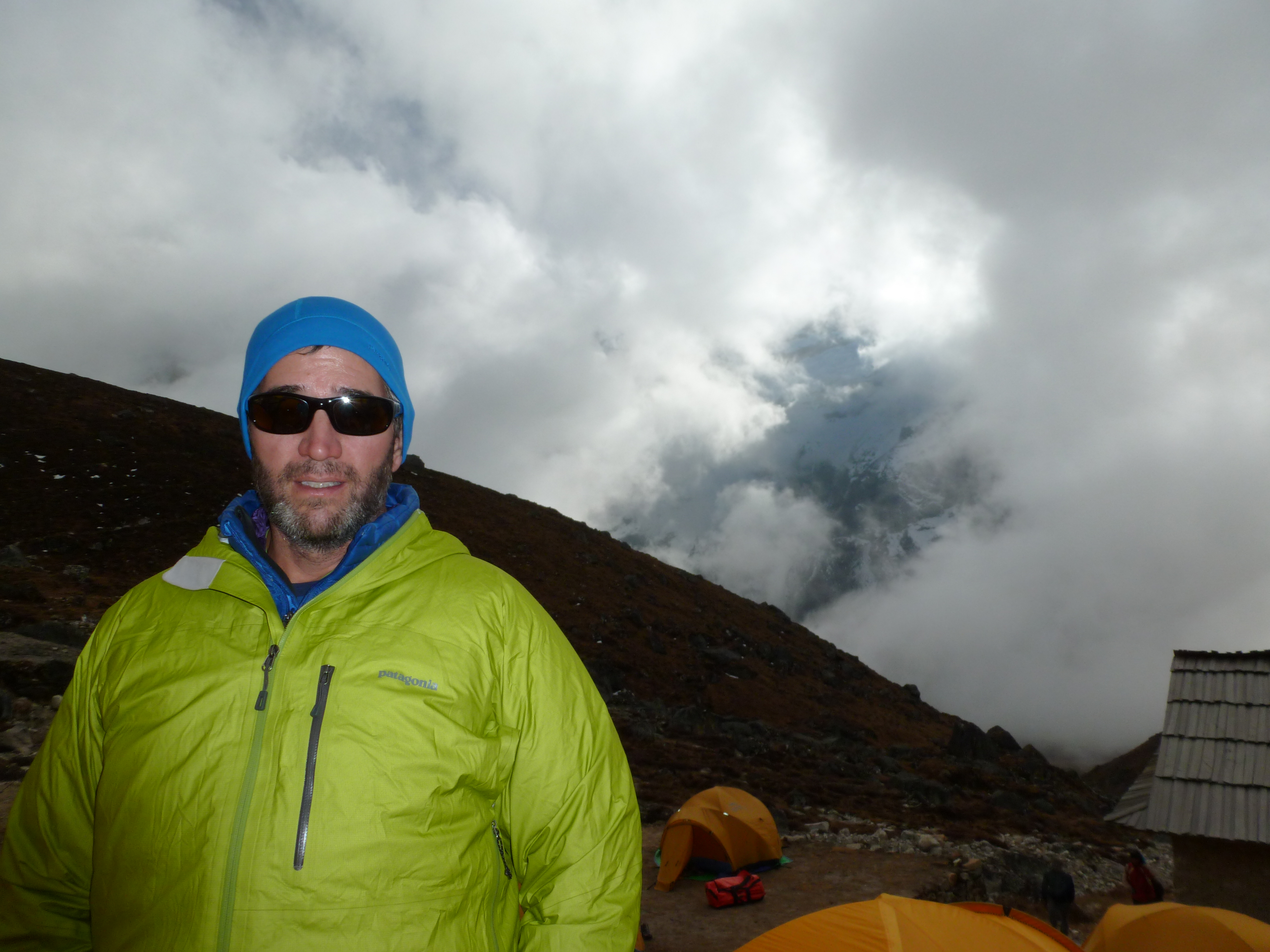 Tomorrow will be an acclimitization day, with a short hike up to a nearby hill with a chorten at its top. We originally planned to hike to base camp, including a glacier walk, but as with many things when trekking in Nepal, the plan changed.
As our load was now considerably lighter and we were as high as many porters would go (not everyone goes to High Camp and the Summit), the two Bika porters, Tsuje and Gopal, were thanked for their services, paid for their time, including a tip from us, and left Khare for the long walk back to Basa 8.
Up next: Mera Peak Expedition — Acclimatization day in Khare




 maximum adventure
Trackbacks/Pingbacks
[…] us ← Mera Peak Expedition — Tangnag to Khare […]
[…] The following is a continuation of Mera Peak Expedition — Khare to Mera High Camp. […]