

The following is a continuation of Mera Peak Expedition — Odare Camp to Kote.
Tuesday, 18 October
Morning was the coldest yet, with our clothing that was hanging on the line having frost streaks where the dew fell and then froze overnight. We slept with our sleeping bags zipped together for the first time and we found it warm and quite comfortable, except for Chris’ ground pad sliding out the side throughout the night. Once you become sleepy enough, you can sleep on almost anything and at some point I gave up the fight and slept soundly on the thinner ground mattress provided by Adventure Geo Treks.
Packing pros
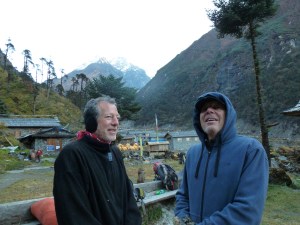
For one of the first times, we slept almost until the hot water arrived, but were able to catch up and have everything packed in a very short time. Each day we became faster at organizing and packing, with no conversation even necessary as each of us knew what was needed to be prepared. We were going up to 4100 m (13,451 ft) this day and it would be much colder, so knowing this, we kept an extra thermal layer in our day packs. We’ve learned the hard way that sometimes the porter carrying our bags is the last to arrive, forcing us to wait for any layers of clothing or equipment that we left in our large duffels. At the end of a day, that can seem like forever.

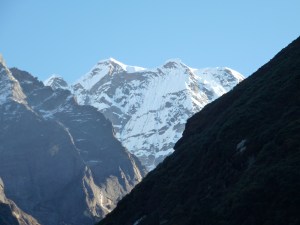
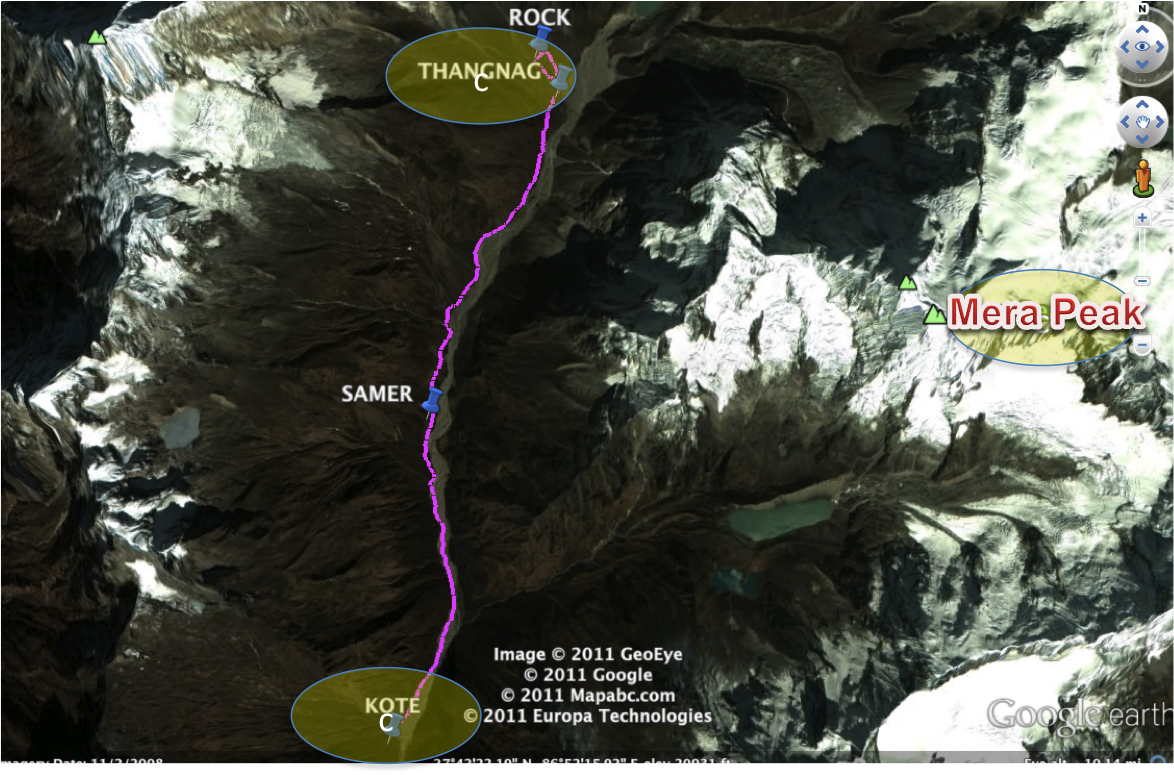
The morning sky was clear and the peaks of Mera were lit up by the sun that hadn’t yet reached the narrow Hinku River Valley. Our camp was on the moraine left by the retreating glacier that departed this valley many years ago. The variety of large and small boulders, all covered with a thick layer of moss, the prayer flags of Khote, and the fringe of pine on the sides of the valley combined to make this appear an idyllic alpine place and provided a reminder of how high we really were. We started walking at 7:30am, per the usual schedule and followed along the west bank of the river, periodically crossing streams coming in from the mountains to our left.
High Himalaya
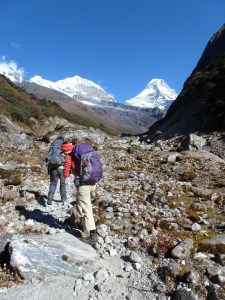
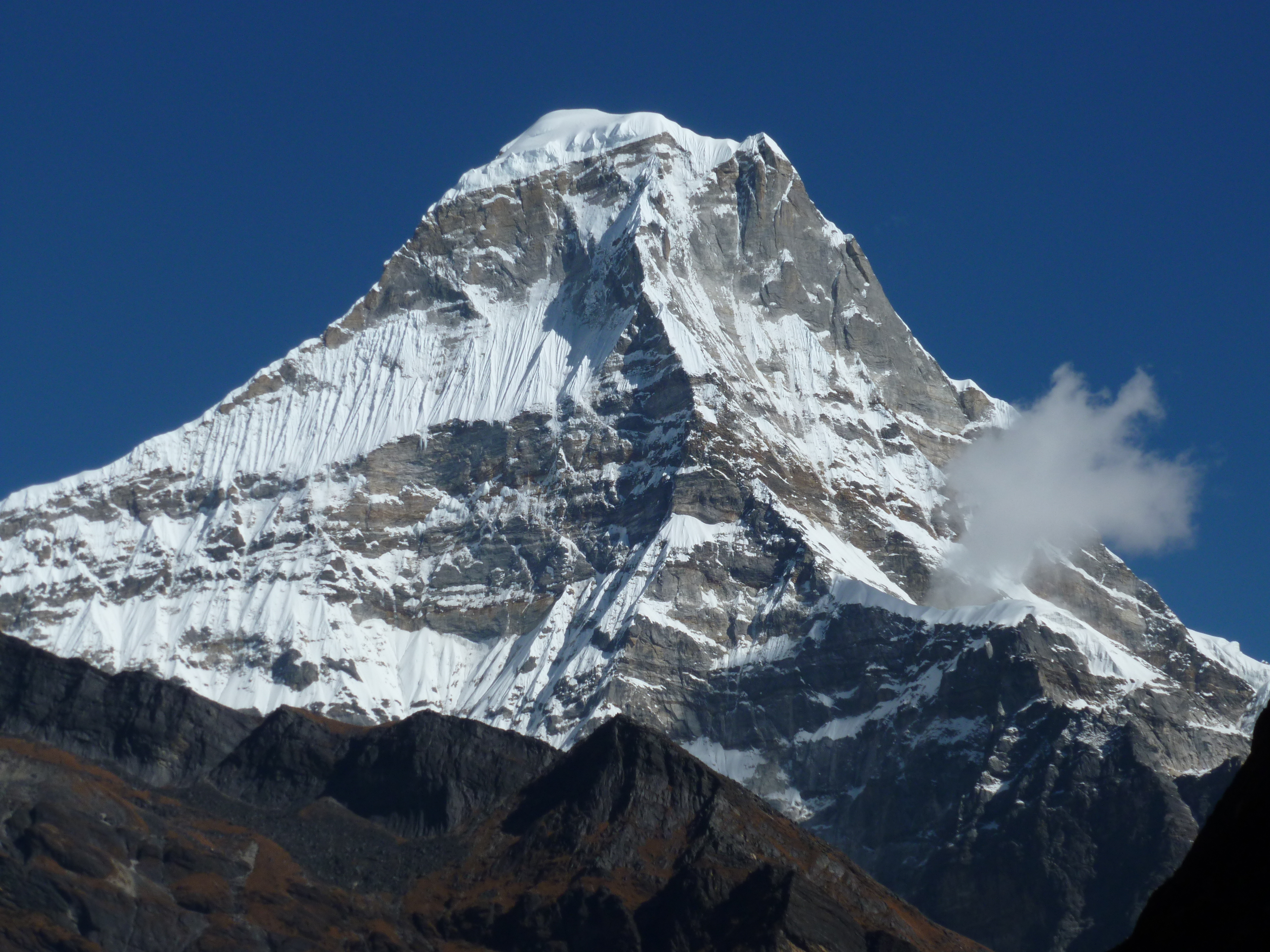
Soon after leaving Khote, we were treated to an excellent view of Tangtse, a nearly perfectly pyramid-shaped peak that was dead center in the direction we were headed. Most of the 6770 m (22,211 ft) pyramid was snow and ice covered with hanging serac at the base. As we climbed higher, we were able to see beyond the largest peak to our left, Kusum Khangkaru, at 6370 m (20,899 ft) and had an excellent view of the Lungsamba and Tangnag Glaciers descending from the peak. The Hinku River gorge was very wide at this point and steep-walled, with the trail at times at the very edge of a significant drop to the river below.
Sabo Lake disaster
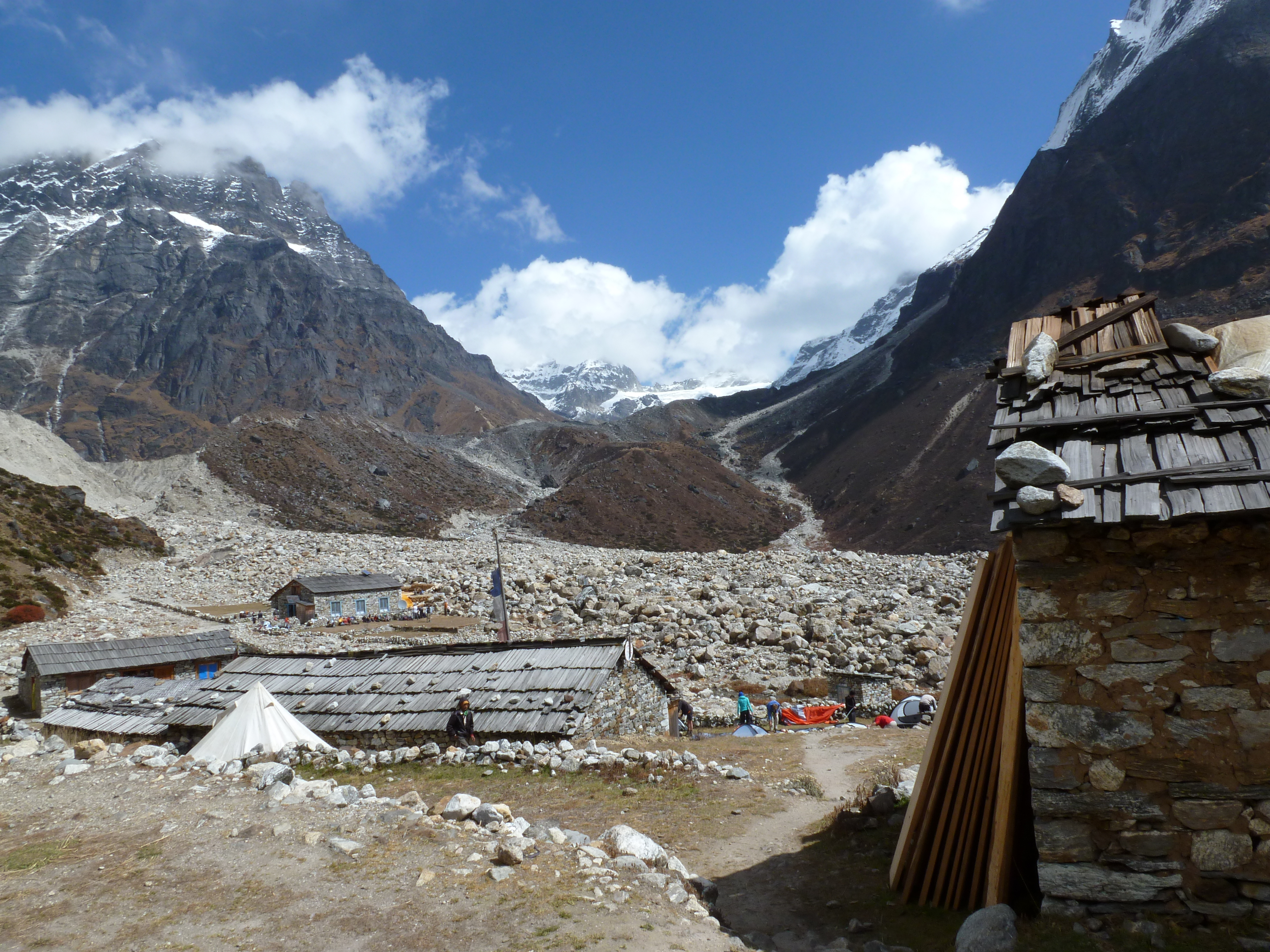 Just before arriving at Tangnag itself, Buddi told us about the Sabo Tsho (Sabo Lake), a lake held back by a moraine that burst in the Summer of 1997, causing a wall of water to roar down the Hinku Valley, washing out the village of Tangnag completely and killing everyone in the village and causing landslides far down the valley as the wall scoured the sides of the river. Fortunately, the lake is much smaller now and well-contained by the existing moraine.
Tangnag
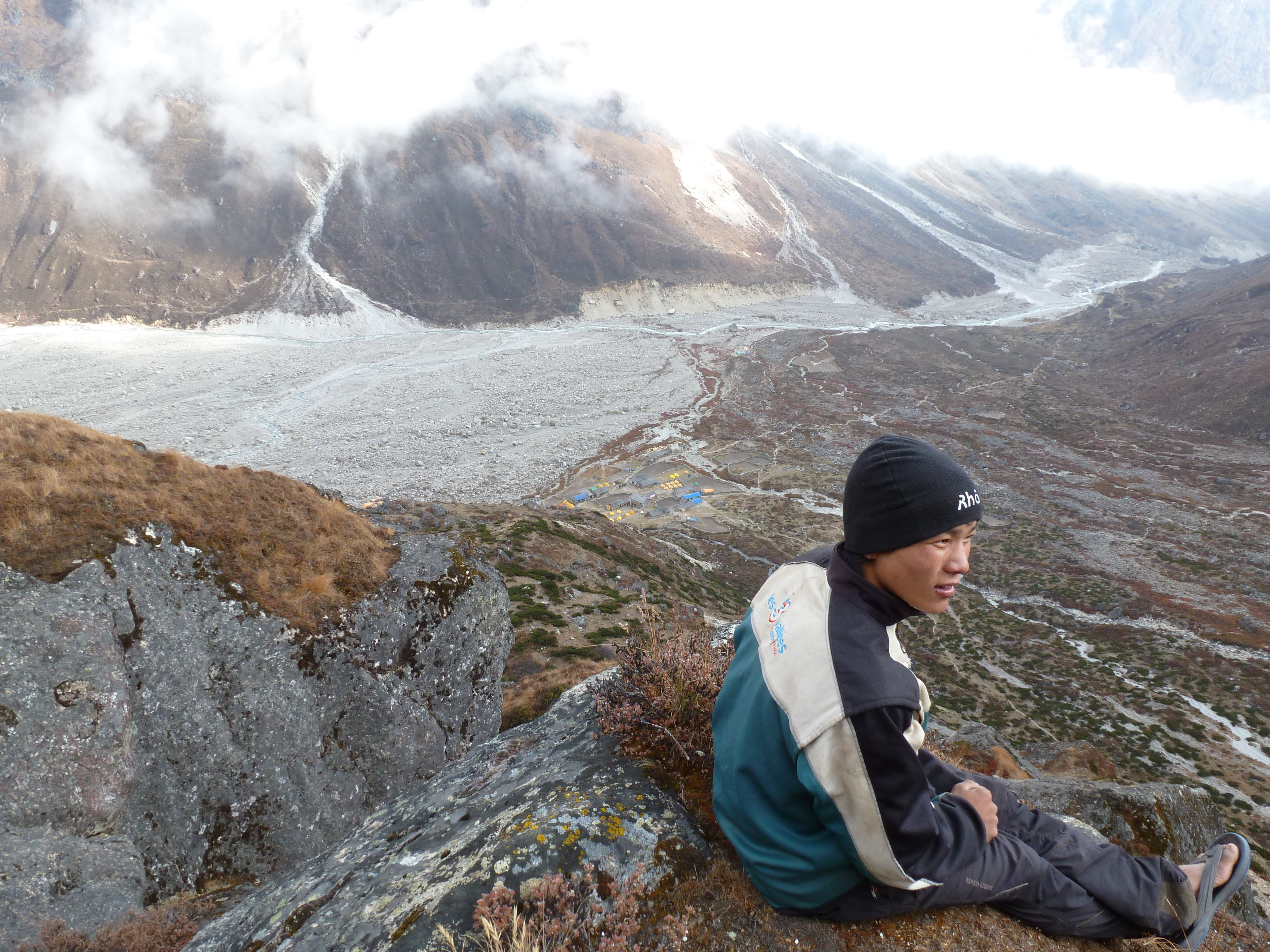 We arrived in Tangnag at 4300 m (14,108 ft) at 11:30am. It had been a short time trekking from Khote, but we gained nearly 500 m. The village was a seasonal site existing mainly to support trekkers hiking over the Mera La and to Mera Peak, to the east and high above the village. There were about ten permanent buildings and there were no longer glass windows, as every opening on the buildings was covered by plastic instead. We used the opportunity to rest and have lunch in one of the buildings while our tents were being set up on the terraces outsides. After lunch and as a way to acclimatize better, we decided to take a hike up the hill with just water bottles. We climbed to 4575 m (15,101 ft) before turning around and felt quite proud of ourselves until we met up with Karlin, who had left earlier and climbed to 5000 m (16,404 ft).
Brief illness
Not longer after our return, Chris began to get a headache and felt nausea. The next two hours were a blur as he ended up curled up in a ball in his sleeping bag, his hat off as it made his head hurt even more. He threw up a few times but after falling asleep for what had to be about ten minutes, he awoke with a clear head and strong stomach. We’re not sure if we’ll ever know what laid him low, but it was intense but relatively short and altitude sickness doesn’t work that way.
Up next: Mera Peak Expedition — Tangnag to Khare




 maximum adventure
Trackbacks/Pingbacks
[…] inspirations ← My Review of Black Diamond Storm Headlamp Mera Peak Expedition — Kote to Tangnag → […]
[…] The following is a continuation of Mera Peak Expedition — Kote to Tangnag. […]