

The following is a continuation of Mera Peak Expedition — Spending a day in paradise
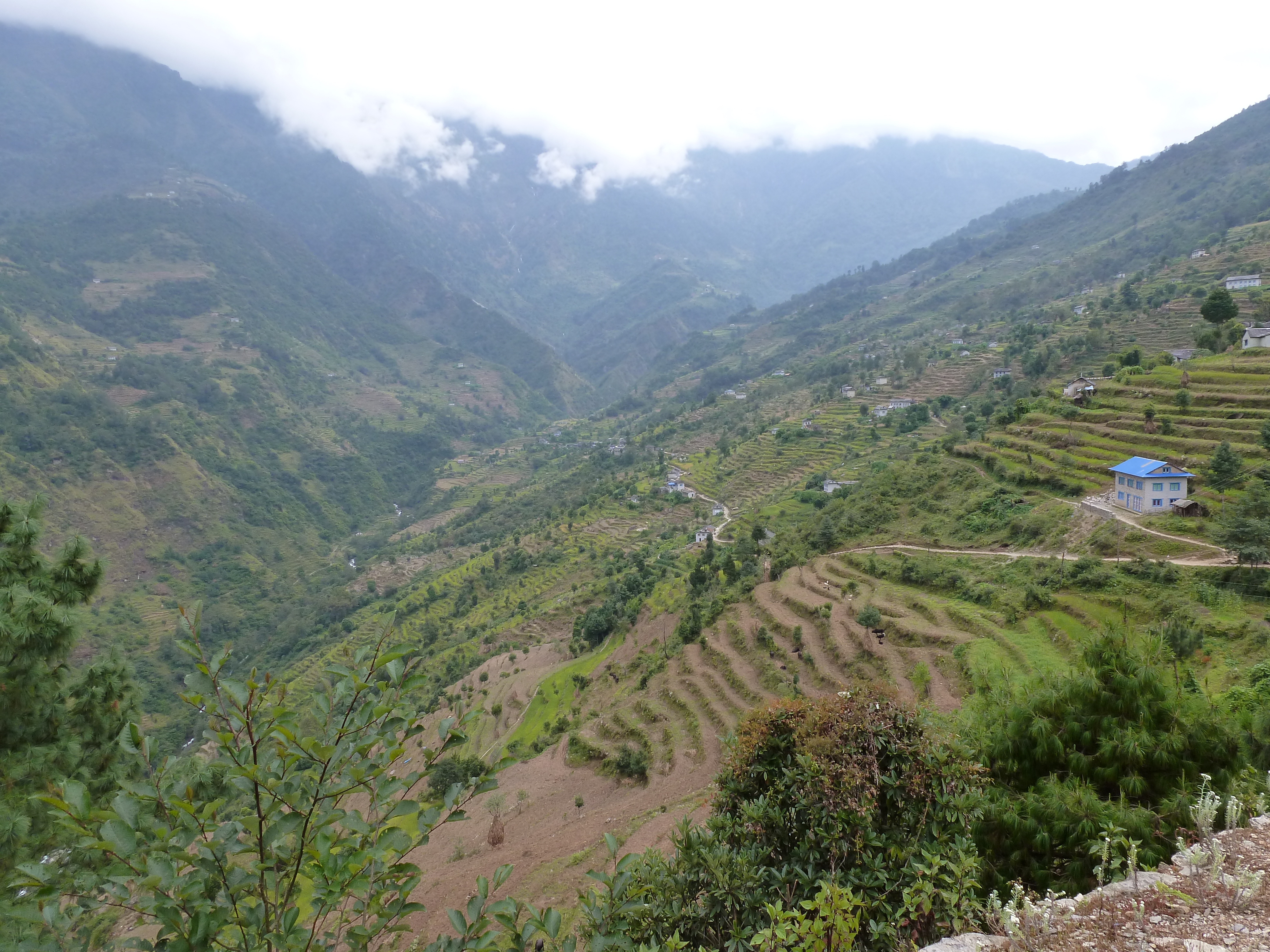
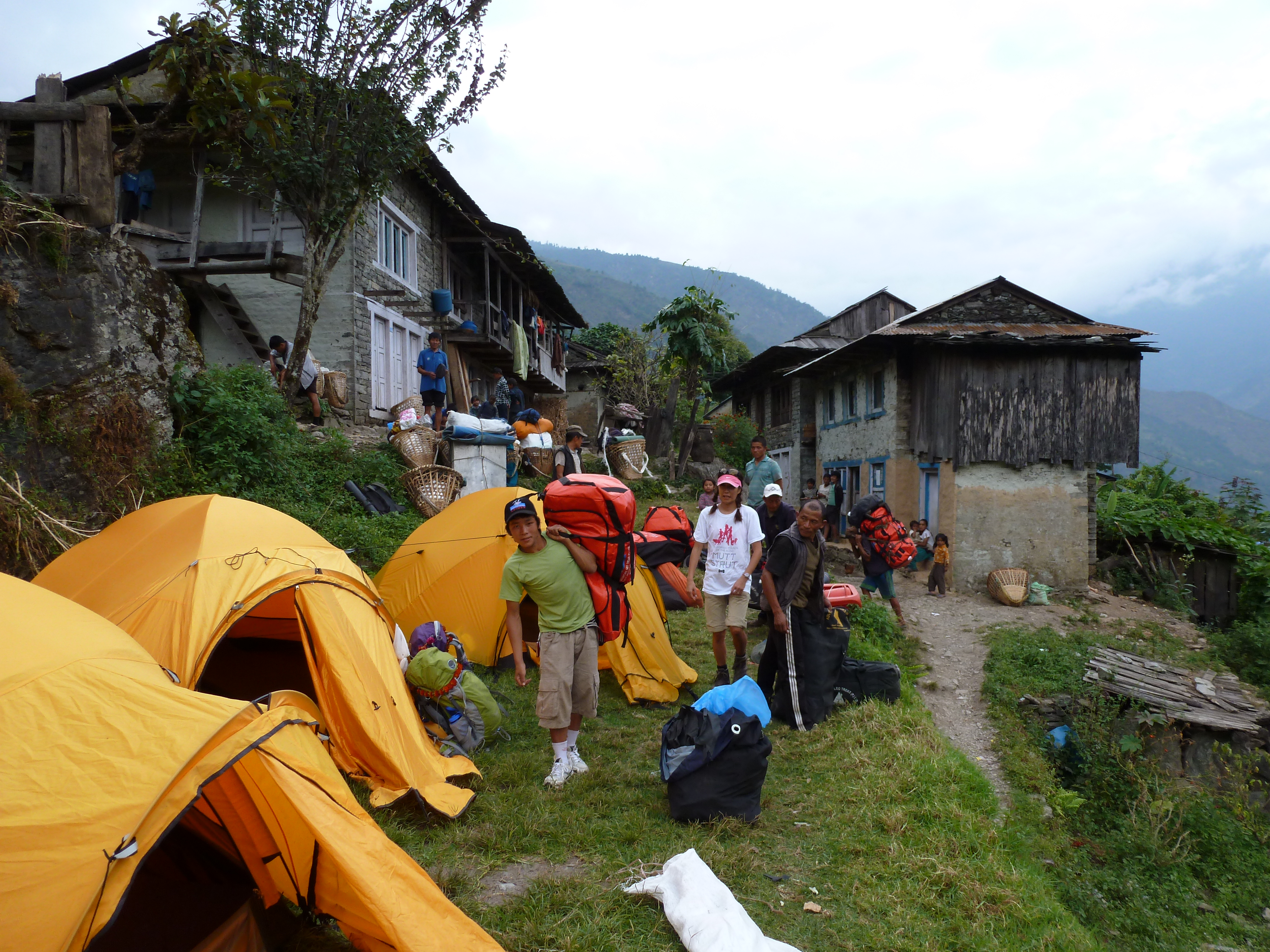 Adheri, meaning “dark place” was very appropriately named. It sits high on the same steep mountainside that Basa occupies, but is situated in a way that the sun comes up very late over the mountain to the east and sets very early behind the mountain to the west. It was mostly dark well before 6pm and wasn’t sunny when we started trekking again at 7:30am. We were still very refreshed from Basa, so it didn’t really affect us.
We were a curiosity to the children here and it was distinctly not as friendly as Basa. After all, no one in our group brought clean water, electricty, smokelessstoves or computers here. We were able to wash all of our clothes in the village cistern and continue our trek with clean and dry clothes, a luxury we would not have in a few days when we reach the colder, higher altitudes.
Friday, October 14
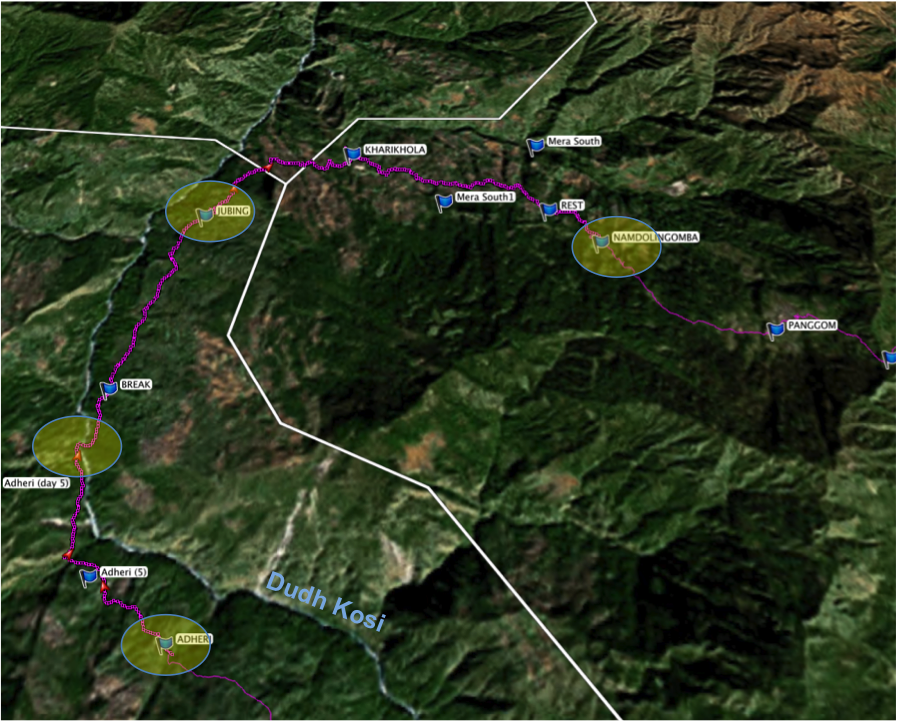
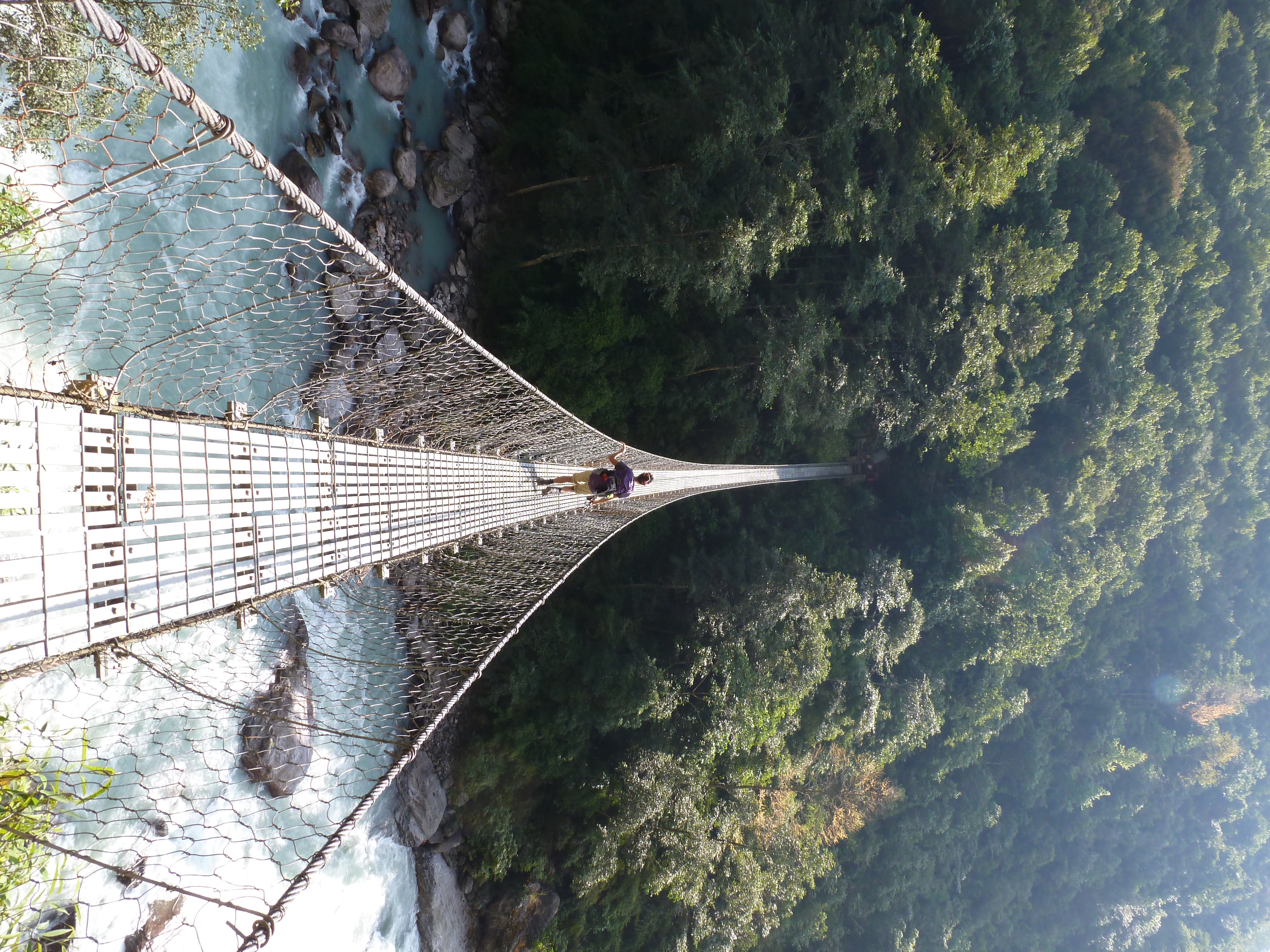 We hiked for a little more than an hour and over several very rough bridges before we reached the level of the Dudh Khosi and crossed our first suspension bridge of the trek. Strung about fifty meters above the river, it was about fifty meters in length and made of very trustworthy steel and cement. Once across, we were on the morning shade side of the valley and enjoyed cooler temperatures but the same high humidity that had been the case since our landing in Phaplu. It was a very welcome relief after being in the direct sun most of morning after leaving Adheri.
No tomorrow
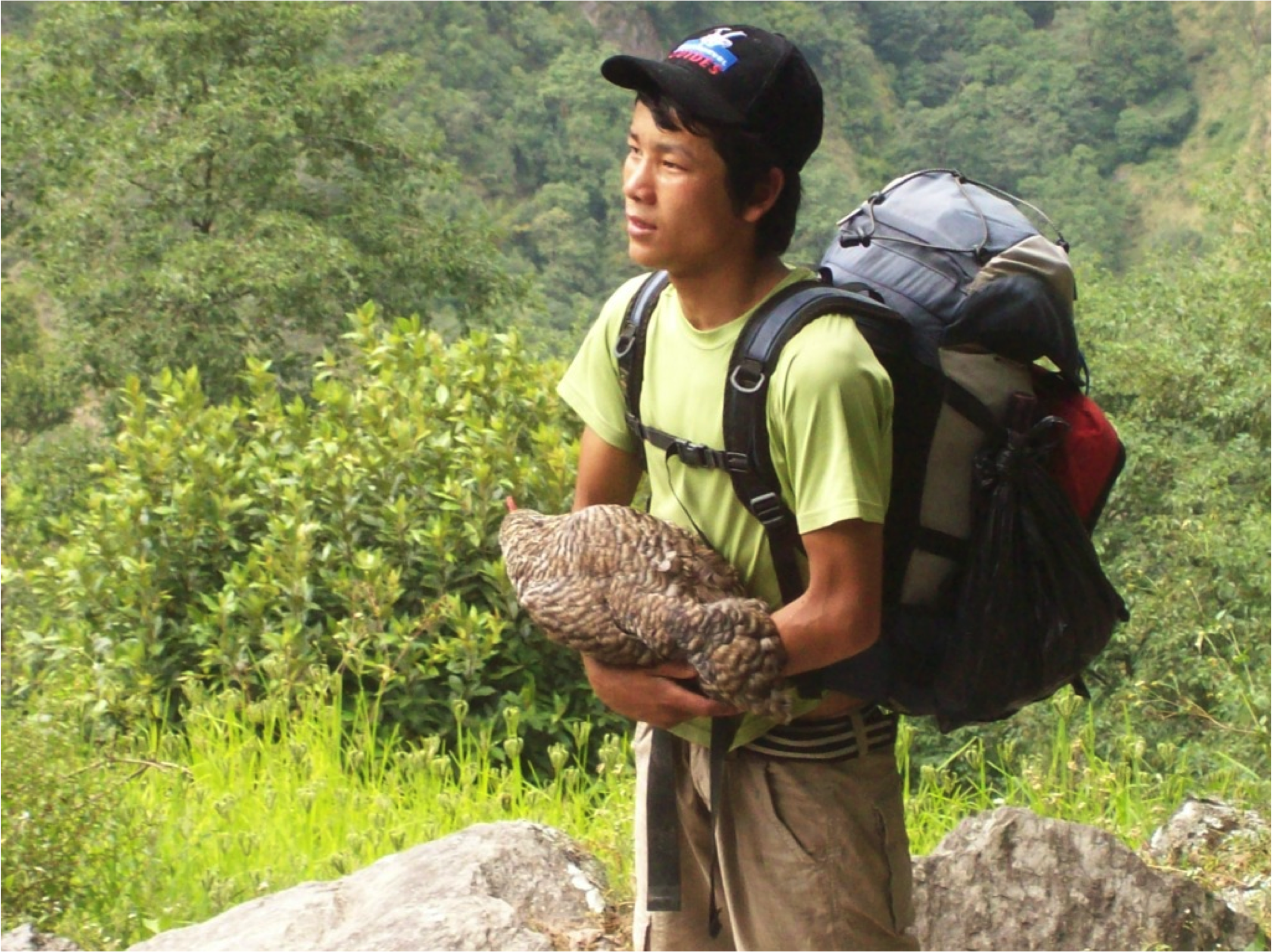 We realized at one of our first stops that Shuvas Rai, our 19-year-old assistant guide and DB’s brother, was carrying a chicken that had its legs bound. I asked if the rooster had a name, and he replied with the Nepali words that he translated as, “Dark Love.” Not sure how that related to the chicken in any way and knowing that it would be tonight’s dinner, we renamed the rooster, “Bholi Hudaina” which translates to “no tomorrow.”
 Our lunch was made in Jubing, a village on the north side of the Dudh Khosi at 1653 m, which was now running more easterly than before. Our goal for the day was a monastery near the top of the mountain, and we are told that was the last day of hiking in damp and warm air. We met our first trekkers since Kathmandu as well, and they were two Italians staying in tea houses and traveling with no guides or porters.
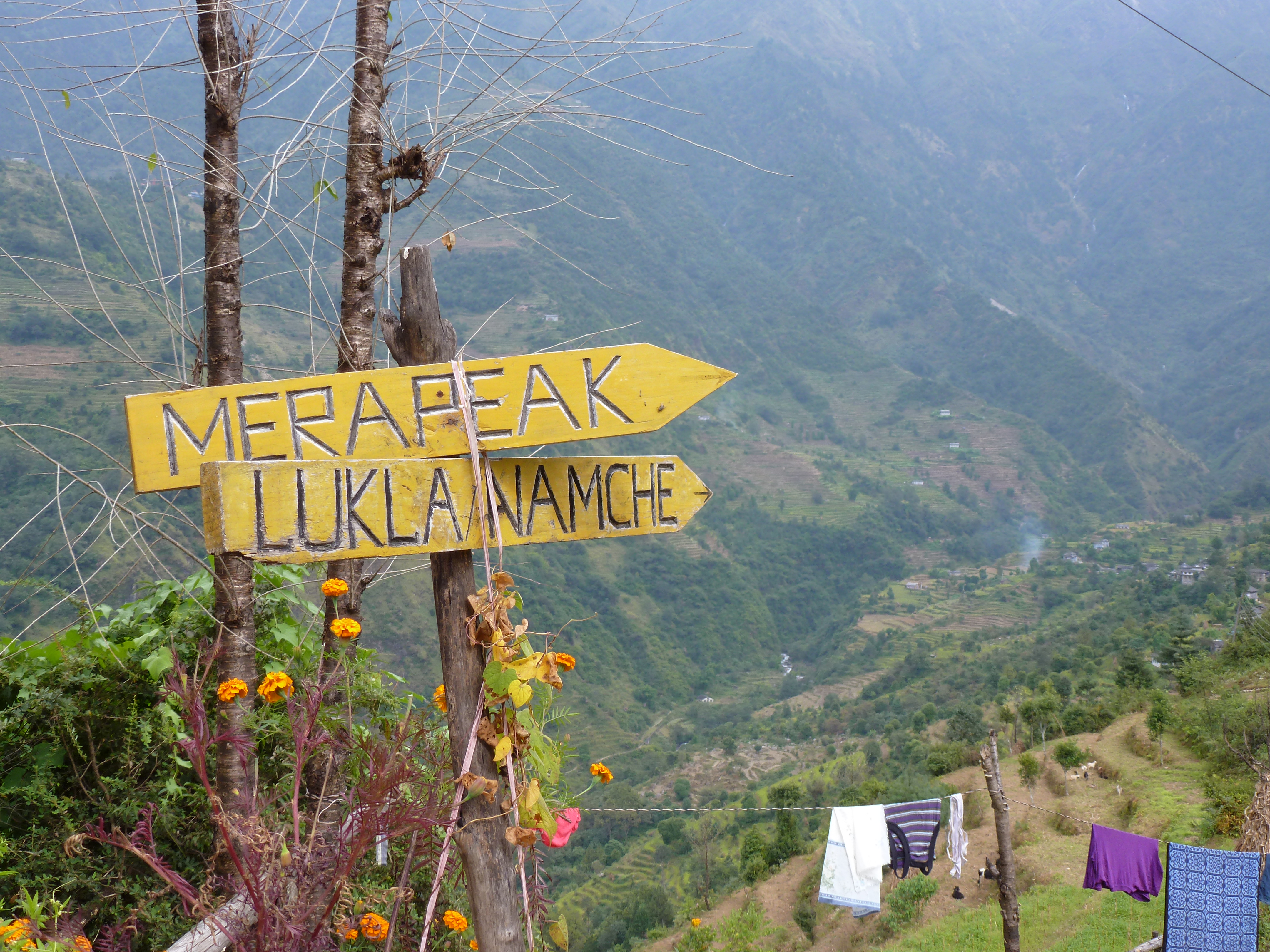
Mera/Lukla Junction
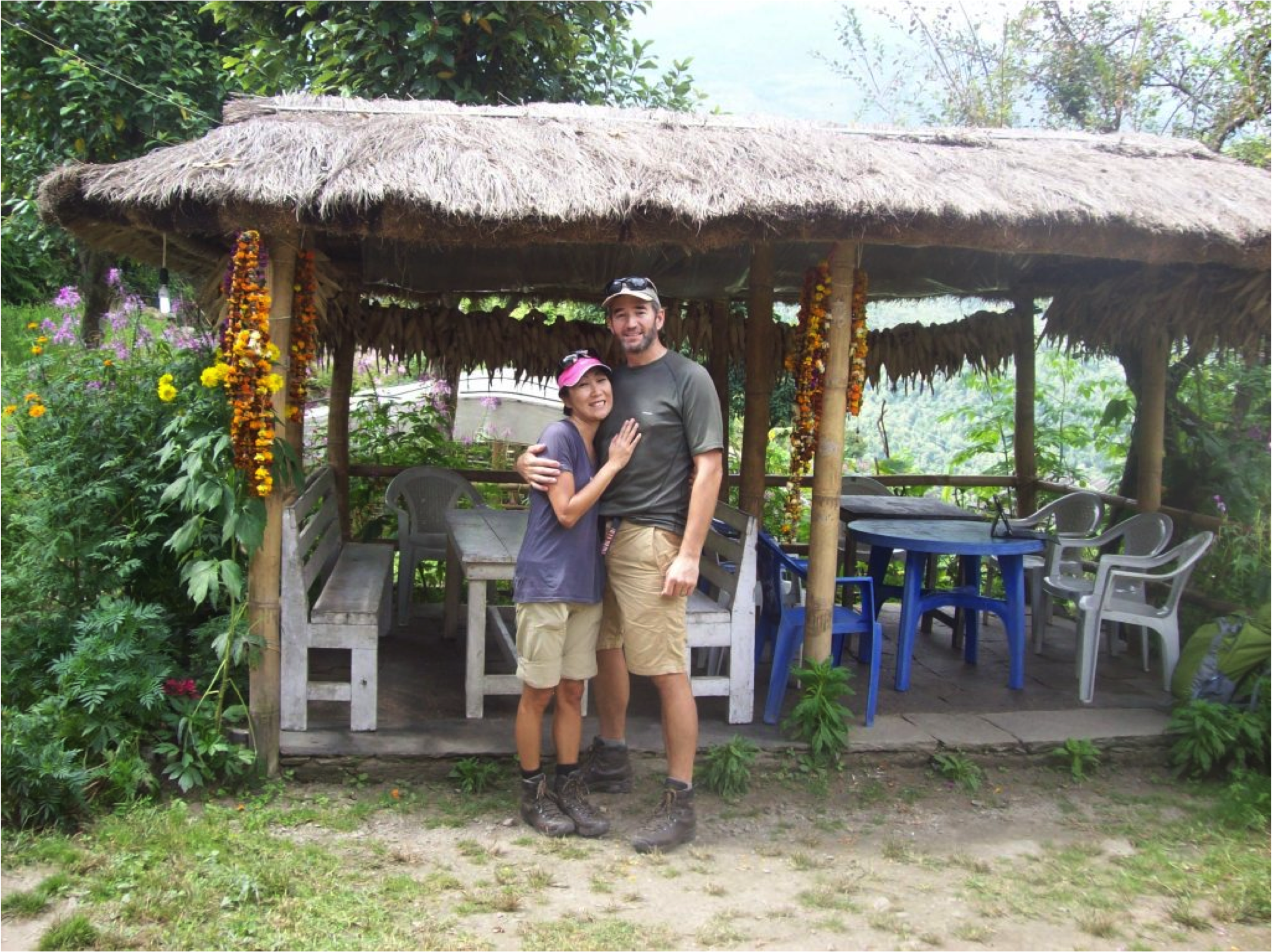
 We fell into an easy conversation with the two, who were from near Turin and spoke excellent English. It was great that they were self-supported, but Jeanne and I distinctly prefer camping treks to tea houses, as they are more self-sufficient, personal and can cover areas where there are no tea houses. We ate in a nicely shaded bamboo gazebo with corn drying around its roofline and were able to dry our clothes completely in the afternoon sun. The village of Jubing was centered around a two-story white building with the standard “Gorkhali Lodge Restaurant” sign above the main door meaning that it was founded by a former Ghurka soldier, the famous Nepali fighters who have served in the British Army since their India campaigns.
Up the hill
 From Jubing, we climbed steadily through pine forests and millet fields until we reached the very top of the hill and the stupa that we saw from very far below. It was the site of the Pema Namding Monestary just above the trail junction town of Kharikhola at 2077 m. From this village, the trail forked to the left toward Lukla and Namche Bazaar and to the right, our direction, toward the Hinku Valley and Mera Peak. There were a quite a few trekkers here, and all were headed to the left fork, which was the original route to Mt Everest Base Camp. It was exciting to think we were walking in the footsteps of Sir Edmund Hillary and Tenzing Norgay, first to climb Mt Everest in 1953 by taking this very route. Since those days, most people headed for Everest fly into the city of Lukla and begin their journey there. An alternative to flying, the standard route is by car or bus to Jiri, and then overland to Lukla and then above to the tallest mountain in the world. We rested on the hilltop and waited for our porters who were struggling up the enormous hill that we had just climbed.
Leaving the Dudh Kosi
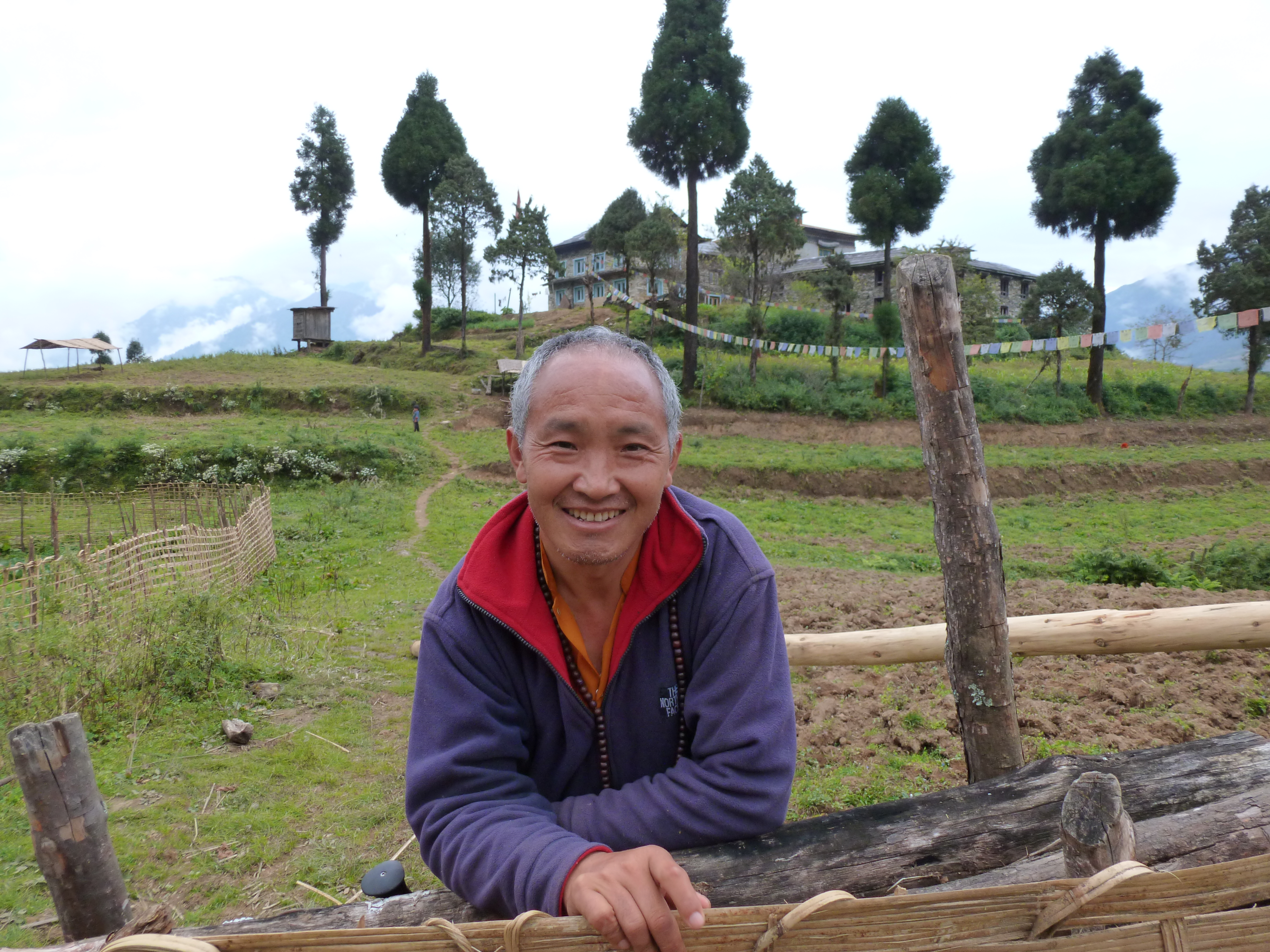
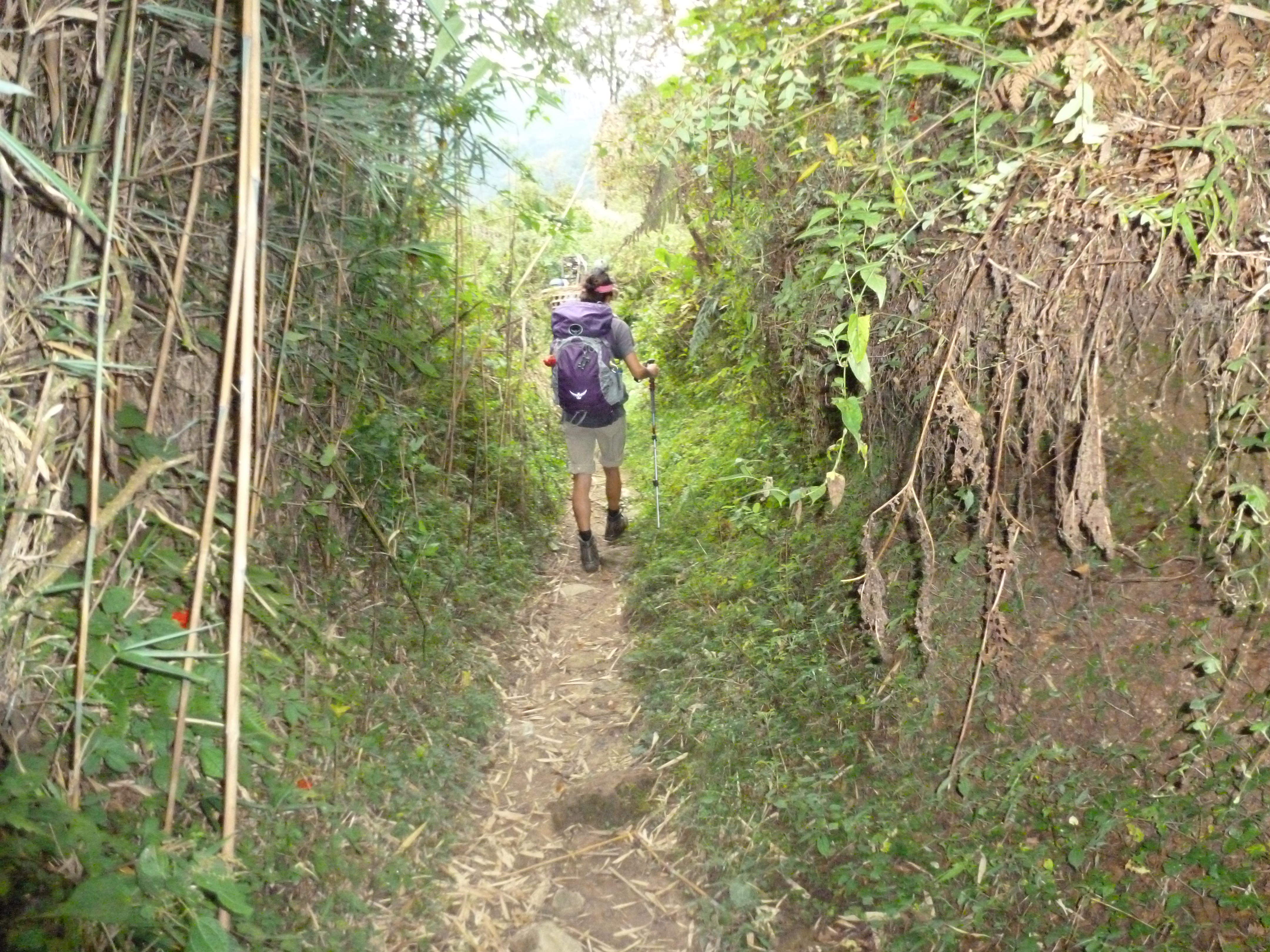 From Kharikhola, we climbed steadily up a very long and steep hill known as the Lenji Kharka, where we found a camp site just as we met Ngawang Tashi Sherpa, a monk for thirty years who lived at the Namdoling Gompa Monestary. He happily offered us the cow pasture and seemed to enjoy talking with us in English. He wore the traditional orange and red monks clothing, but with a Northface fleece, of course, to guard against the chill of the hilltop. Tashi, as he was called, was the only monk in this place and was restarting the monestary after the previous lama died a few years ago. Just as we arrived at the top, we also discovered an unexpected passenger on the back of my hand. There was an inch-long leech that was well-established and getting his fill of my blood. We pulled him off, not without some resistance, and I immediately began to bleed freely. Dennis remarked that leeches put an anticoagulant in their victim that causes this bleeding, and I believed it. We cleaned the small hole and applied antibiotic before covering with a bandaid after Jeff said that his last leech left an itchy spot on his hand for a year or more. Before the tents were even set up, we found several more leeches, and it was uncanny how they could sense body warmth and would stretch their bodies toward a human hand.
At the monestary
 We took the ipad up to the monestary and were able to get a full charge, important as we weren’t sure how many more times we would have access to electricity. The room with the outlet turned out to be tonight’s bunkhouse for the guides, cooks and porters as well. It was dark, as is the norm in old wooden buildings, but was also lined with pictures of family members, the Dali Lama, Buddha, climbers on various peaks and a couple of bare light bulbs in the ceiling. There were also a couple of children and their mother tending to a very welcoming fire.
 The Porters made their way in gradually and gathered around, watching as I typed and talking about what I was doing. They were very happy when I explained that we loved their village and that this was a description of the great things we saw when we visited Basa. We were now clearly in Sherpa territory, meaning that the Dali Lama is revered and Buddhism was the dominant religion. Jeanne and I sprung for five bottles of raksi for our Nepali team, costing only 450 rupees, which would be cheap compared to the beer we would buy the next night.
Dinner was our poor Bholi Hudaina. He was tasty. We would have enjoyed the dinner more if not for the occasional leech that dropped from the ceiling onto unsuspecting trekkers. We were able to wash clothes by headlamp in the ubiquitous black hose that brings water down to every village from higher on the mountain. It was cold but the air was so humid and mild that it simply felt refreshing. We fell asleep paranoid about leeches dropping from the ceiling, but when we woke up at 1am, were sleepy enough that we no longer cared if they found their way into the tent.
Up next: Mera Peak — Namdolingomba to Ngyngso Camp




 maximum adventure
December 4, 2011 at 6:29 pm
Loved those leeches; and they loved us.
December 4, 2011 at 8:50 pm
Poor hen! I couldn’t have eaten it! I hope they do veggie food as I want to do a similar trek but ain’t gonna eat poor dead things!
Is there a time when there aren’t any leeches? I’m terrified of the things and wouldn’t want to encounter any.
Carol.
December 8, 2011 at 8:58 pm
Not sure on the leeches, but if you go when it is drier (in the Spring), leeches would be much less likely, I’d expect.