

The following is a continuation of Mera Peak Expedition — Phaplu at last.
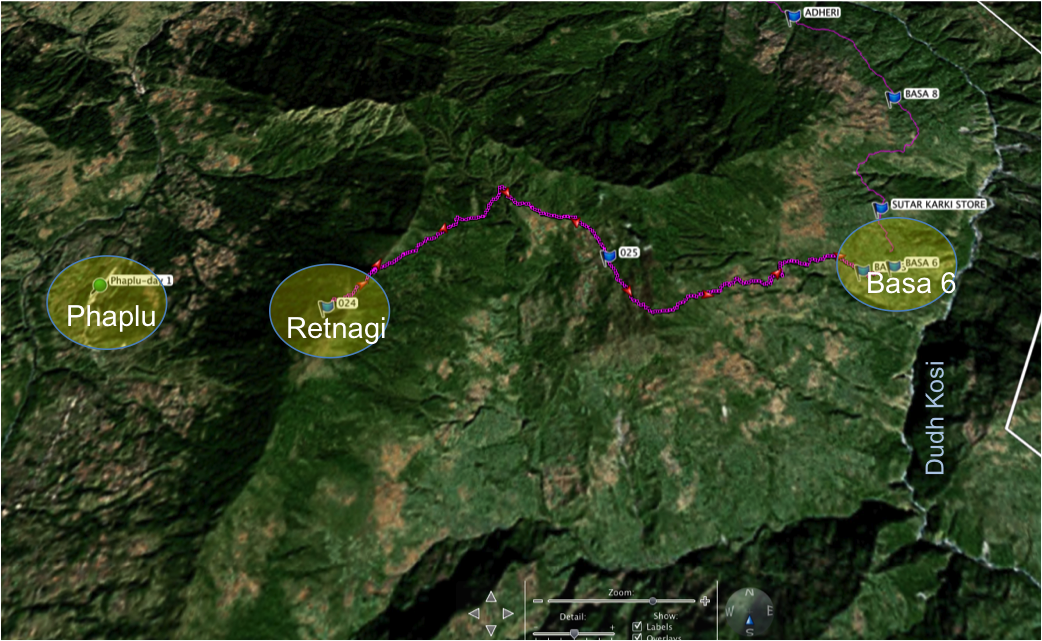
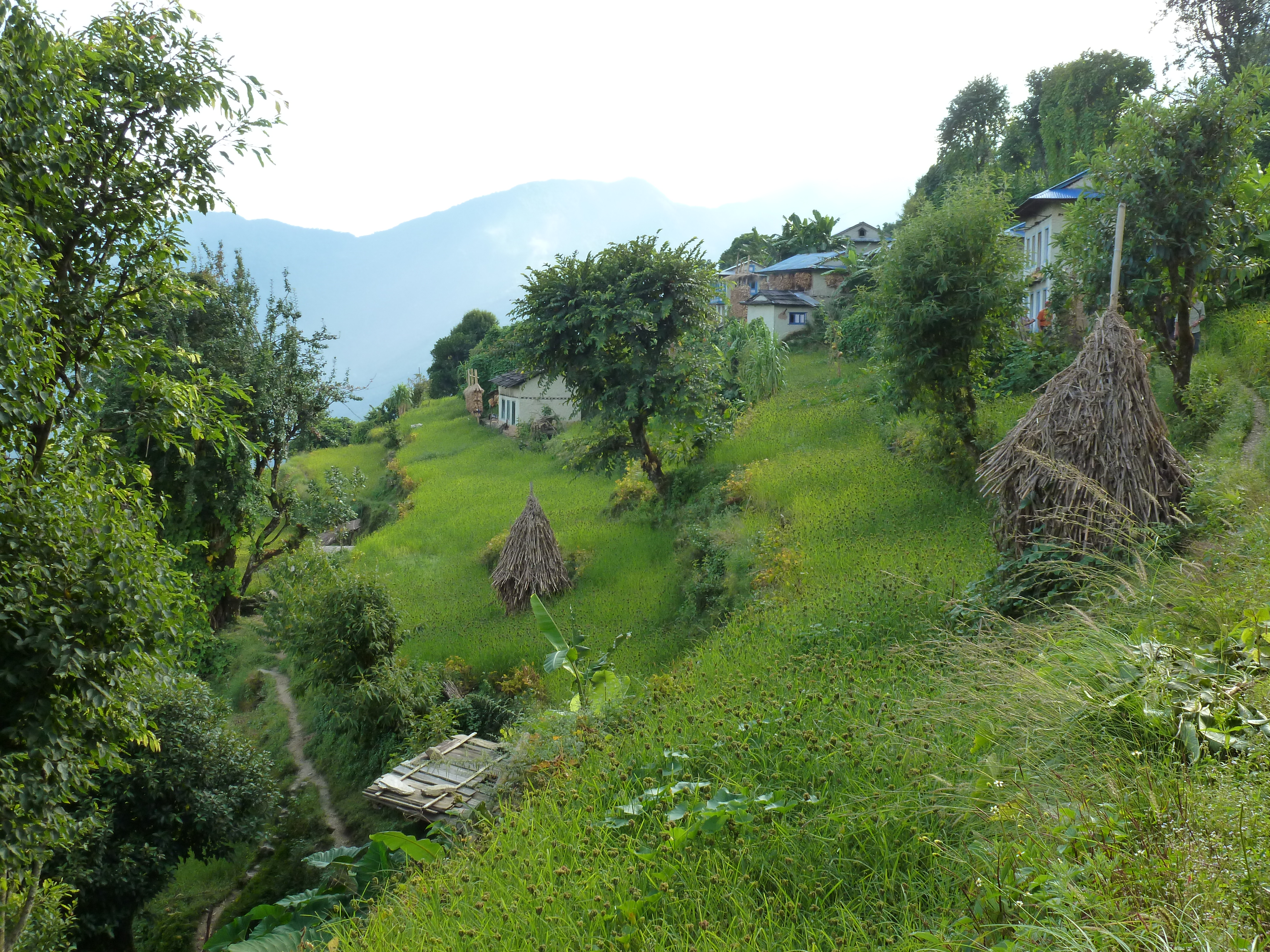
 The next day’s trek was almost entirely downhill from just above 3000 m. (about 10,000 ft) and ended up at 1800 m. (5900 ft). We were in the sun most of the time, making it a warm but very enjoyable journey into what is a very fertile part of Nepal. We passed large villages that had significant buildings, but were told those were Basa 4 and Basa 3. Just before Basa 6 (there are 9 Basa villages), we were met by several villagers, including the village band. They played traditional music on horns and drums while we made our way further down the hill into the village.
Garlands
 Just as we entered the center of the village, we were met with what looked like a crowd of 200 or more, the first being the children with garlands of many types of local flowers and leaves, mostly marigolds of orange, yellow and crimson. As we passed, they each placed a garland around our neck until we had so many that we could no longer see and our necks became very heavy, not to mention the heat that steamed our glasses that were mostly blocked by flowers, anyway.
 We made our way to the yard of the Shkhar Babuchhiri Bal Kunja Primary School, built in 2002 (Nepali year 2059) by SolHimal, a French group inspired to generosity by the obvious need for a school they observed when they trekked through.
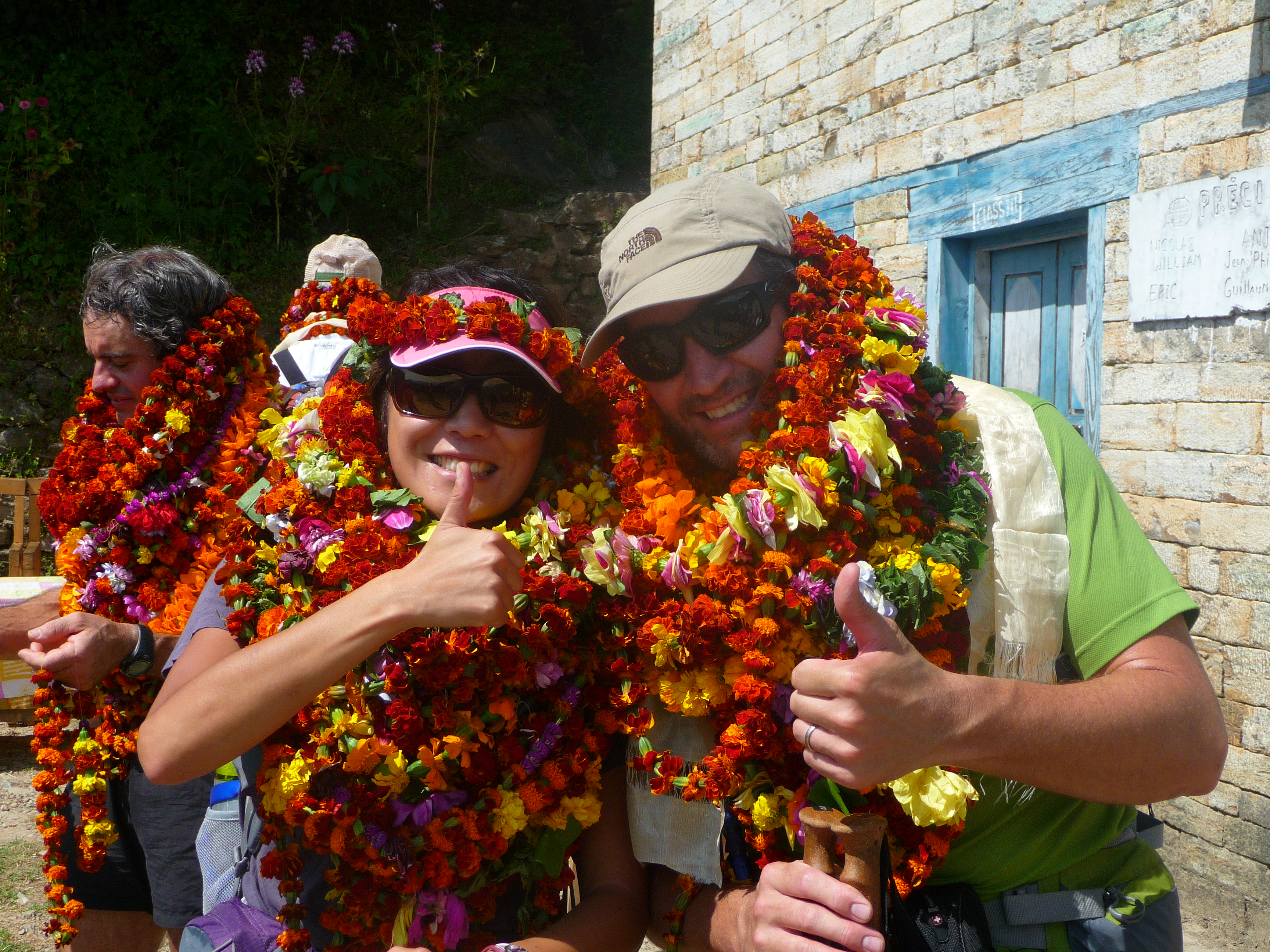 Once in the schoolyarvillage horn and drum music continued for a while as we spent several sweaty, flowery minutes meeting and greeting. The salutations ranged from kisses on the cheeks and mouth, to two-hand handshakes, to the standard fingers-pointed-up “Namaste.” Our main guide, DB, thanked us for coming and for bringing computers to the village and our group’s leader, Jeff, thanked the villagers for such a wonderful welcome. Wonderful was the only way to describe a welcome that went beyond our wildest expectations and would be unlikely to be topped at any later point in our lives.
Did that just happen?
 We shed our garlands and placed them on a table that was placed in front of our dining table for just this purpose. We were immediately served juice and then a full meal of pasta, potatoes and vegetables and told to relax, enjoy ourselves, and that there would be another ceremony at 4pm. Once fed, we were fairly alone to ask ourselves, “Did that really happen?” It was so remarkable and happened so quickly that it had a surreal quality and the heaps of flowers became the evidence that yes, it happened.
 We met our friend Buddi’s 75-year-old mother, Maya Rai, adorned with the traditional Nepali nose piercing and colorful Nepali dress, including a colorful cloth wrap on her head. We then met his brother, Dinesh, a soldier in the Nepali Army and a member of the Army Volleyball Team. Volleyball is a popular sport in Basa since it only requires an unused terrace, a ball, and a net. The biggest challenge is that an unreturned spike often results in the ball traveling 16 or 17 terraces down the mountainside. One of the children will run down to retrieve it, of course, and then sprint back up the hill to rejoin the game as though they were on a flat beach instead of a steep mountainside.
The ceremony
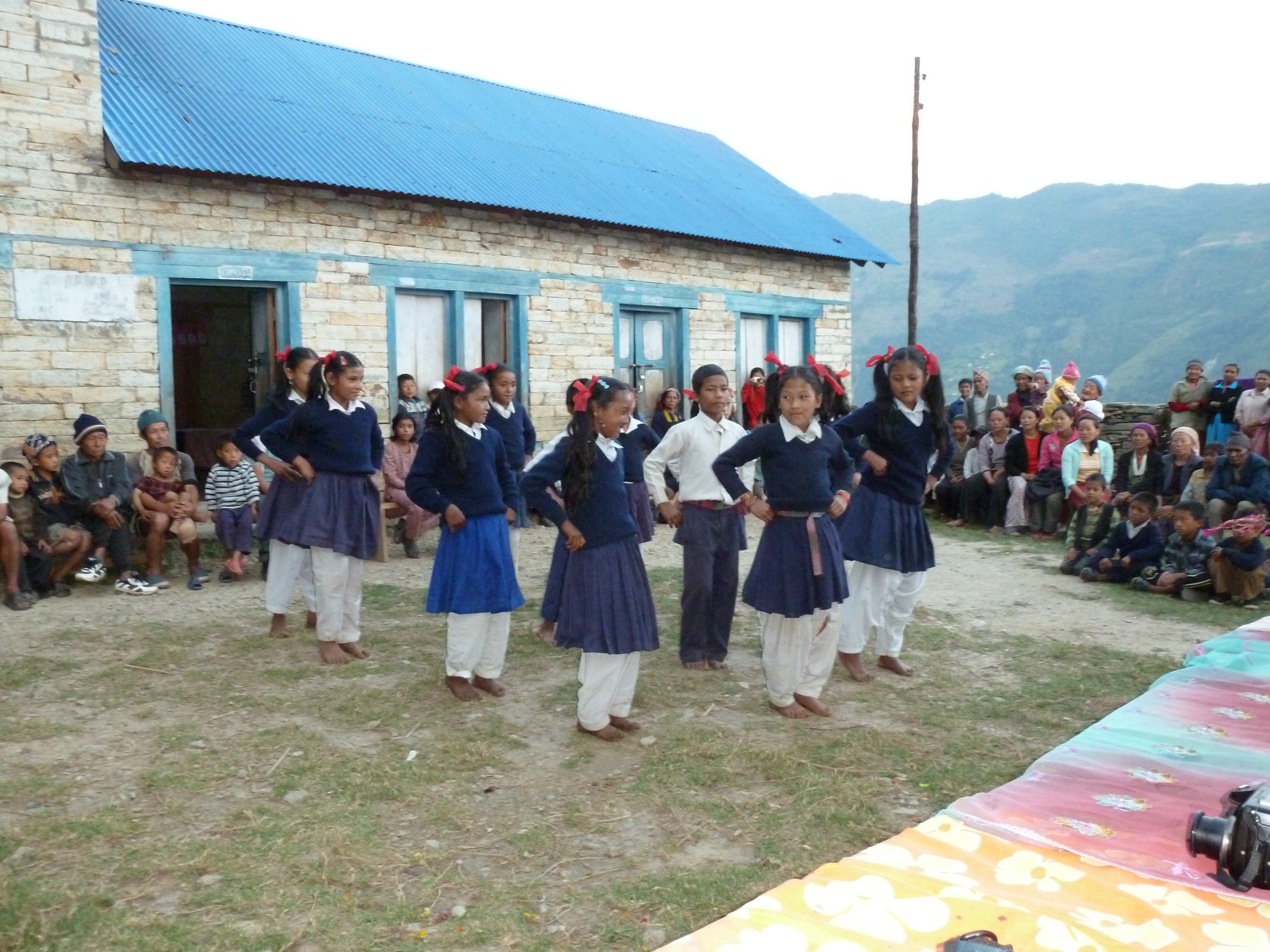 The promised ceremony began with speeches by the village elders and the first round of raksi, a local spirit made from barley, corn and millet. The best raksi is made from millet that is cooked, then two types of yeast are added and the mixture is left to sit for one week. At this point, the mixture is sweet and is known as “chang”, the local beer. The chang is then distilled and the resulting alcohol is the final product. We had the chance to try chang when approaching the village and much prefered the final product of raksi. After a few rounds of this delicious drink served up while watching the school children perform dances (dances that look very much like Bollywood steps), we were invited to join the dance.
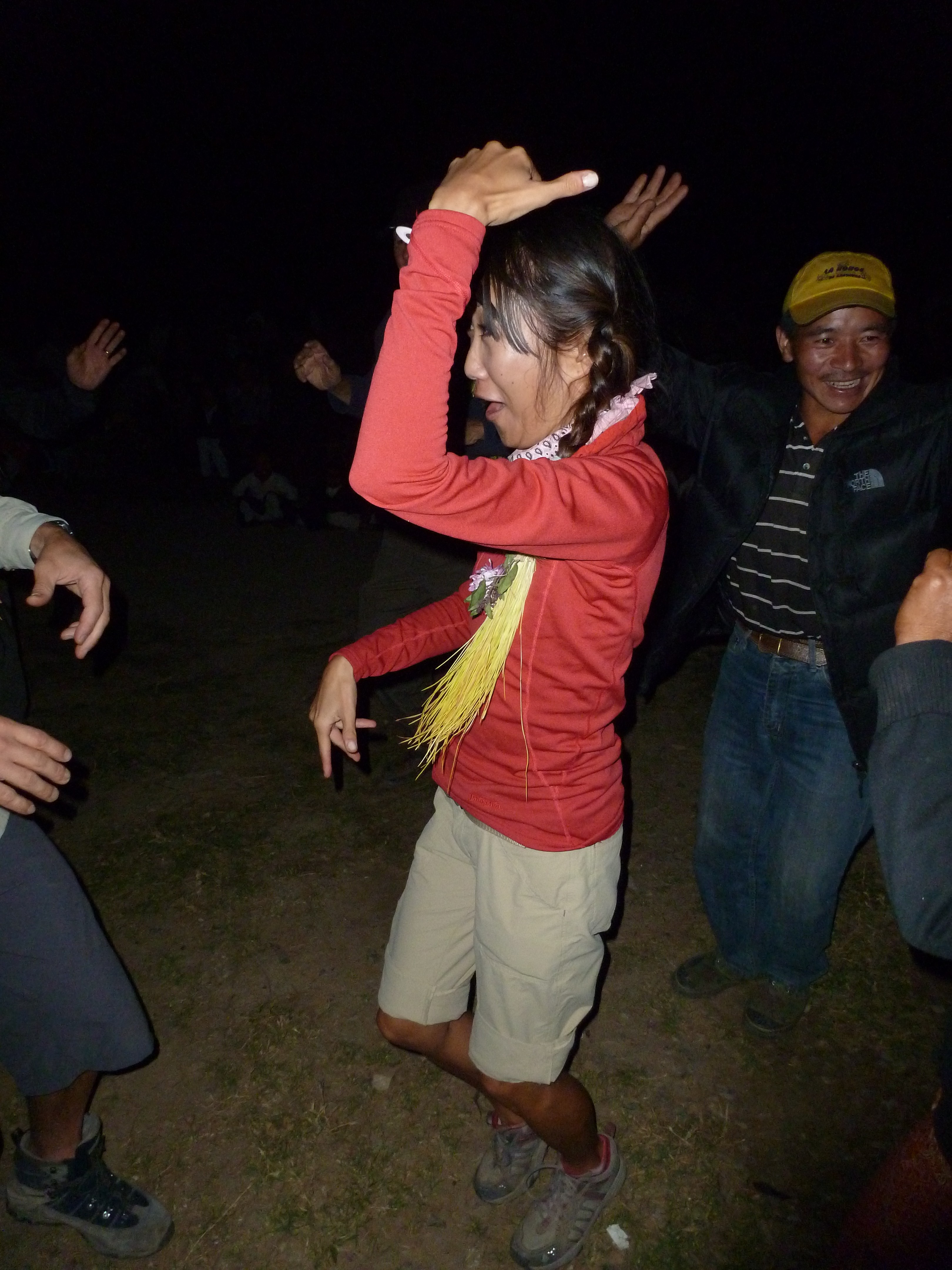 Thanks to the excellent and sufficient raksi, we had no problem getting up and joining the crowd. The music was no longer the boom box, but now just a man playing a madal (a local drum) and the crowd singing, “Ressam firiri”, which means “silk waving in the wind”. The song continued for a solid twenty minutes with various people performing their own steps as the group moved in a circle. It could only be described as joyful and the ultimate welcome.
That night we slept very well aided no doubt by the excellent ceremony and dance…and maybe even more so, the raksi.
Up next: Mera Peak Expedition — Why Basa matters so much





 maximum adventure
November 10, 2011 at 8:48 pm
Your descriptive powers are wonderful as well as the photographs are captivating!!
Keep it up.