

Our life revolves around getting outdoors and hiking, trekking, and climbing. All too often, I’m the only woman in sight and often draw comments from the men in our group or people we meet, amplifying the fact that so few…too few…women are out in the mountains. I’ll admit that it isn’t the same in every part of the planet, as we notice in Nepal when we mix with people from France or other parts of Europe. But most of the world over, it is the a fact that women make up a small part of the adventurers.
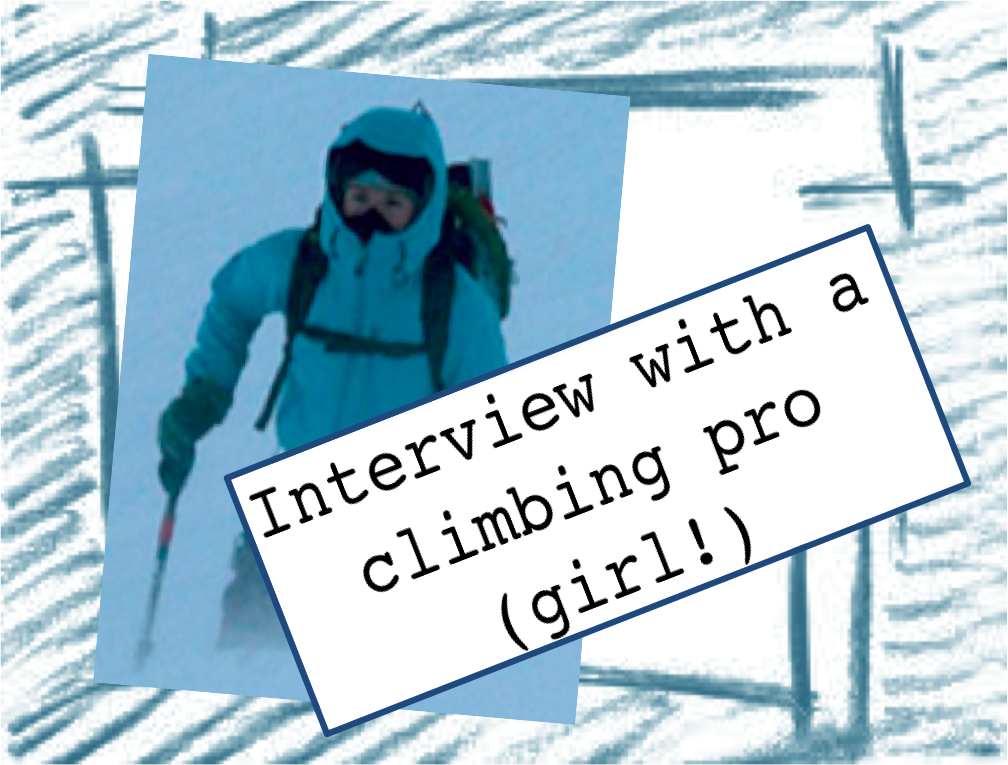
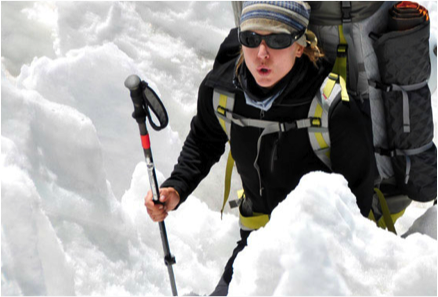 I’m drawn to women who get out there, and few are as noticeable as Melissa Arnot, world-class climber and mountain guide with First Ascent. As I stress to prepare our climb of Mera Peak, Nepal (6476 m) over the next three weeks, I find support from other women that help me to know I can do this. I had the chance to ask Melissa a few questions recently, and found her responses to be very inspirational.
The interview
JRT: How did you get started as a climber?
 MA: I grew up in the mountains of Montana and Colorado and my parents were incredibly supportive of an outdoor lifestyle. So of course I rebelled and went to college in Iowa! After I graduated I came back to Montana to visit, and a friend of mine had started climbing. He slowly started teaching me and it began to shape everything that I did, from free time to the jobs I was taking. I became involved in medicine so that I could be more self-sufficient in remote areas and I literally spent all my free time either rock, ice or alpine climbing.
JRT: What were your early barriers that you had to break through?
 MA: For any climber just starting out, a huge barrier is finding people who you trust who are also willing to teach you. I was lucky and had a great group of friends who were exceptionally patient. But climbing is hard and it takes a level of mental commitment. I had to make choices to train harder and put myself out there in situations that I knew I might not succeed with. That is incredibly challenging if you are used to staying inside of your comfort zone.
JRT: There aren’t many women who climb. Do you ever feel cultural pressure to explain why you’re one of the few?
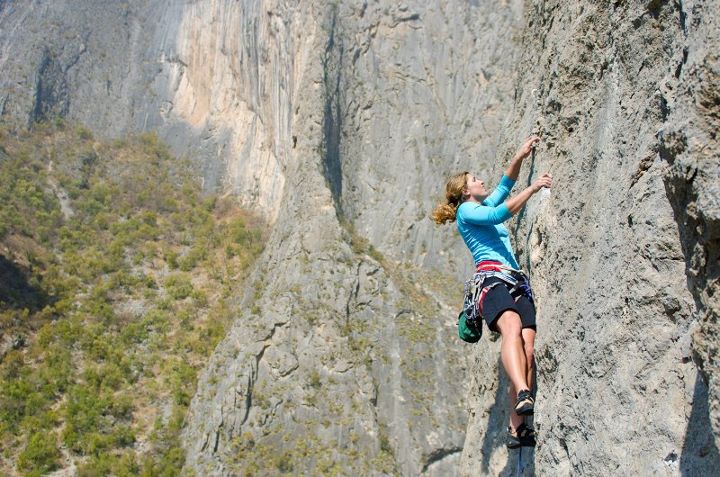 MA: At any given mountain I travel to, women make up about 10% of the climbing community. That is pretty small. Often people ask me if I am going to stop climbing to have a family or when I am going to quit. It is hard for people to understand that climbing is my passion and I am a much better person when I am following my passions. I also find it interesting that people often expect the women on the team to be weaker, less knowledgable or need more help. That is just not true. It is one of the many reasons I love climbing big mountains- they don’t care what your gender is. It is equal work for everyone. Last spring I attempted to climb Makalu with my climbing partner and fellow guide David Morton. We went unsupported (meaning using no Sherpa or BC support). It was a significant amount of work for both of us, but an excellent example of how it doesn’t matter your gender, each person has to put in the work for success.
JRT: Would you like to inspire other women to become more involved in climbing?
 MA: I find climbing to be incredibly grounding as well as confidence building. Every time I see women out climbing, I try to make strides towards creating a supportive environment for them. Being the minority is difficult at times but it can also lead to opportunities the majority would never have. If I put myself out there as a women in a very male dominated industry hopefully another women will know that she is not alone as she gets out there.
JRT: Have you had signs of success in getting more women involved?
 MA: In the last 8 years of working as a professional guide I have seen the number of women participants rise. Interestingly the desire for ‘all women’ trips has decreased. That is success to me. Women wanting to get out there and play and not worry about being the only girl. I am often told by male clients and guides that having a female on the team offers a nice balance and they would prefer it.
JRT: What are your ultimate goals?
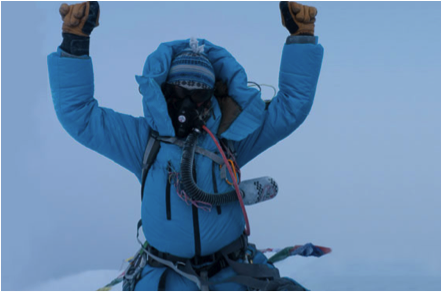
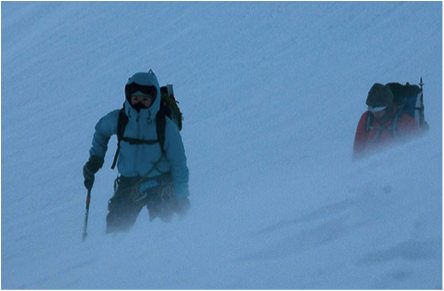 MA: You know, I never set out with a goal of climbing Everest or doing it multiple times. I have just tried to stay open to the opportunities that appear for me. With that approach, I would say I just have a goal of climbing honestly and honorably and respecting the mountains and the people in the places I travel. I would also love to help inspire people to try things and chase their dreams. I am just an average girl who had a tremendous desire to learn and commitment to work hard. Anything is possible that way.
JRT: What do you see as the biggest challenges standing in the way of your goals?
MA: It is difficult to keep your focus genuine as you gain more success and notoriety. I find myself asking the question of ‘why am I doing this?’. If I am doing it because I want to then that is climbing honestly. If I am doing it for someone else or what I think I will gain, then I think I begin to lose the solid foundation of being in the mountains. The greatest successes are the ones I feel and no one ever knows about. This is a dangerous sport with real risk and so I have to be sure I am doing it for the right reasons.




 maximum adventure
October 4, 2011 at 5:13 pm
I very much appreciate Melissa’s attitude expressed as:
“I have just tried to stay open to the opportunities that appear for me. With that approach, I would say I just have a goal of climbing honestly and honorably and respecting the mountains and the people in the places I travel. I would also love to help inspire people to try things and chase their dreams. “