

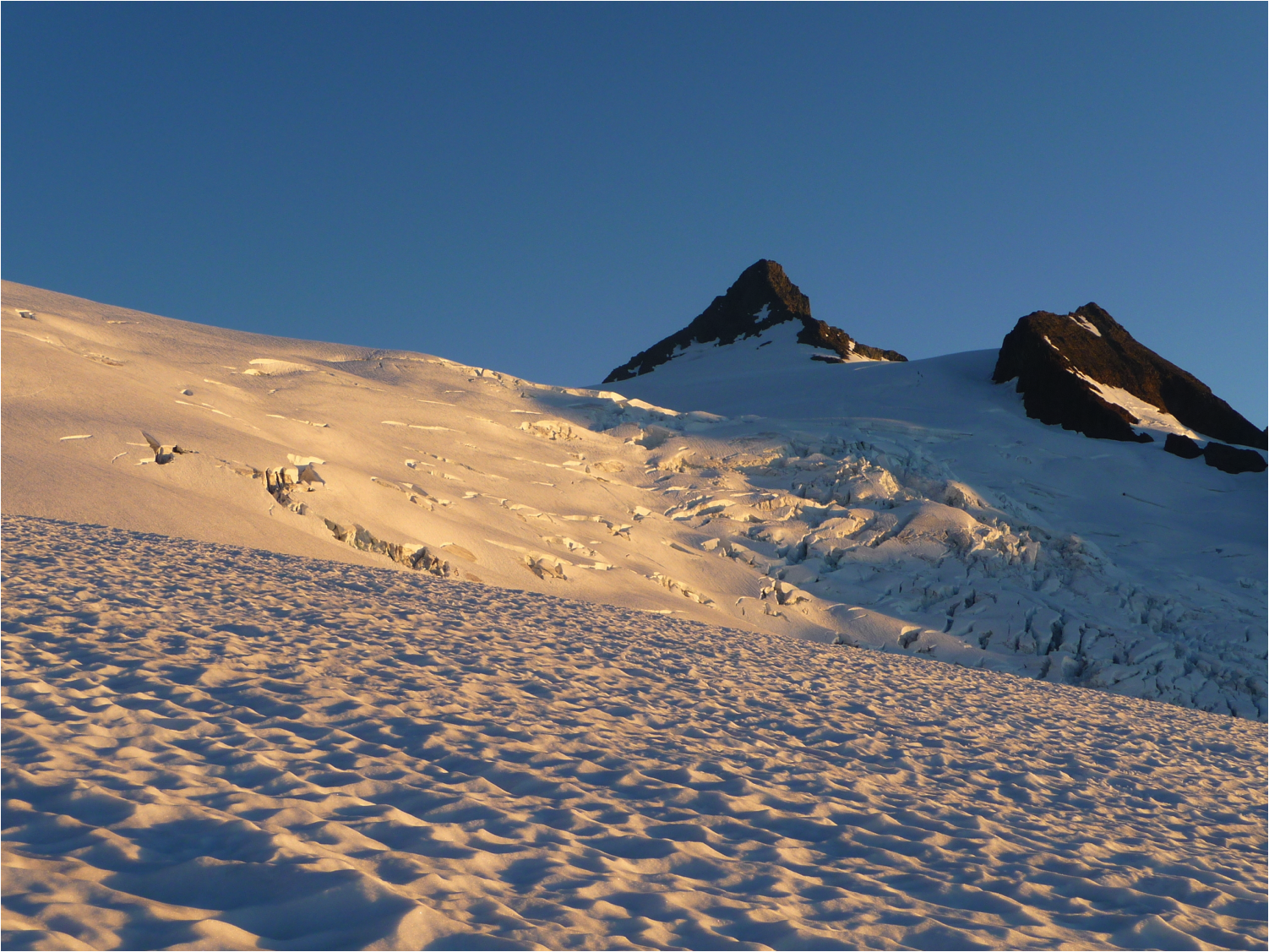
 Mt Shuksan is often referred to as the classic Cascade Range Peak. At 2783 m (9,131 ft), it is lower than the iconic Mt Baker, but has a photogenic peak known as Summit Pyramid and is draped with the Sulphide, Price, White Salmon, Crystal, Nooksack, Curtis and Hanging Glaciers that make it a tempting target for climbers. Due to its popularity, there are no less than 14 routes that lead up to the summit. Our Seattle-based friend, Joel Meyers, suggested Shuksan by the Sulphide Glacier Route on one of our climbs of Mt Whitney and we were ready to take it on.
Heading north
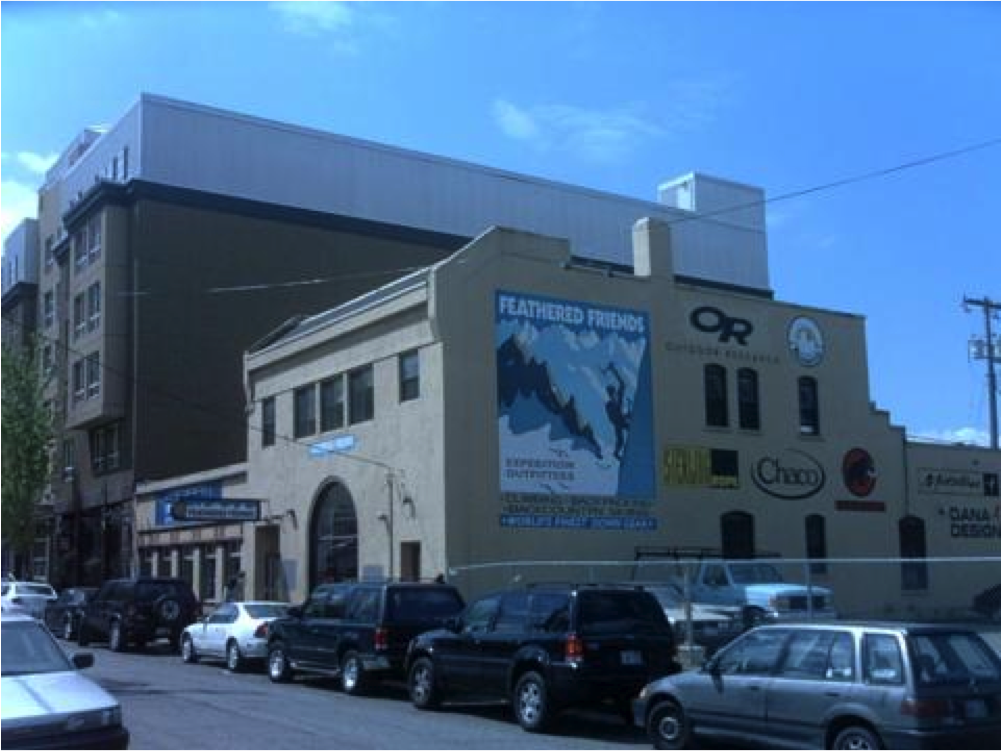 We flew to Seattle on Friday evening and were shopping for our first mountaineering boots at Feathered Friends the same day. We had done our homework on the best “double plastic” boots to buy for our October climb of Mera Peak, Nepal and knew that Shuksan was the perfect opportunity to test them out and break them in before going to 6,476 m (21,247 ft) in six short weeks. It is also nearly impossible to find these types of boots in Southern California since it is built for high altitude climbs 6-7,000 m (19,685 to 22,966 ft). The classic mountaineering boot has a removable inner boot that allows the climber to keep the soft liner on their feet while sleeping to avoid putting on very cold boots first thing in the morning. This is a critical point when the outside temperatures can be -29 Celsius (-20 degrees F) and starting with cold feet can lead to significant problems, including loss of toes from frostbite.
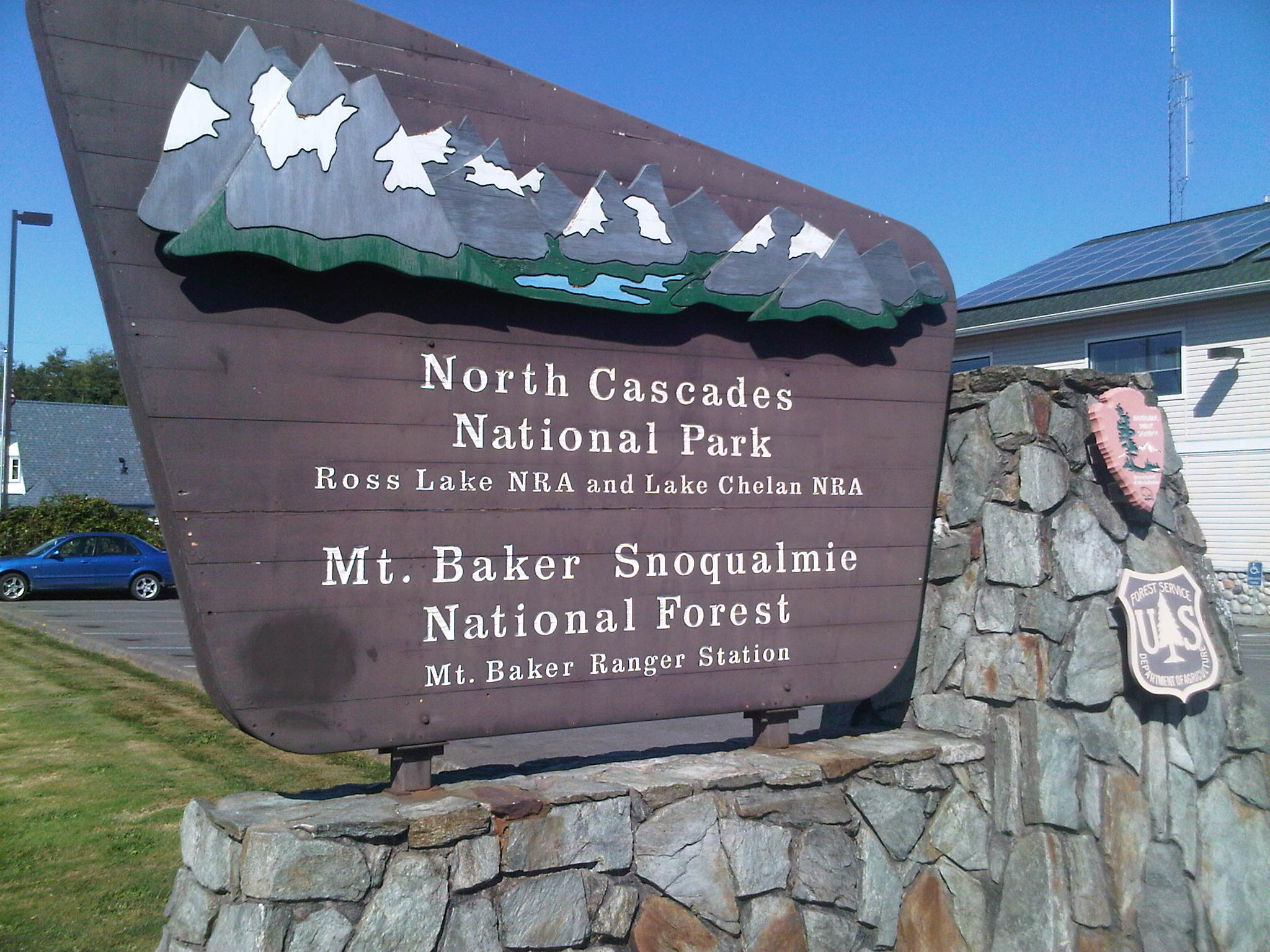 We left mid-morning for the Shannon Ridge Trailhead, driving north from Seattle before heading east to the National Park Office in Sedro-Woolley to pick up permits. We were the last group to secure overnight permits for the upper bivouac, the highest point where camping is allowed on the mountain. We grabbed a quick Subway sandwich around the corner and were soon on the final segment of our drive.
To the trailhead
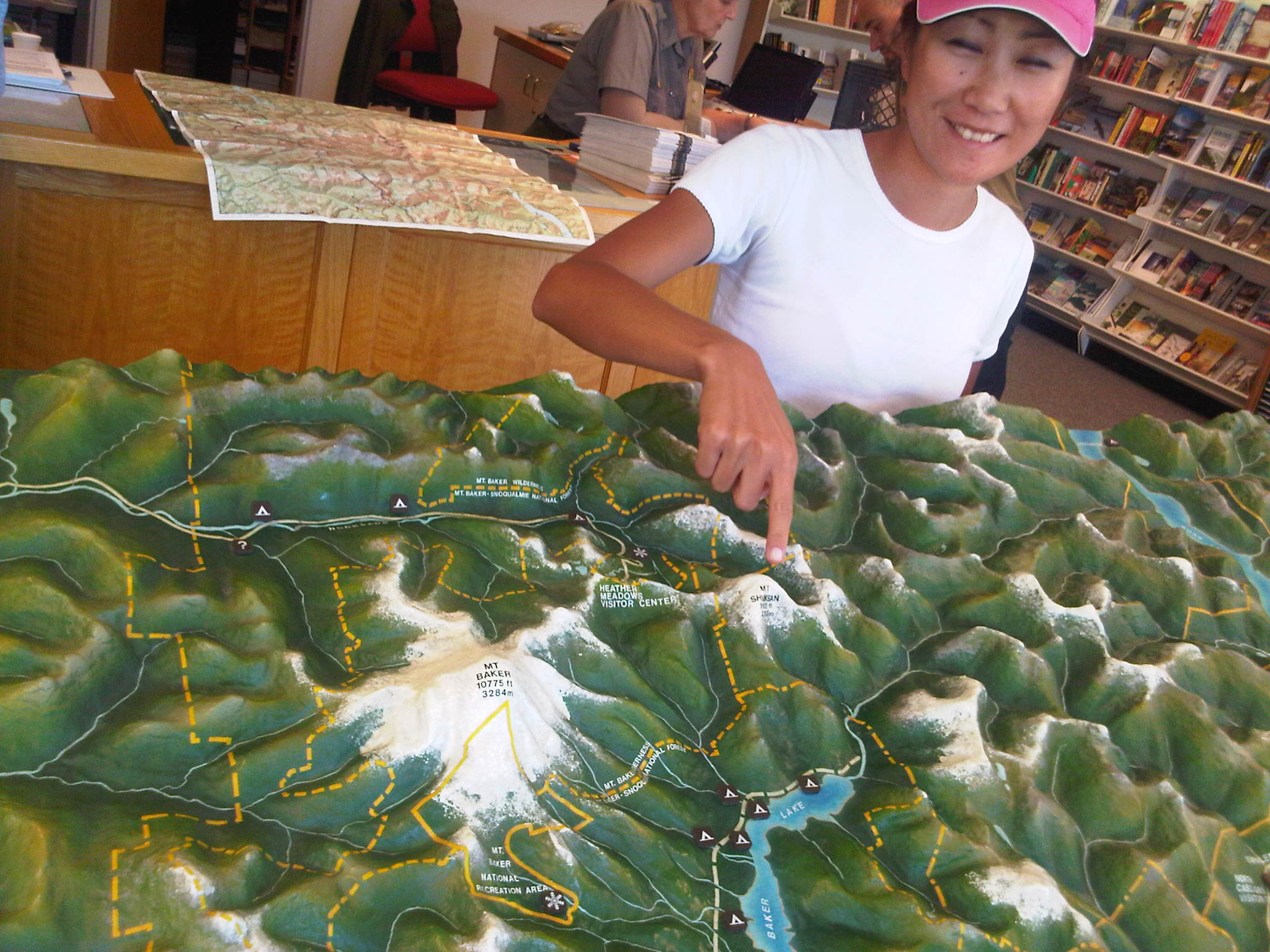
Getting to the trailhead involved contenting east from Sedro-Woolley until a turnoff for Baker Lake. We drove along the lake until the road became gravel and wound higher into the forest before the turnoff for Shannon Ridge. It was just a few miles on the final road before we came to a parking lot at the road’s conclusion. The trail itself was a former logging road that continued ahead along the side of Shannon Creek.
Shannon Ridge Trail
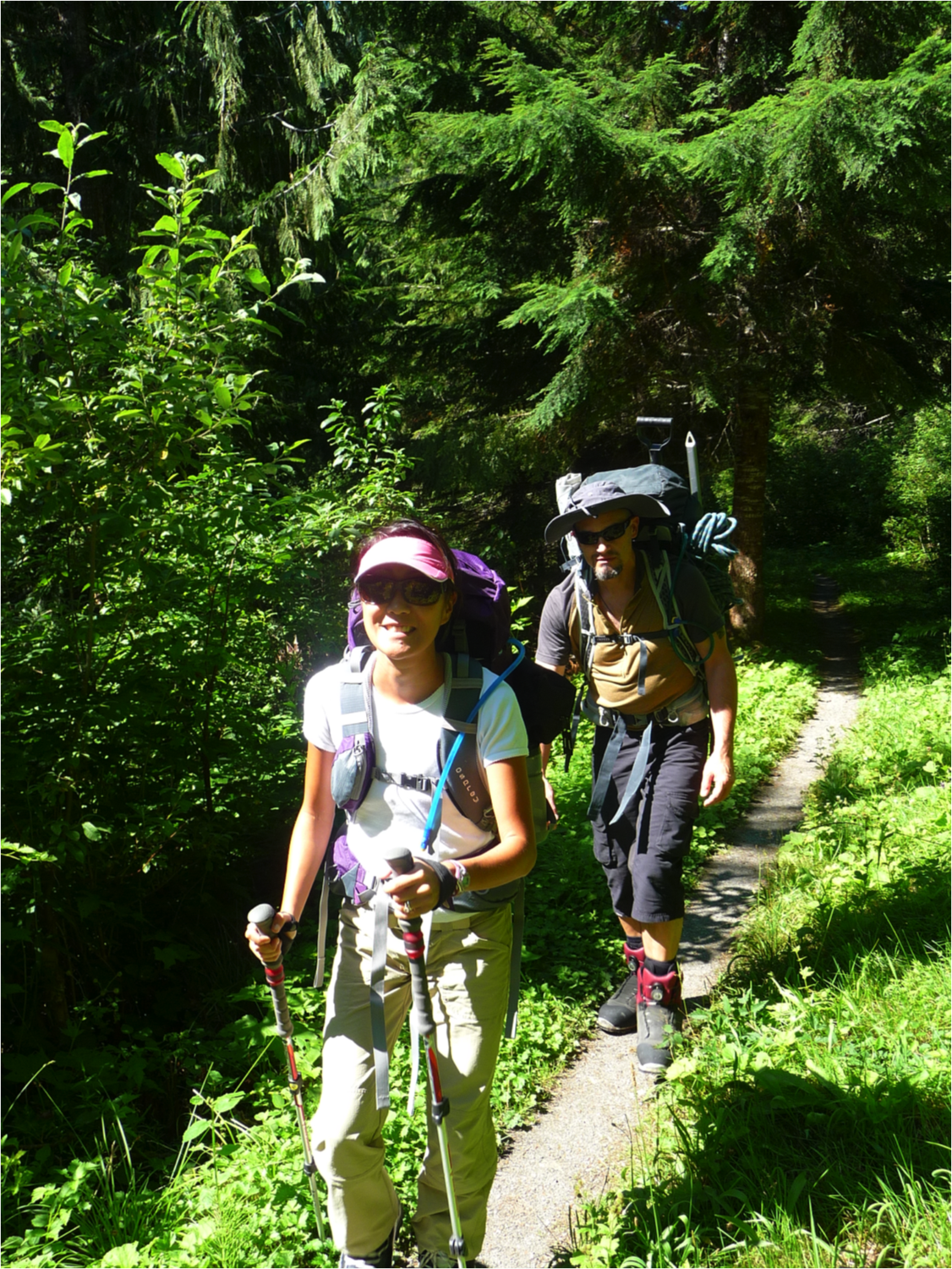 The first section of the trail was the approach to the Ridge itself. The trail had not been maintained well, and there were several places where large trees and other debris blocked the way and various detours needed to be figured out. This was a much easier problem on the way up, as the slope could be figured out fairly easily, but this proved to be much harder on the way down, where a wrong turn could put us on the wrong side of a mountain. With multiple people in our party, we were able to each take a direction and shout out when we figured out which was the best way to regain the trail. A solo climber could easily get lost without the benefit of this approach.
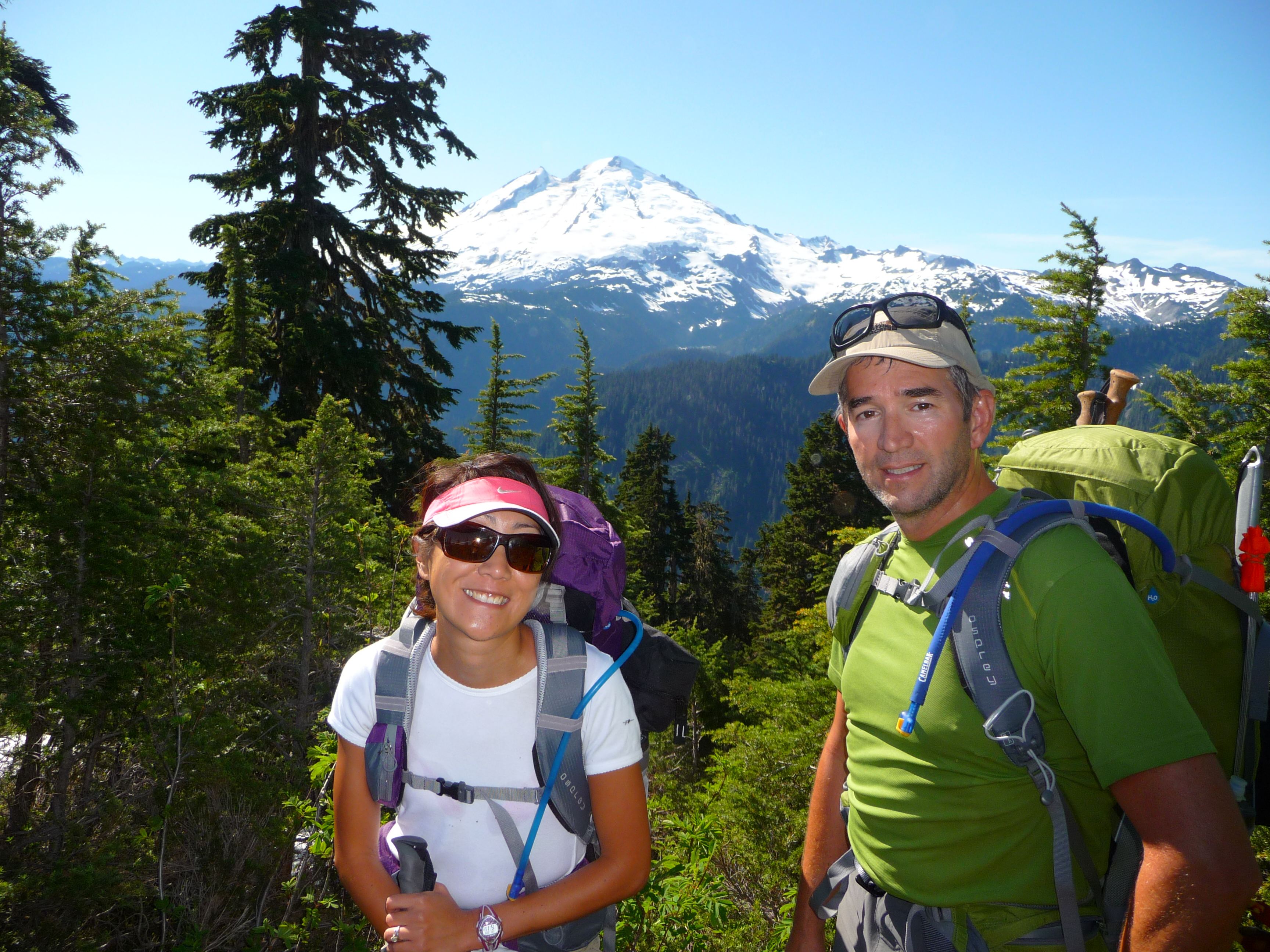 When we finally broke out of the the dense forest onto Shannon Ridge, the view of Mt Baker was remarkable. The amount of snow was remarkable, even knowing that this had been a late Spring and a wet summer. It was great to be free of the old growth woods and the slow, lazy flies that pestered us every time we slowed down. The trail was now clear though muddy in many places and we found our first snow at 1280 m (4200 ft). Unlike Southern California, where the sun is much more intense, the snowpack was relatively firm and easy to cross.
The notch
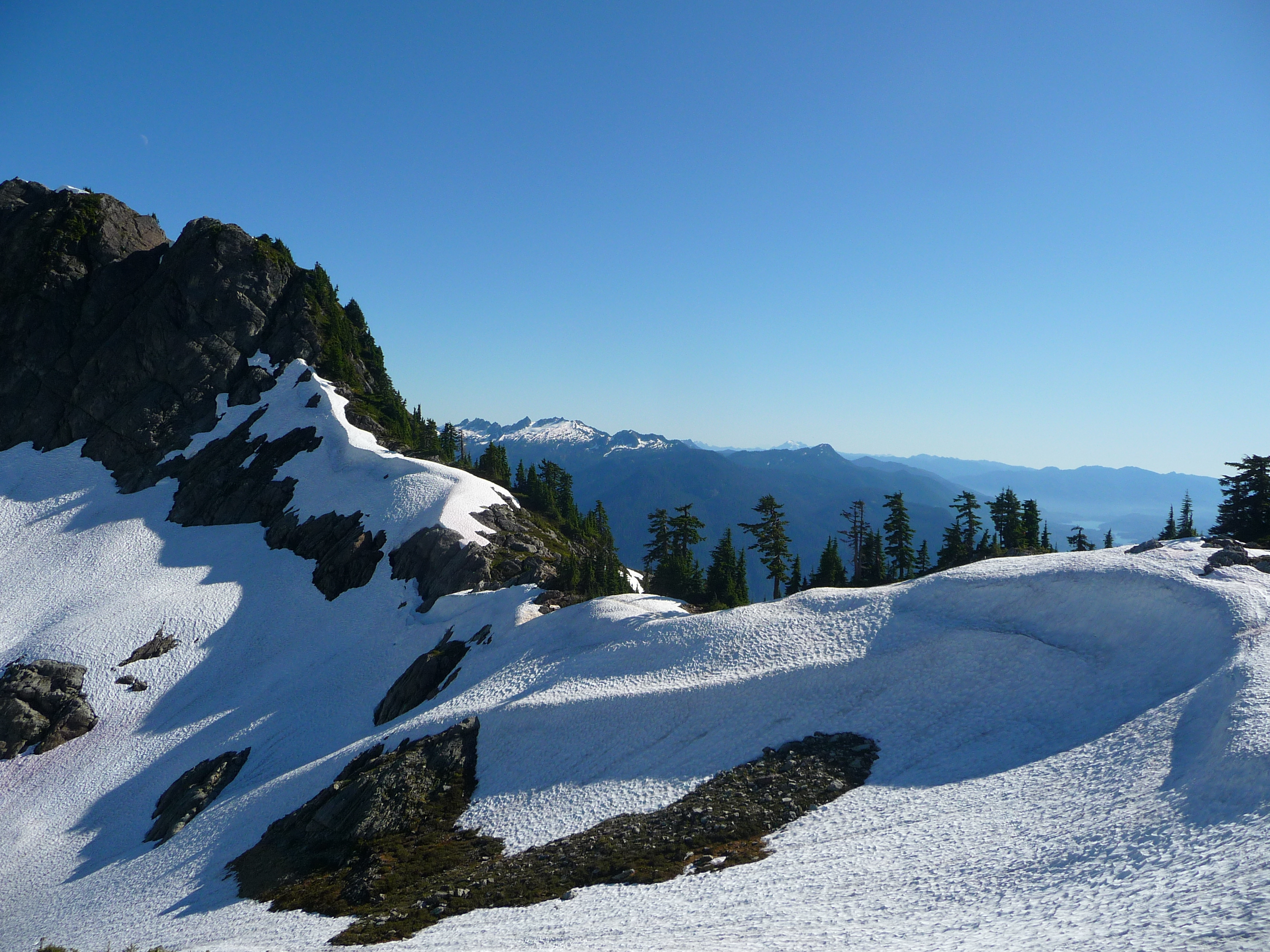 The trail changed significantly once we finished Shannon Ridge and crossed through a notch that took us around to the eastern face of Shuksan. From this point onward we were walking on a combination of rock and snow that was firm and easy going as we traversed around to a point below the Sulphide Glacier. The temperatures dropped significantly as well as we left the strong afternoon sunshine that isn’t so typical of this part of the world.
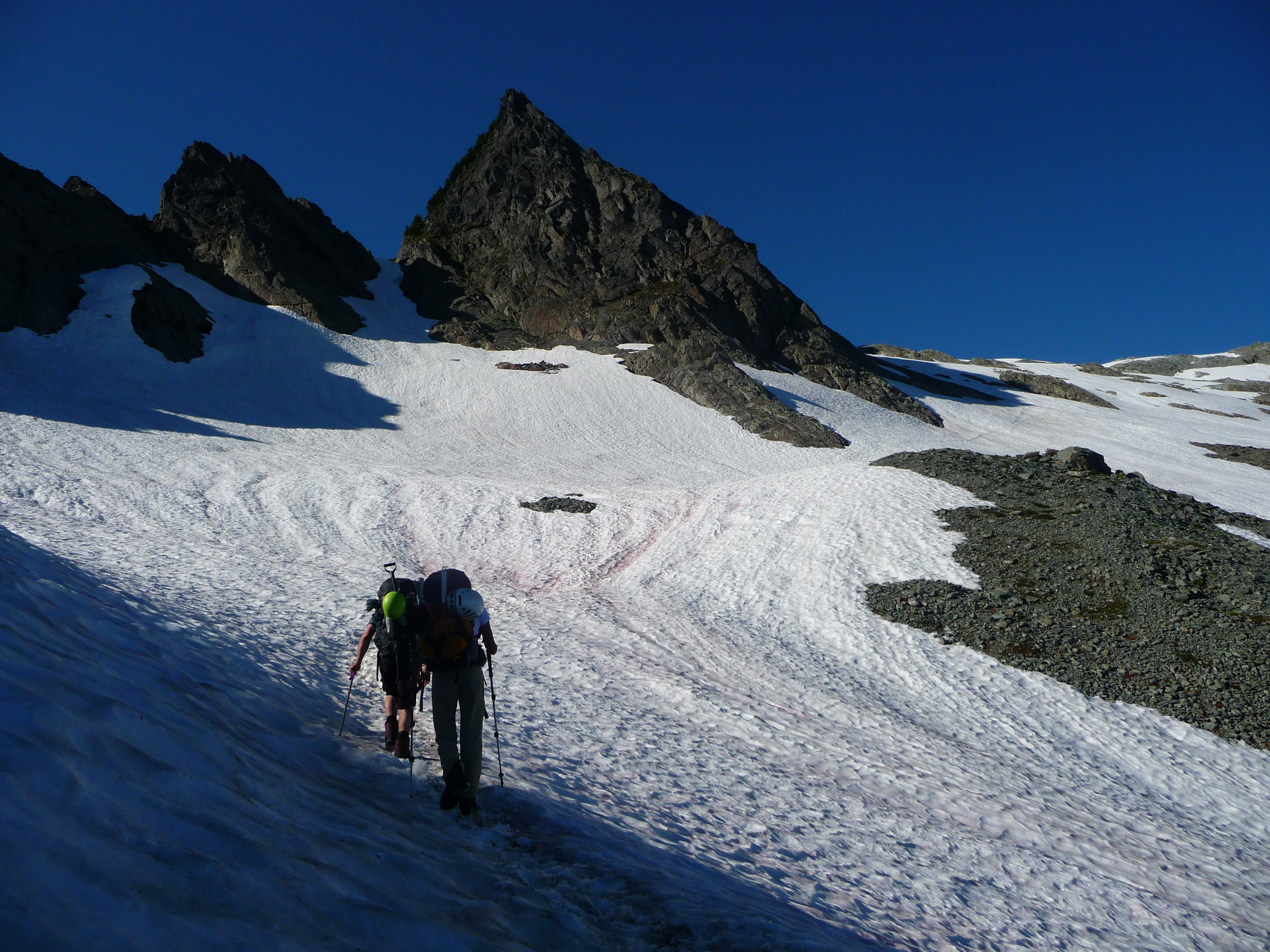
Sulphide Glacier
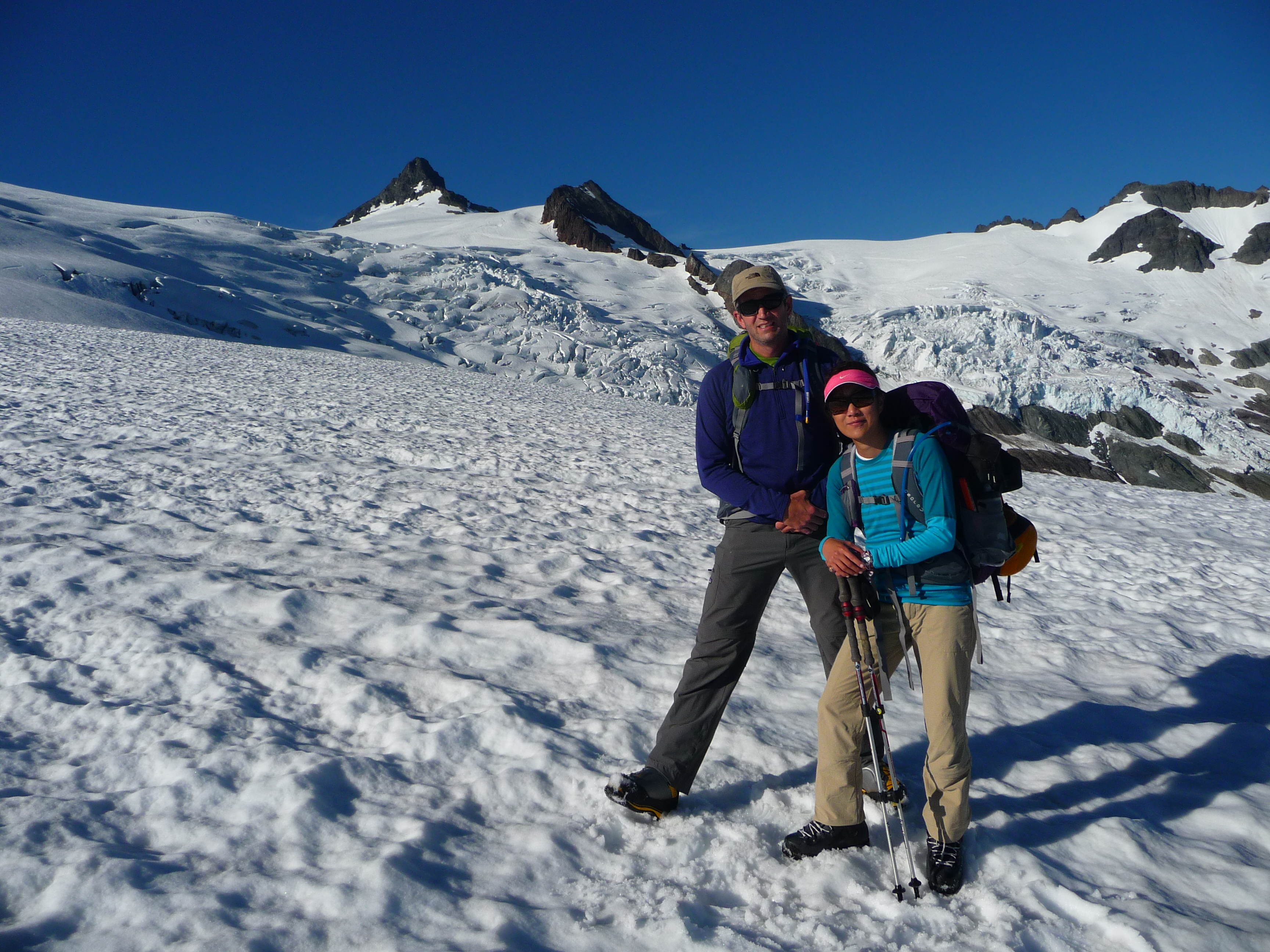 Reaching the Sulphide Glacier was a great day’s achievement. The sun was high enough to create a brilliant vista of Summit Pyramid and the extensive crevasses of Sulphide and Crystal Glaciers. We were able to talk to the teams returning from the summit as they arrived and were surprised to hear that they had spent 11 hours to get up and back to Lower Bivy, our campsite. Most were part of guided groups that were in some stage of a many-day trip in the Cascades.
Onward and upward
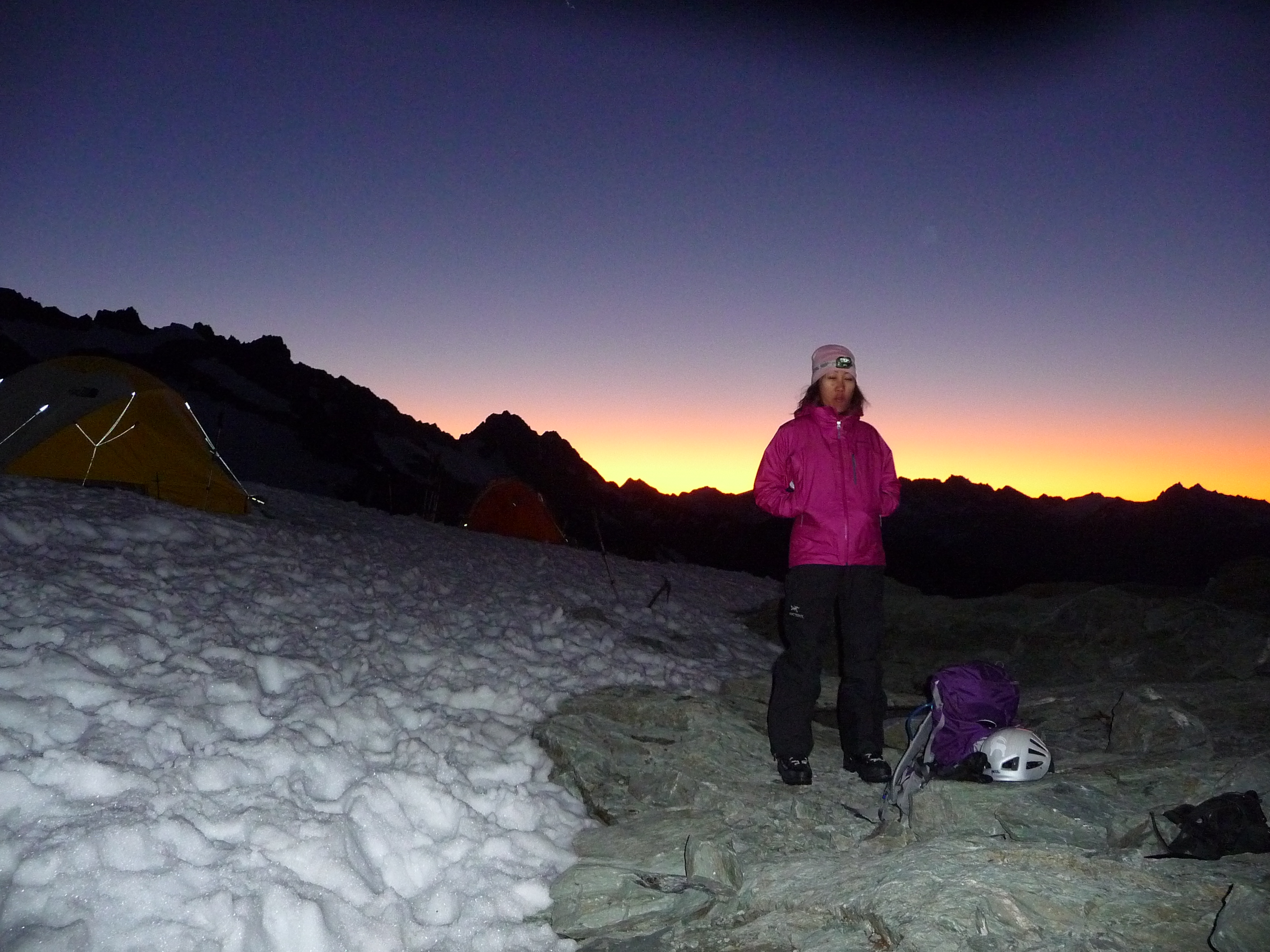 We were up at 5am the next morning to take our turn on the trail. It was cold but hadn’t frozen overnight, to our surprise. We put down as many calories as time would allow and we were ready to walk by 6:30 am. Though there were several tents near ours, we were the only ones up and moving that early and and appeared to be the first to set out from Lower Bivy.
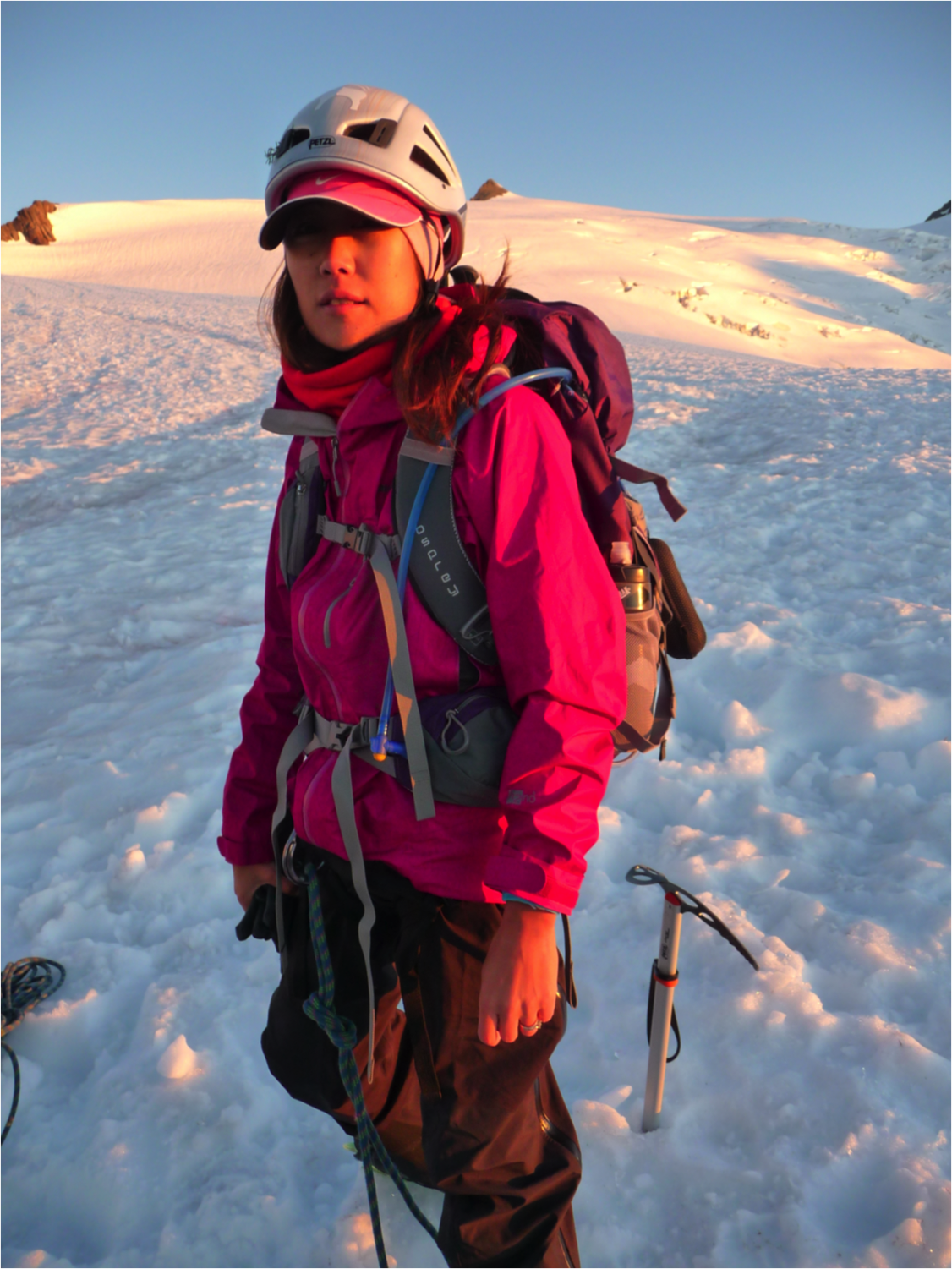 Our first decision was to angle away from the distant peak to avoid the crevasses that were part of the shortest distance to get there. We roped up from the beginning as we could see the occasional crevasse even on the more level slopes.
After a quick discussion of our order on the rope, our means of communication, and a refresher on how to self-arrest in the event of a fall, we started toward Summit Pyramid in the distance. The snow was crisp and with our crampons we were able to make very fast progress around the crevasses and start the very long traverse.
The long traverse
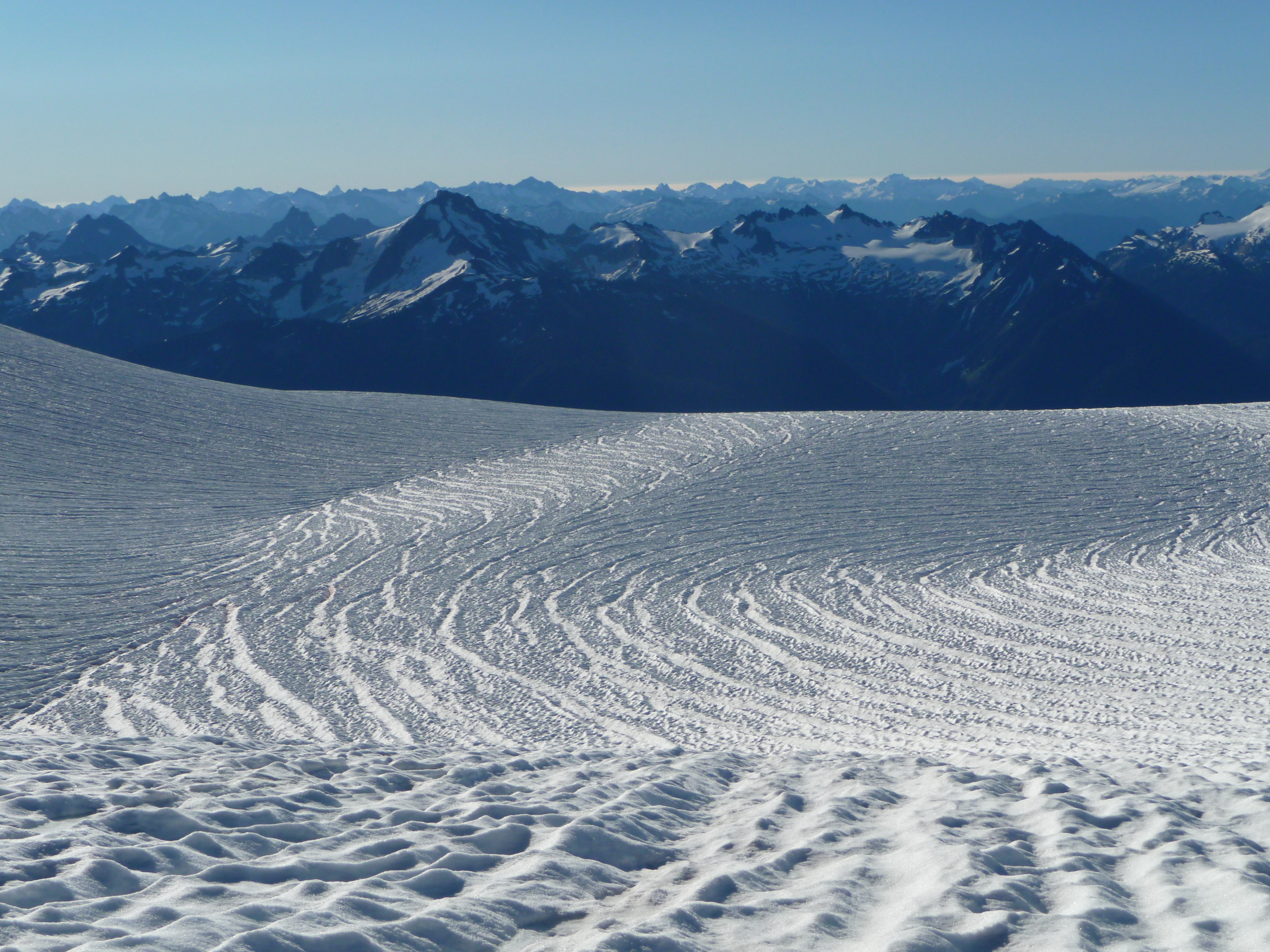 Getting to the Summit Pyramid was difficult as much as it was a long walk with the challenge of maintaining our separation, not stepping on the rope, and carefully placing our crampons to avoid any mental lapse that would put spiky points into our legs. Looking back at the areas we had crossed, the patterns in the snow were beautiful and a reminder of the wonder of untouched nature. We were also now above most of the nearby peaks, including the Pickett Range, and had a clear view to a very far-off Mt. Ranier.
Summit Pyramid
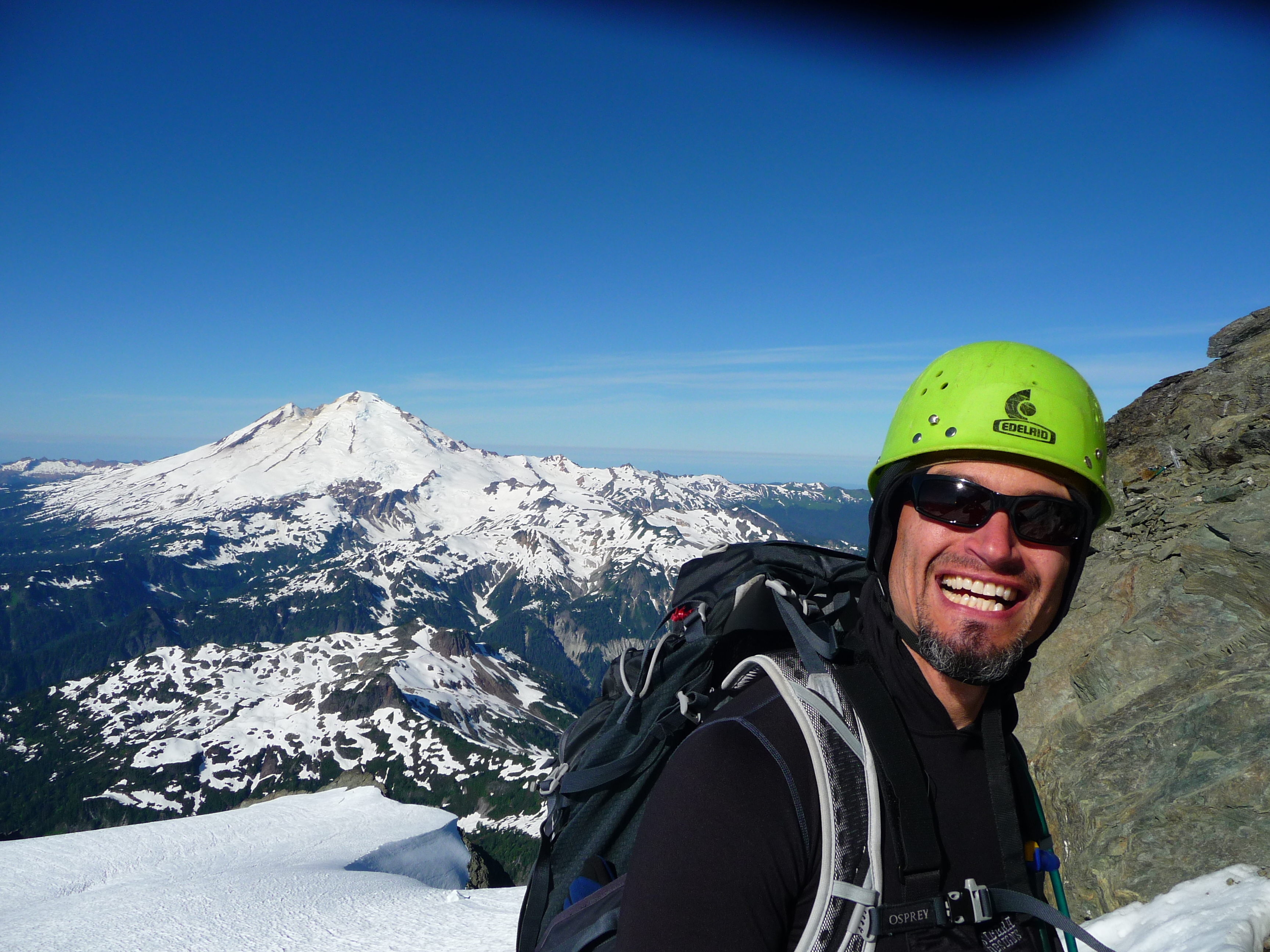 We found our way to the base of Summit Pyramid, the final stretch of the climb. The snow gave way to rock, and it was apparent quickly that we needed to have a longer rope than the one we used for safety across the Glacier. A quick check of the GPS revealed that we had reached 2621 m (8,600 ft) at the base of a Class 3 to 4 rock scramble that we didn’t feel comfortable about tackling without a means to rappel back down when finished.
Heading down
 Going down was a matter of following the same track back to our campsite, but with the benefit of several long glissades on the steeper sections. There’s something of a child in all of us once we start sliding down the snow, and it rarely happens without laughter…this time was no different. Beyond fun, the energy we saved was important as we still needed to eat, break down our camp, and walk the complete trail back to the parking lot far below.
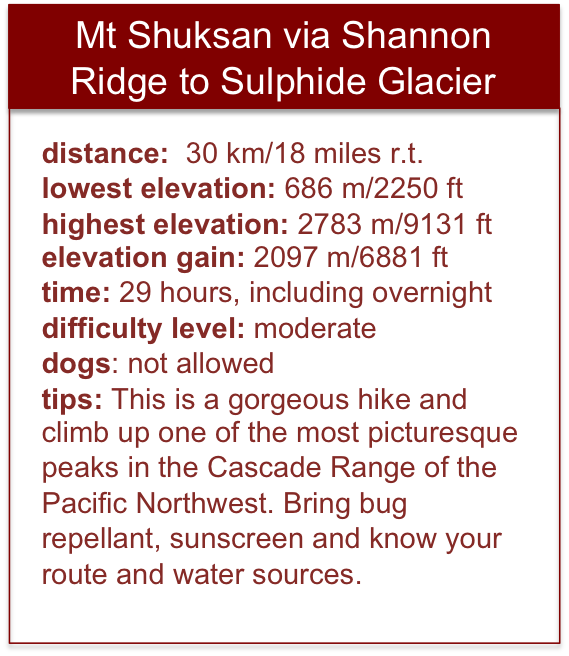 Mt Shuksan is an excellent adventure and our mountaineering boots were given a live test in a way that makes our October climb of Mera Peak, Nepal less risky for equipment problems. We were also able to give our legs an excellent workout even thought the altitude isn’t comparable to what we’ll have in the Himalayas. This is a great climb for getting solid practice on glaciers.




 maximum adventure
Trackbacks/Pingbacks
[…] you would like to know more about the climb of Mt Shuksan, click here. Eco World Content From Across The Internet. Featured on EcoPressed Another thought on our […]
[…] morning. Frozen boots are a sure way to frostbite. We recently used the La Sportiva Spantik on a climb of Mt Shuksan in Washington State, and it was very comfortable and easy to take on and off. We’re looking […]
[…] Mt Shuksan, Washington took us to 2783 m (9131 ft) […]
[…] several times each week and it has been our preparation spot for bigger hikes like Mt Whitney, Mt Shuksan and even the Himalaya of Nepal. One of the greatest adventures in our own back yard is canyoneering […]