

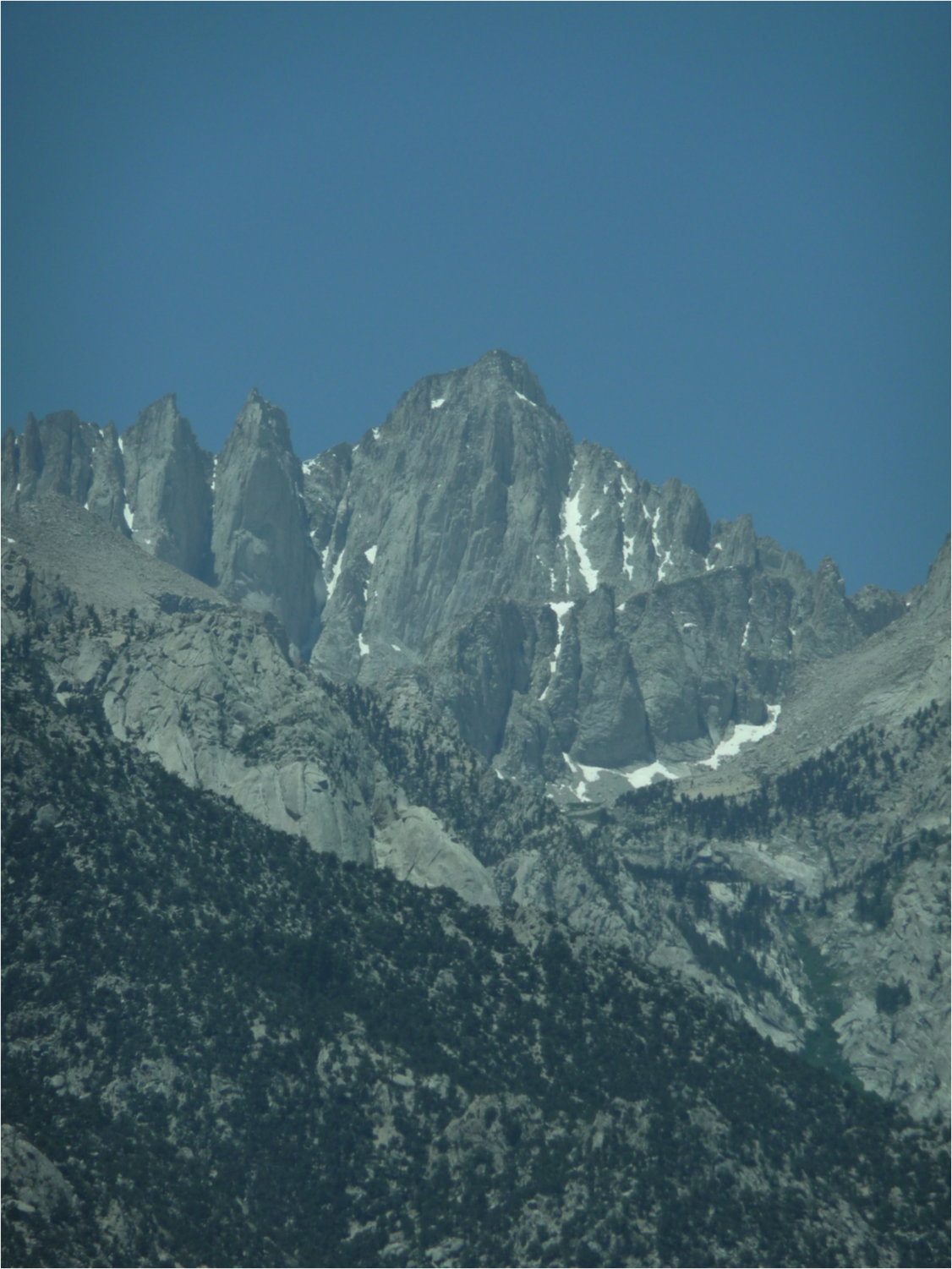
 I’ve heard it said that no Californian can call themselves a climber without reaching the summit of the highest peak in the Lower forty-eight. Mt Whitney, at 4421 m (14,505 ft), is not the most difficult peak to reach, but it is a long, challenging trail to reach the summit. We joined a group that included a former coworker and two of his friends for a one-day hike planned for the Forth of July, 2009. Most importantly, they had a permit reserved, which is one of the challenges with this mountain’s restricted lottery system.
We successfully climbed Mt Whitney the year before, in September 2008, by the same route but in two days rather than one. Knowing how much more weight is required to camp overnight (which includes a bear bin, per the park rangers), we were eager to see how much faster and lighter we could travel by making a one-day attempt. This turned out to be the way to go.
Whitney Portal
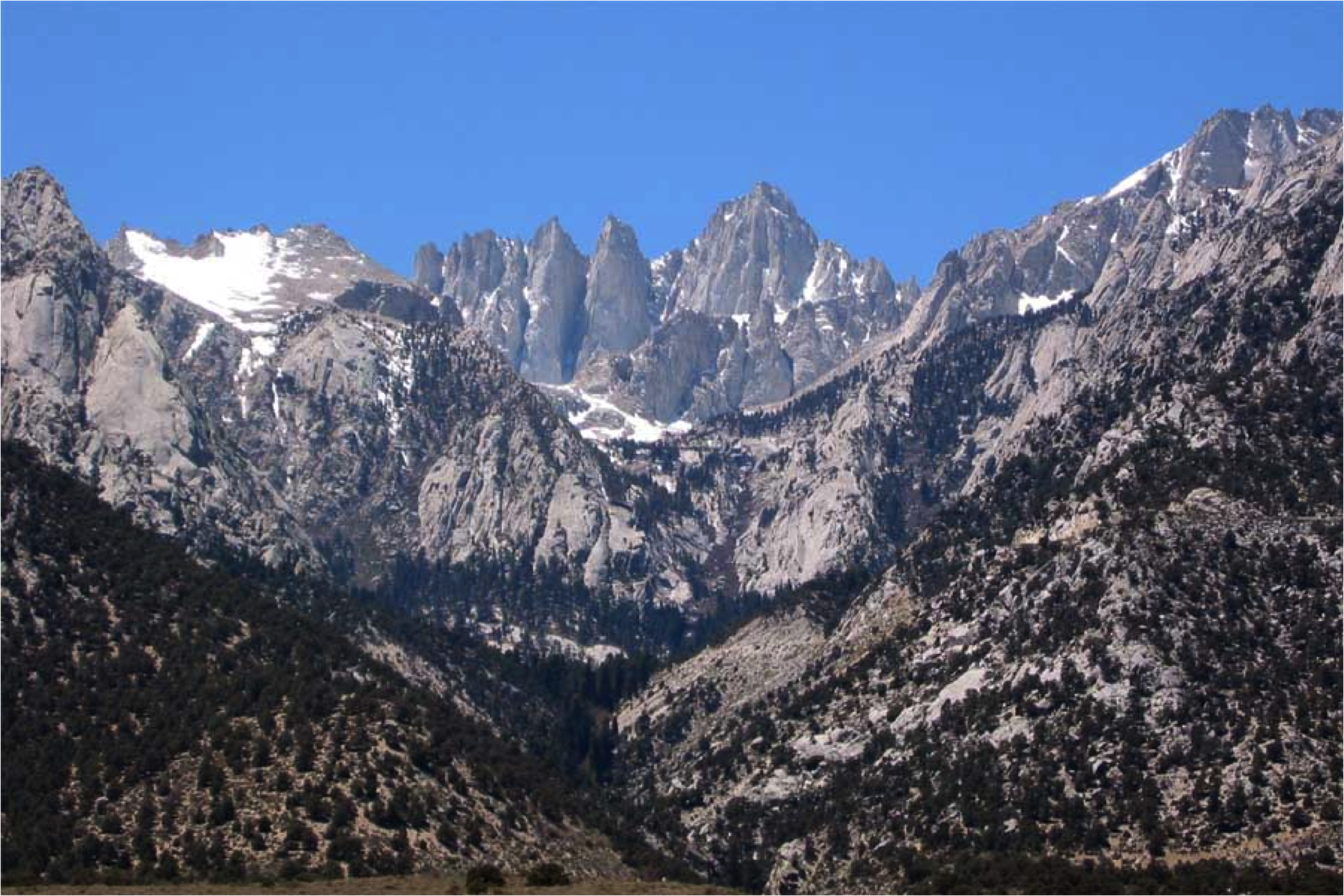 We met up with the rest of the group on July 3rd at their campsite at Whitney Portal. The Portal is the jumping off point for the one of the most popular trails in the US and serves as the staging point, the parking lot and even has a restaurant and store that carries many of the last-minute items you may need for the hike. The Portal Store even operates the message board and web cameras that point at the peak. This is a great resource.
Early start
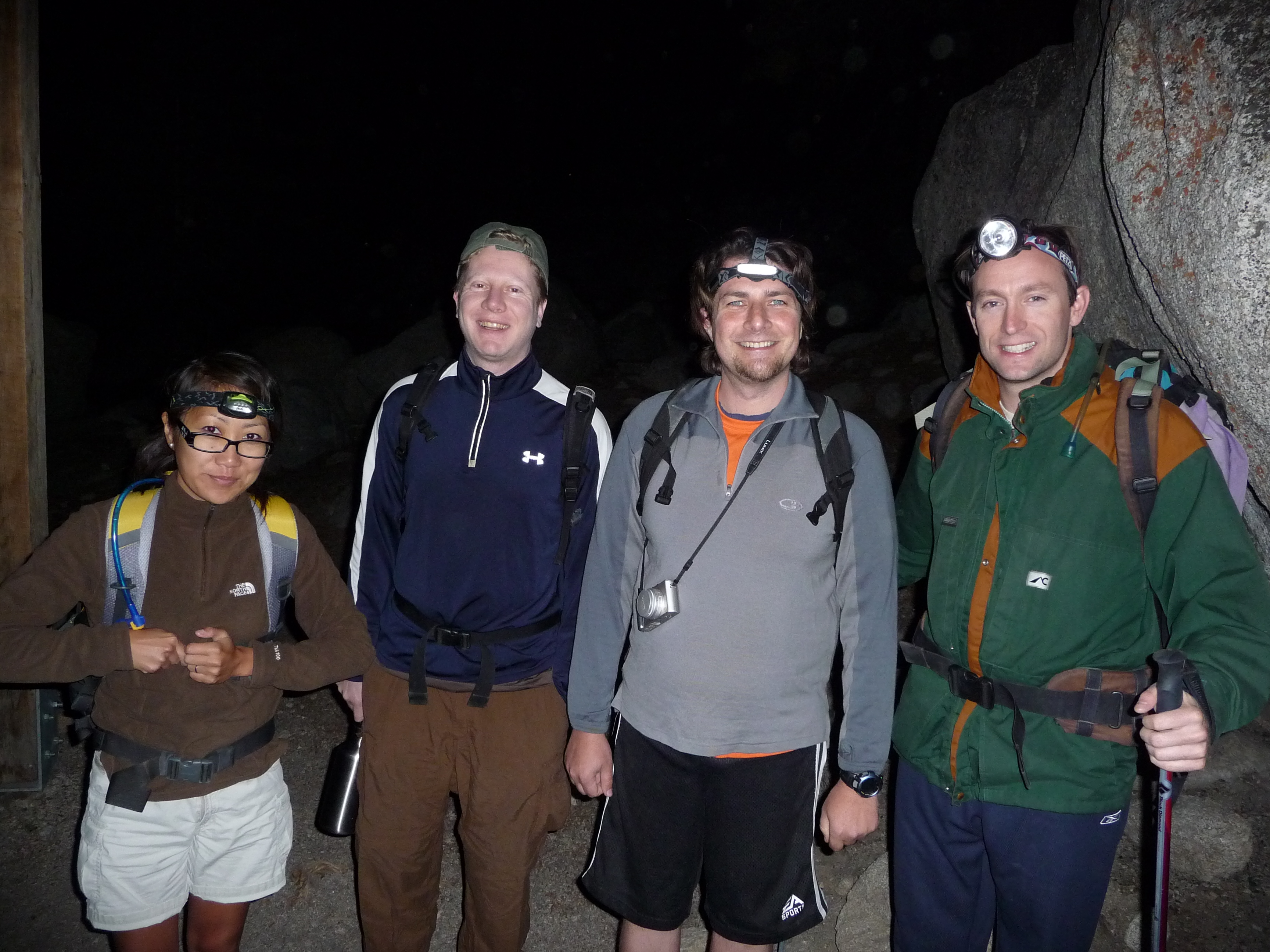 To complete this hike in one day requires well before sunrise and we chose to to step onto the trail at 3:30am. It was dark but not very cold as we weighed our packs at the trailhead, just below the Portal Store. It was fantastic to have 7 kg (15 lb) packs rather than the previous year’s 21 kg (47 lb). It didn’t escape me that I was celebrating our Independence Day by climbing with a group entirely made up of French.
Sunrise on the trail
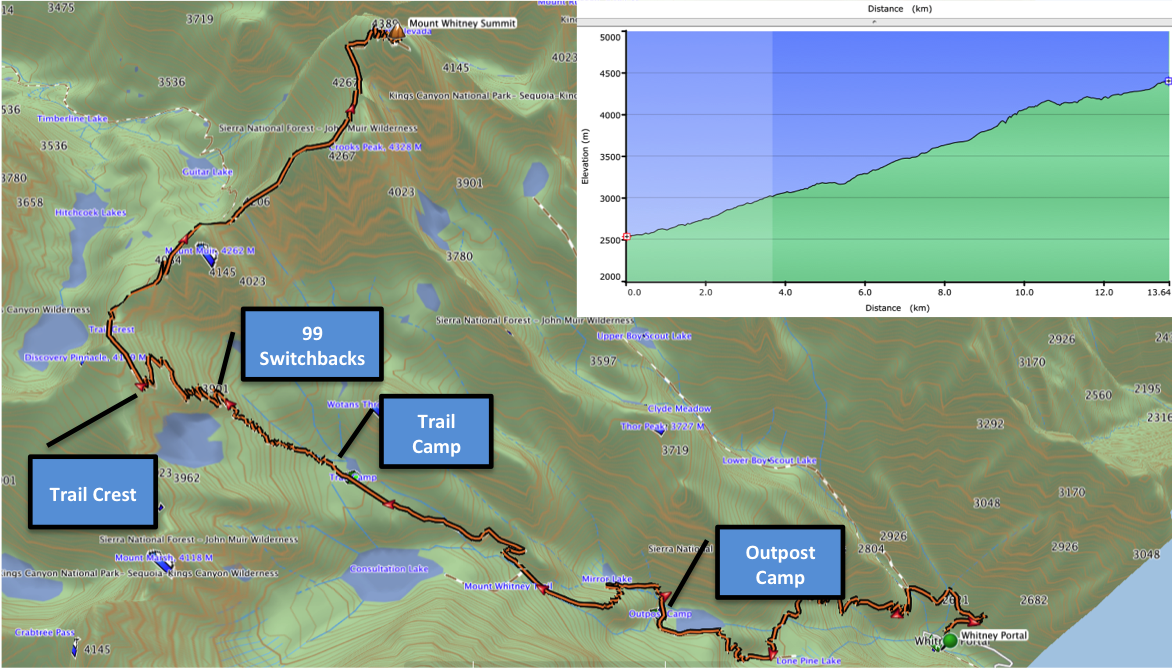
There’s something about hiking through the dawn of a new day that makes the distance fly by. Every time we’ve done this, we’re always very surprised on the way down at the distance we covered. Maybe we’re not awake enough to realize, but we remember enjoying it nonetheless. The first section is walking an extensive set of switchbacks that lead up to the first allowed camping site, Outpost Camp at 6.1 km (3.8 miles) and 3,159 m (10,365 ft). For us, this is too low to call it a full first day, and on our first trip camped at the second site, Consultation Lake/Trail Camp, which is 10.1 km (6.3 miles) from the Portal, at 3700 m (12,000 ft.), and a better place to overnight and keep the next day’s hike to a ‘short’ 26.7 km (16.7 miles). Since we were ‘day hiking’ Mt Whitney, we passed through these two sites relatively early in the day.
To Trail Crest
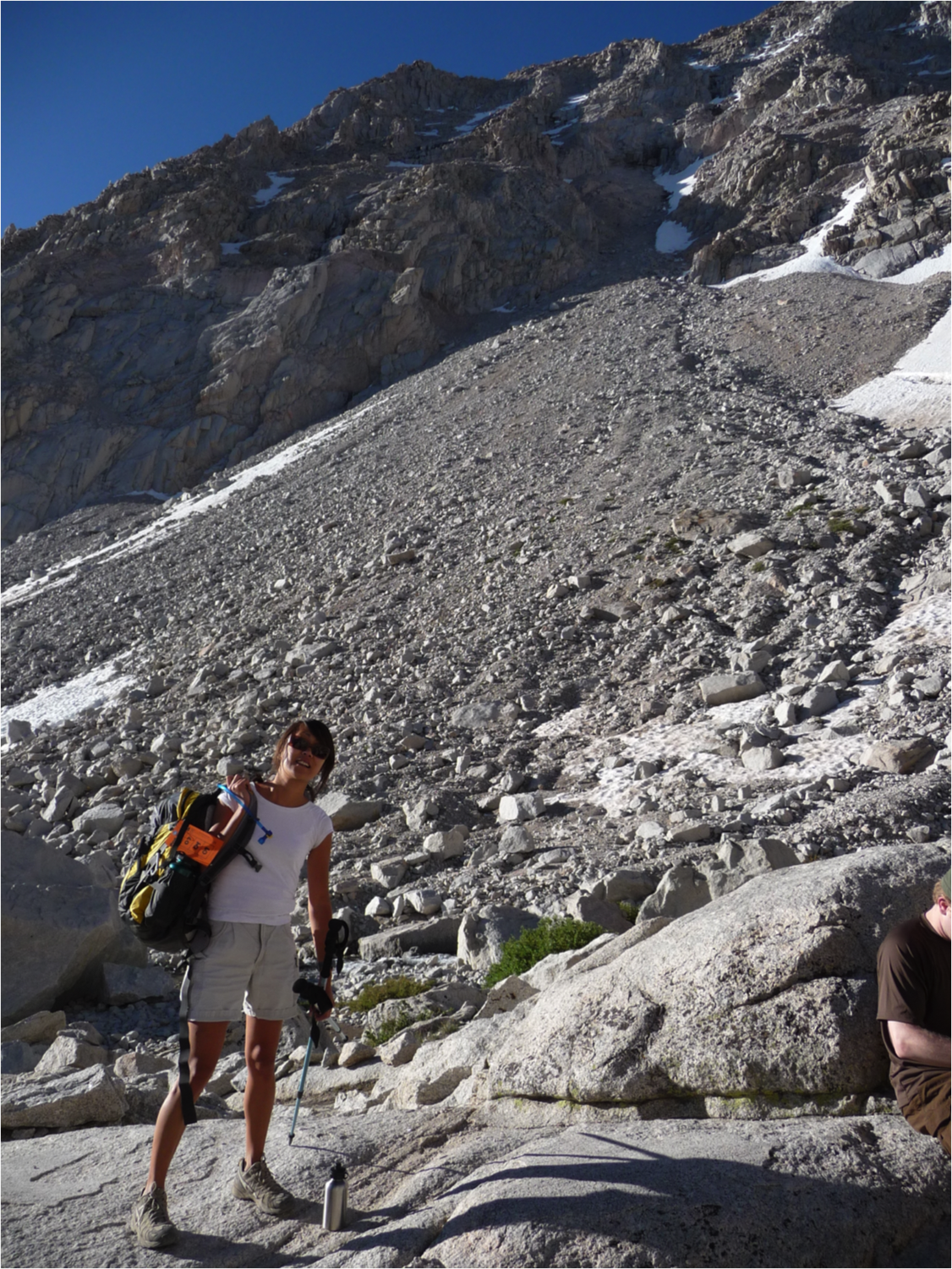
 The gritty part of climbing Mt Whitney, besides distance and altitude, is getting from Trail Camp to Trail Crest at 4200 m (13,777 ft), which seems to be not so far below the summit, but there’s something a little misleading about the last section of the trail…it goes down and up, so the actual vertical distance hiked to Mt Whitney’s summit is higher than the difference between the summit and the Portal.
The gritty part about getting to Trail Crest lies in climbing up the “99 Switchbacks”, but how many there actually are depends on when you start counting and what constitutes a switchback. We counted 107 the year prior, and others have adamantly claimed 97. I guess 99 is just a great number to remember and recite. You know you’ve bested the switchbacks when you reach the cable that helps hikers cross an otherwise treacherous slab area just below Trail Crest. When we arrived at that point on the morning of July 4th, there was considerable snow forming a large cornice that made crossing a matter of leaning away from the hill while gripping the cable, with nothing but open drop below us. We saw several people turn back rather than cross that spot.
To the summit
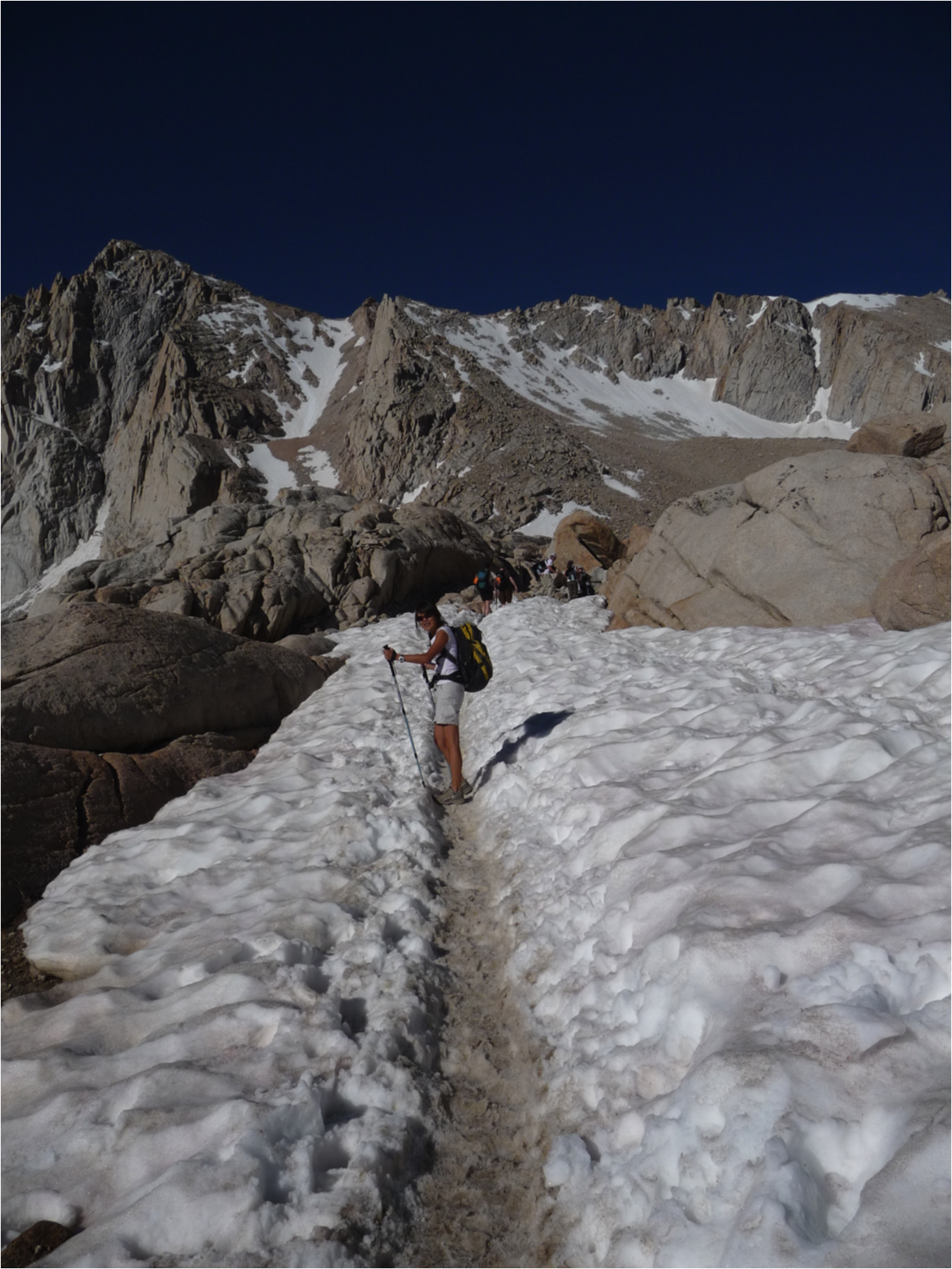 After a break at Trail Crest, we headed north toward the summit, soon passing where the John Muir Trail meets the Whitney Main Trail. There were significant patches of snow along this portion of the trail, and more than once we post-holed into a gap between rocks that had been hidden by a thin layer of snow. Everyone was breathing hard due to the altitude, but our progress was very steady as we passed by the ‘needles’ that line the right side of the trail before the summit. Each one was like a rabbit ear sticking up from the mountain and the trail allowed us a view of the Owens Valley to the east as we passed between each. Having climbed after the snow melted last time, I knew we were following a very direct line rather than the normal ups, downs, lefts and rights of the established trail.
The summit
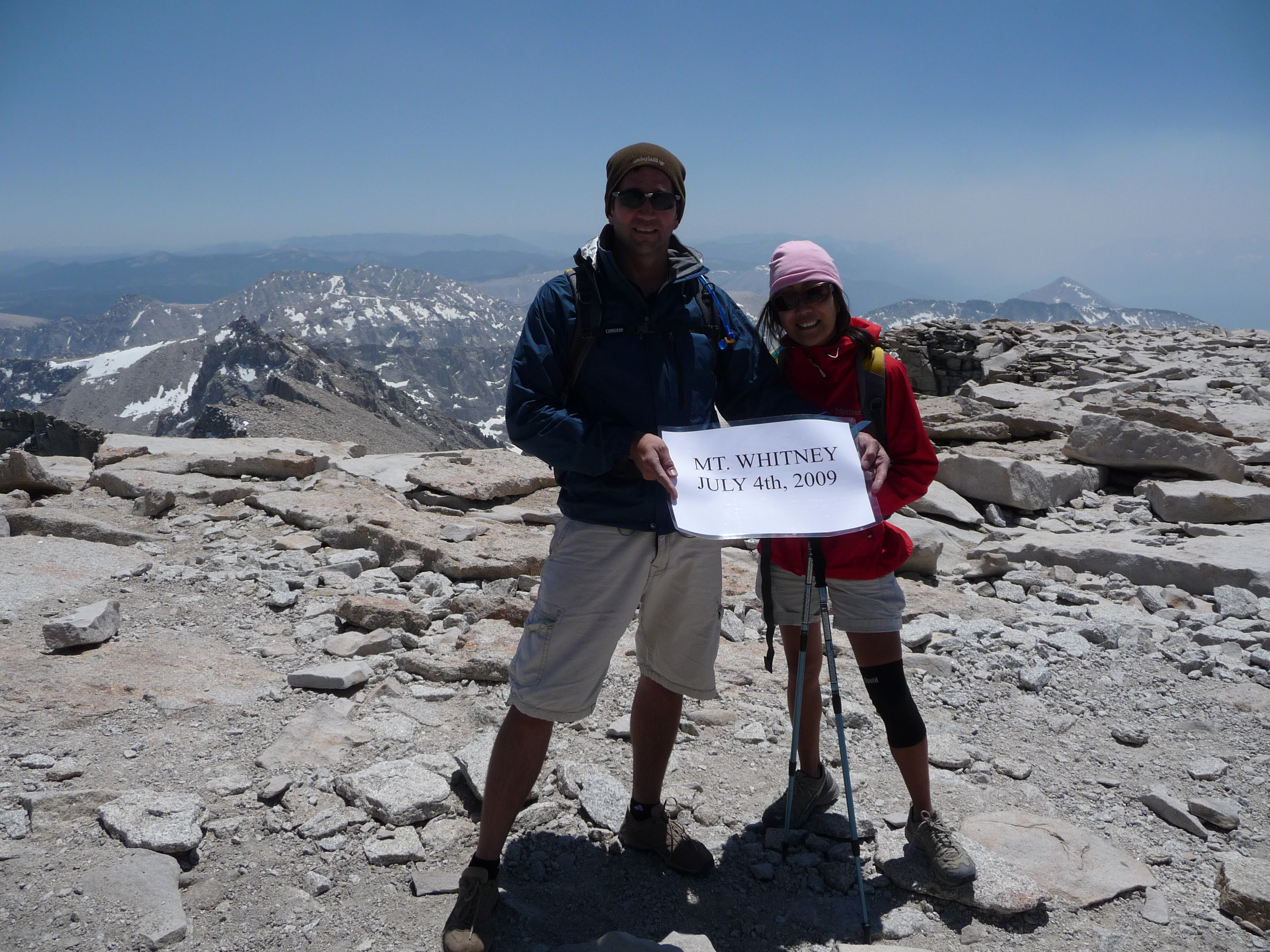 Mt Whitney’s summit comes after crossing a rough, rocky section of trail that has gentle switchbacks toward a hut that appears in the distance about ten minutes before the end. At this point, we were tired but extremely happy to have made it in a single day. We signed the register along the wall of the shelter and found a sign that someone had created for their summit photograph, so took advantage and had our friends take pictures as we held it.
Resting
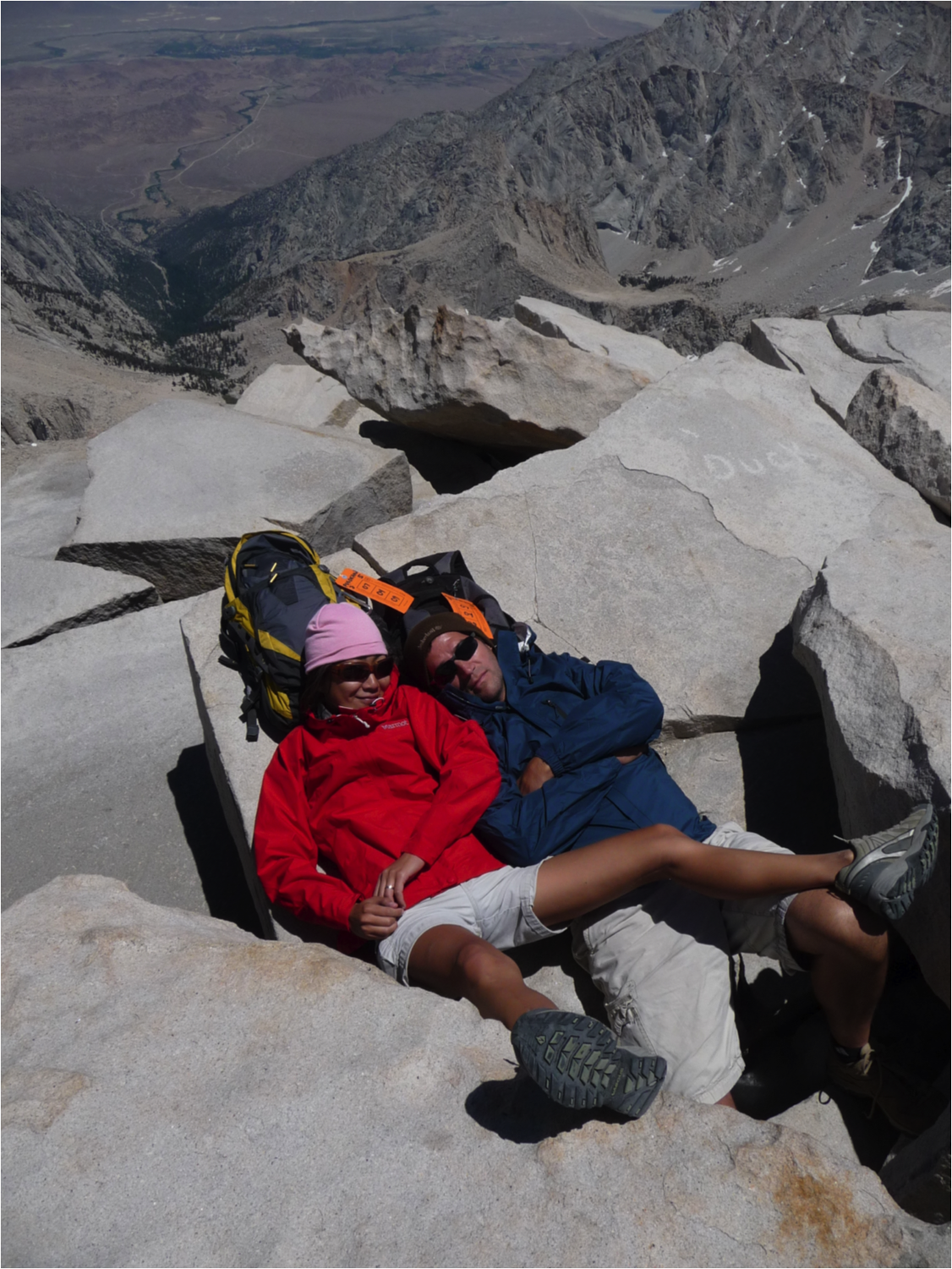 Anyone who has hiked much will tell you that getting to the top isn’t the most challenging part of climbing mountains. Getting down is where the accidents happen and where most of the pain occurs. Knowing this, we laid down on the rocks to take a break for a while rather than starting down right away. It was cold but sunny, and with our jackets on, tucked into the enormous rocks that form the summit, we were soon napping comfortably at the highest point in California. If you make it this far, plan to do the same, as it feels great to take a break and will certainly help make the return trip safer. After thirty minutes or so, we left our comfortable refuge and headed down. The trip down was long but uneventful. Another adventure.
The facts
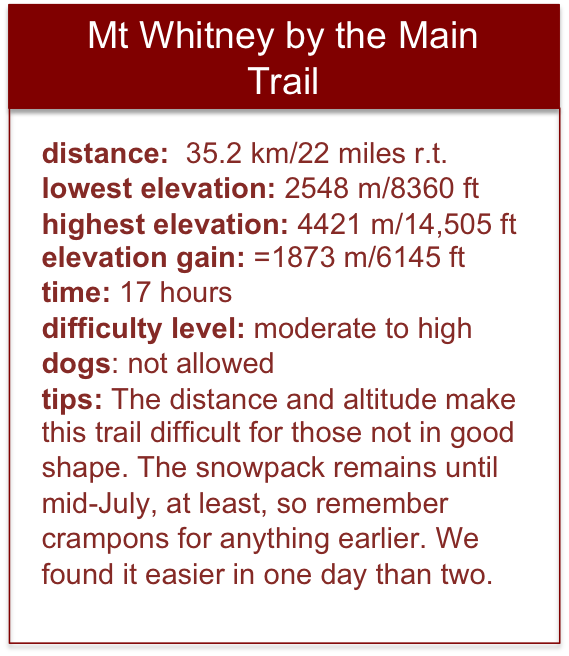 This is not an easy trail and no one should attempt this hike without doing conditioning beforehand. Good shoes are also in order, as the distance will do damage to unprotected feet and ankles. We went on a picture-perfect day, but you should always know the forecast before setting out and be willing to change plans if there is a forecast for snow (early or late season) or for thunderstorms. We’ve been told by Park Rangers that one of the most dangerous aspects of climbing Whitney in the Summer is lightening, which can kill a person on the unprotected, above-the-treeline parts of the trail.




 maximum adventure
September 12, 2011 at 10:49 am
Chris – thank you for the post! this brings back some nice memories 🙂
September 17, 2011 at 12:55 pm
Nice write up. What an amazing hike and wonderful memories of incredible sights and very sore legs!
Also, congrats on the Nimbus acquisition.
See you in the field or on the trails.