

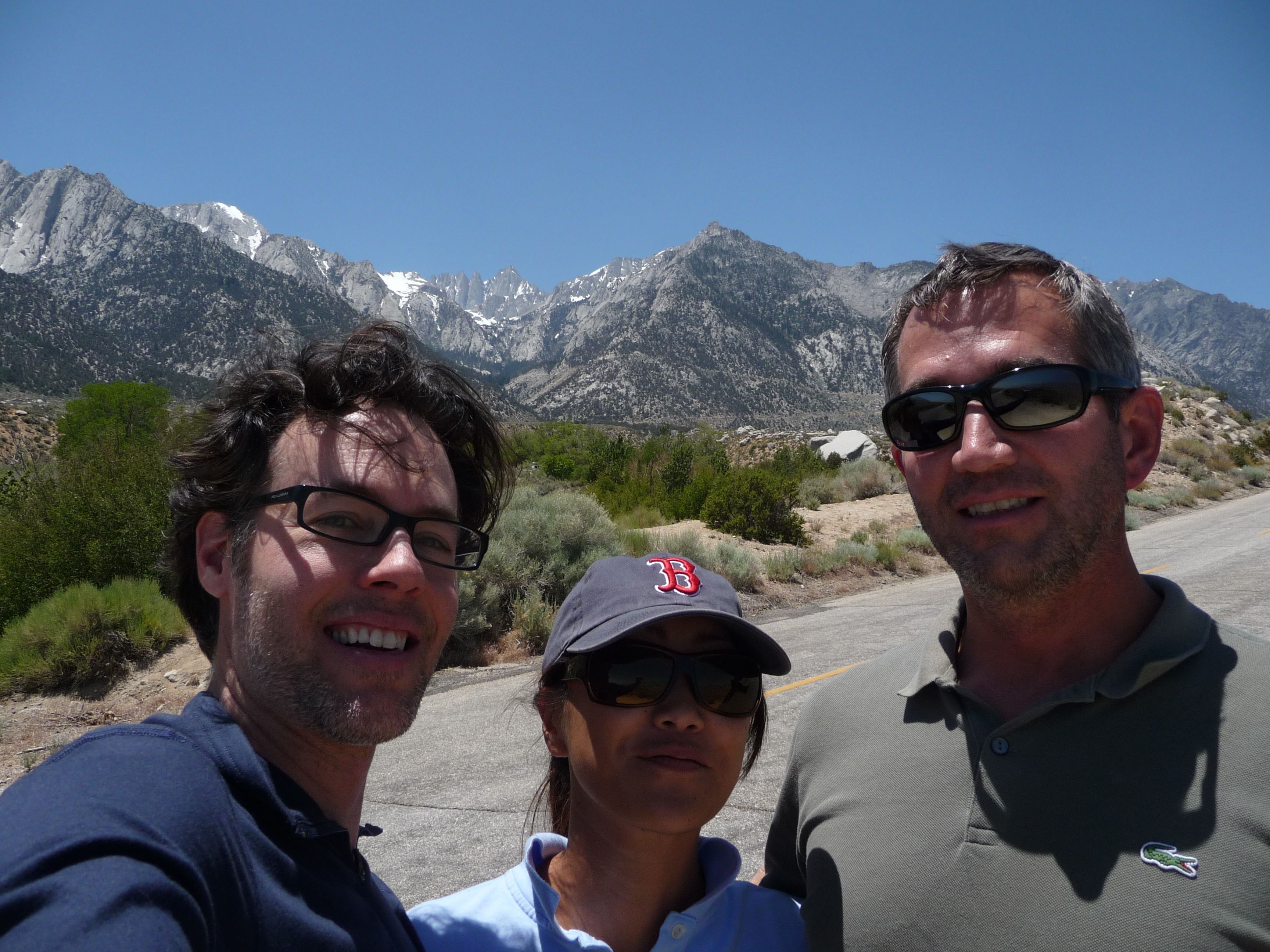
 Jeanne, our friend Craig and I made our second attempt on Mt Whitney’s (4421 m. 14,505 ft.) Mountaineer’s Route on June 13th and 14th, 2011. The highest peak in the lower forty eight states, Mt. Whitney is typically accomplished as a very long hike of 22 miles from the Whitney Portal (2,250 m., 8,360 ft.) trailhead. We’ve managed to complete the typical route twice…once as a two-day hike, camping at Consultation Lake, and once in a single day where we left at 4am and made it back to the trailhead at 7pm. The single-day option makes for a grueling day and I don’t recommend it to anyone who isn’t in good shape.
Starting up
 The Mountaineer’s Route, on the other hand, isn’t nearly as long as the main trail, but is a very direct route up the North Fork of Lone Pine Creek. It is only 7 miles in each direction, but the trail has boulders to navigate, fast streams to cross, a dangerous ledge that has claimed lives in the past (Ebersbacher Ledges) and in late Spring, plenty of snow. Snow can be your best friend or your worst enemy, depending on how much there is and how firm it is. Last year’s attempt on the Mountaineer’s Route ended in the final snow chute at 2pm, when it became obvious that the slow going had soaked up so much time that we had to turn around or be stuck on the mountain overnight. This year’s plan was to camp just under halfway up the trail at Lower Boy Scout Lake, making it easier to reach the steep chute at a point in the day when the snow would be easy to cross.
Lower Boy Scout Lake
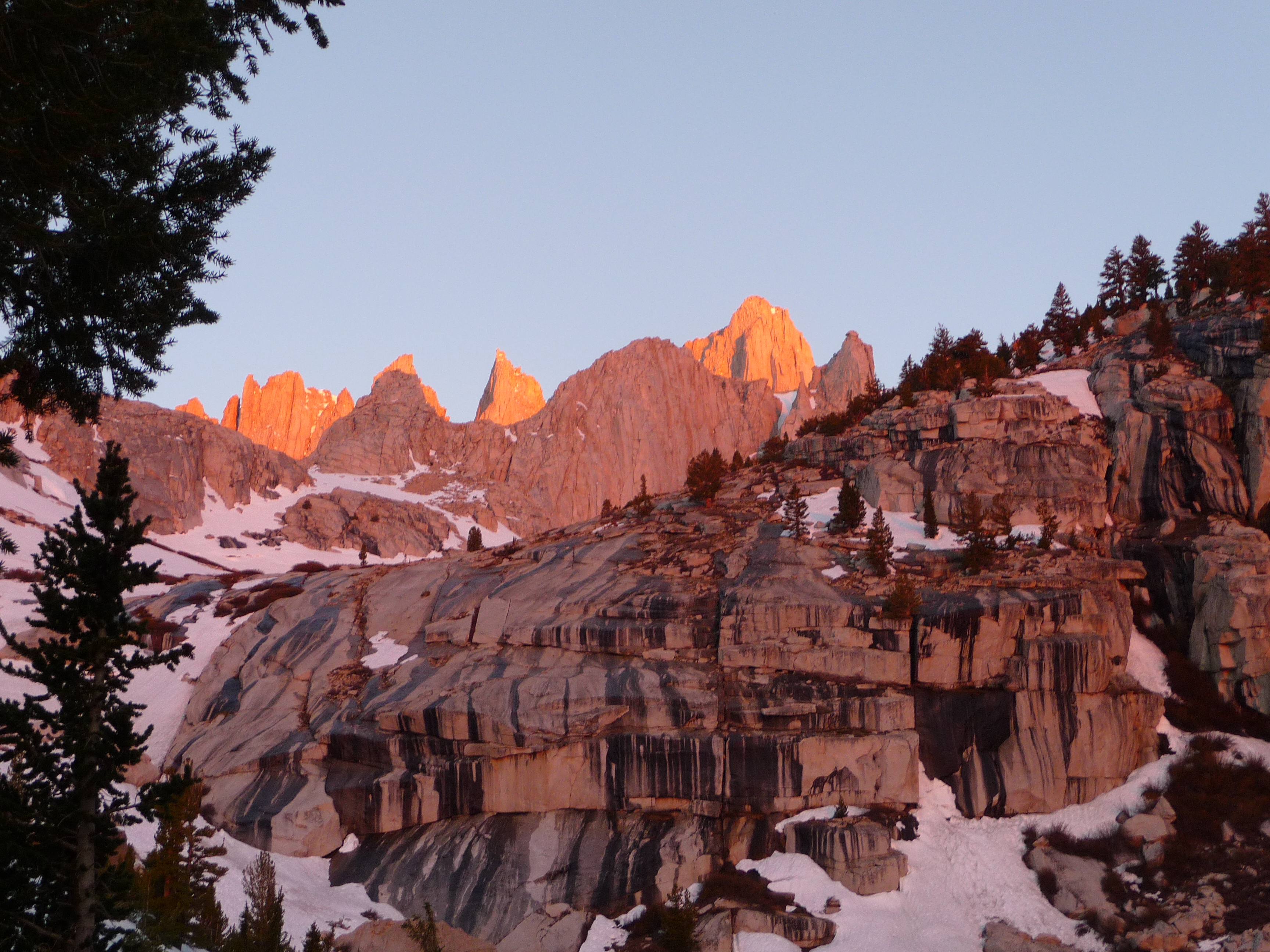
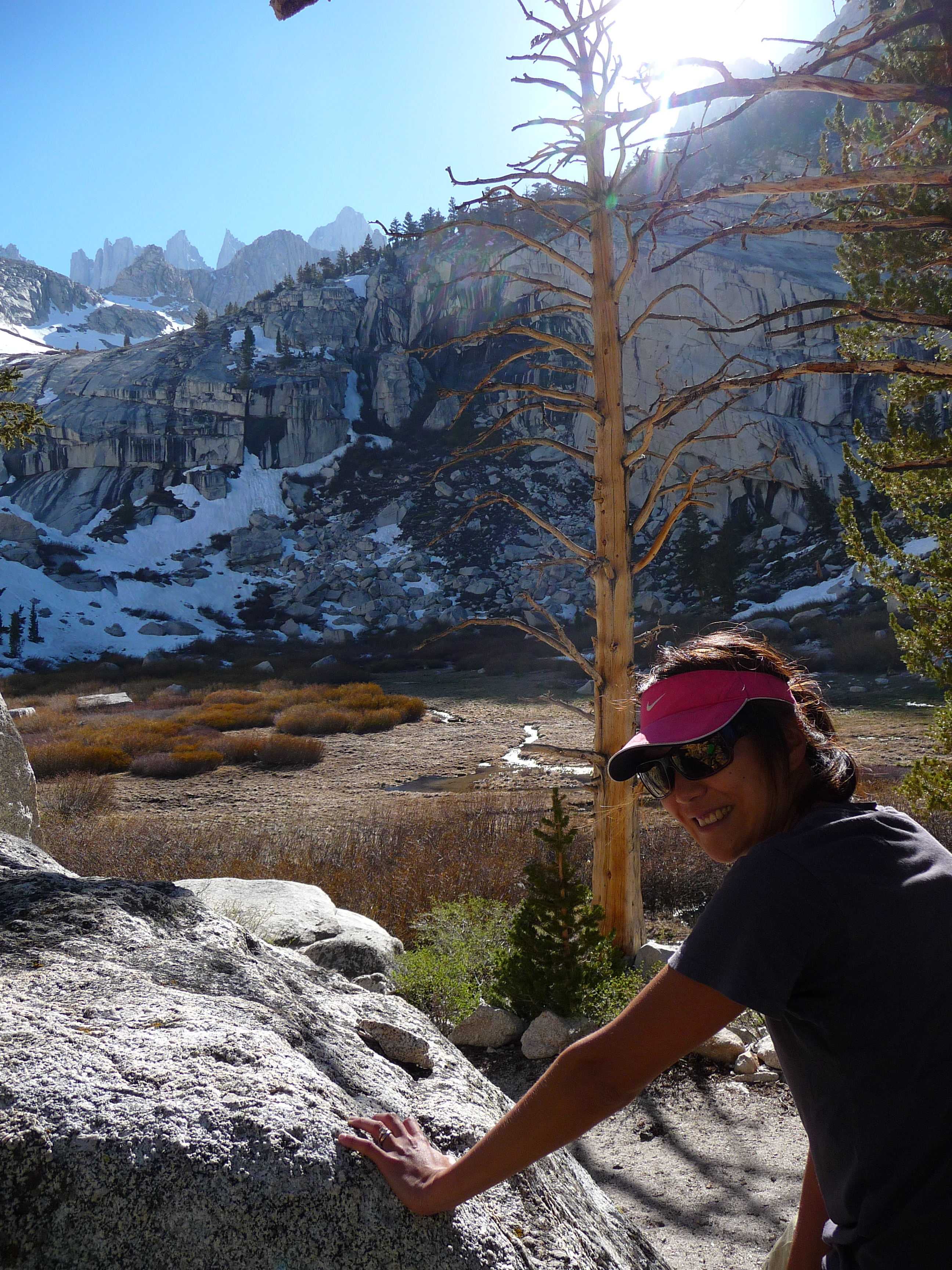 The first day passed quickly as we left Lone Pine at 12pm, left the trail head at 2pm and were at Lower Boy Scout Lake by 5pm. It was a beautiful and warm evening and we could see the peak looming above us in the distance. Little did we know that it was a little too sunny and too warm for that time of the evening, that high on the mountain. Craig went to filter water from the lake, while Jeanne and I set up the tent and started dinner. With a plan to start hiking by 6am, we were turned in and sleeping by 9pm. Despite the altitude, which can make sleeping difficult, we slept well and woke up to a beautiful pre-dawn sky. It looked like it would be a gorgeous day, and it didn’t feel as though the temperature had gone below freezing.
Summit day
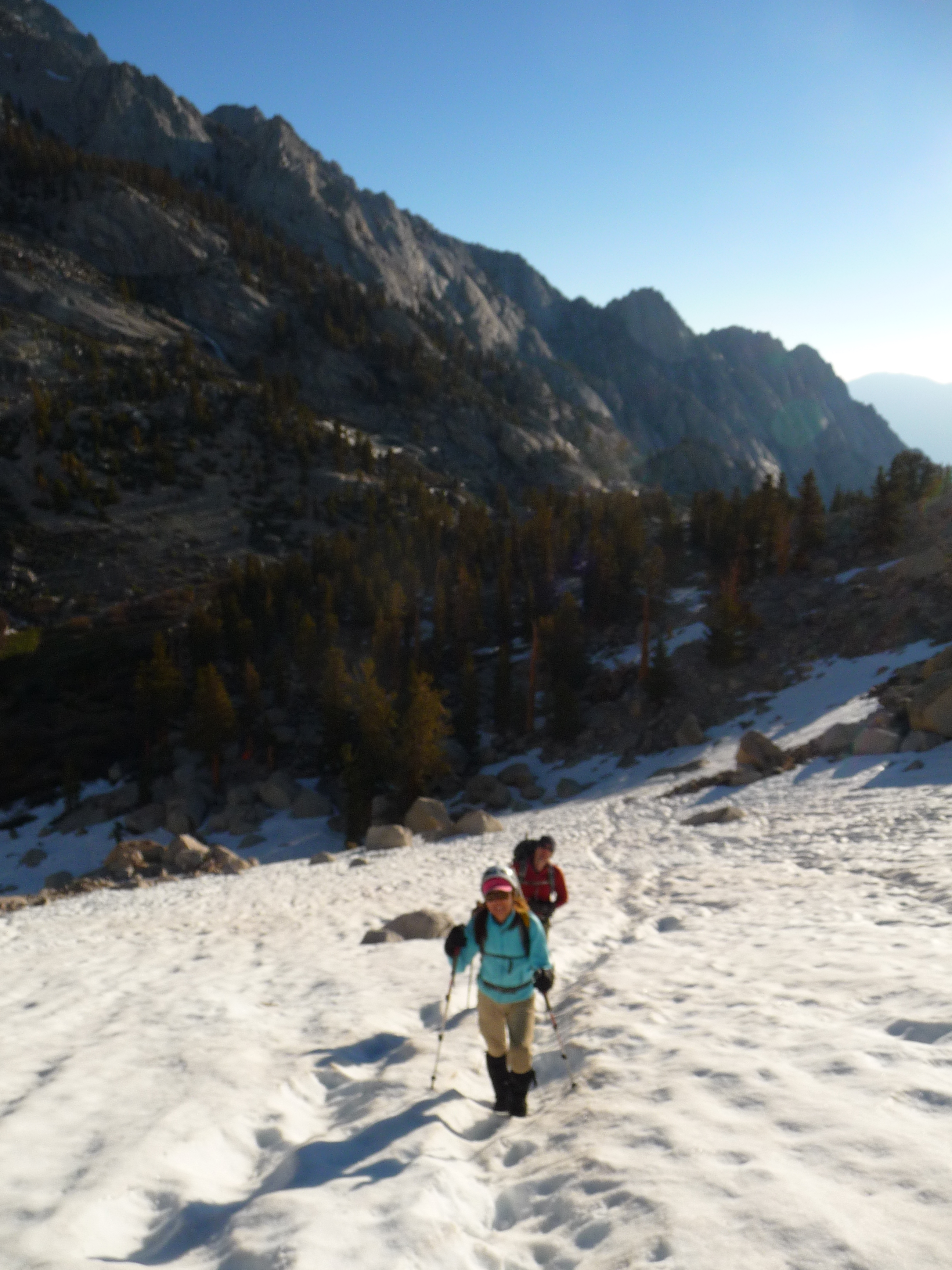 Other than being conspicuously warm, Day 2 was off to a great start. We had our oatmeal, eggs and bacon and set off on the snowfield just above our campsite. The snow didn’t seem very firm but it wasn’t very soft, either, and we were very fresh. As we climbed higher, however, the temperature began to rise and the snow grew softer and deeper. There are a series of snowfields as the climb passes Upper Boy Scout Lake, goes over a ridge into the large bowl below the Summit, and then up a steep hill to Iceberg Lake. It is from Iceberg Lake that the final push is made up the snow chute. By the time we reached this point, we were ‘postholing’ in the snow, which refers to suddenly dropping into deep, soft snow rather than being able to walk normally on the surface. Beyond tiring, postholing causes injuries to the lower leg as there are often rocks or tree branches hiding beneath the snow’s surface with empty space around them.
The chute
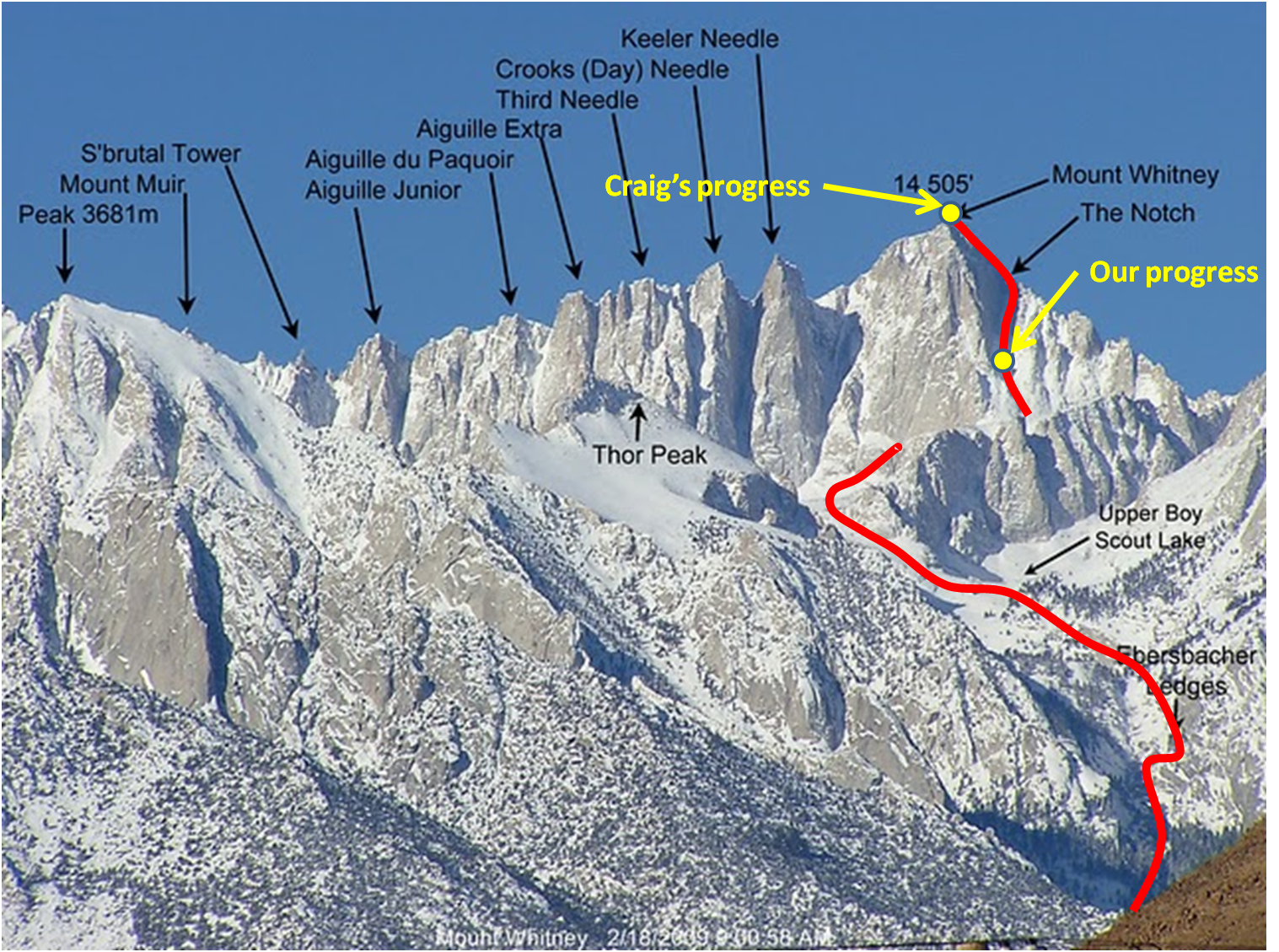 We reached the final chute that leads to the Summit at 10am, far earlier than the previous year. What we found, however, were snow conditions that were significantly softer than the previous year. Jeanne and I climbed one hundred meters or so before deciding that the conditions weren’t safe to continue. Our intrepid friend, however, made the decision to go for the top and soon disappeared above us.
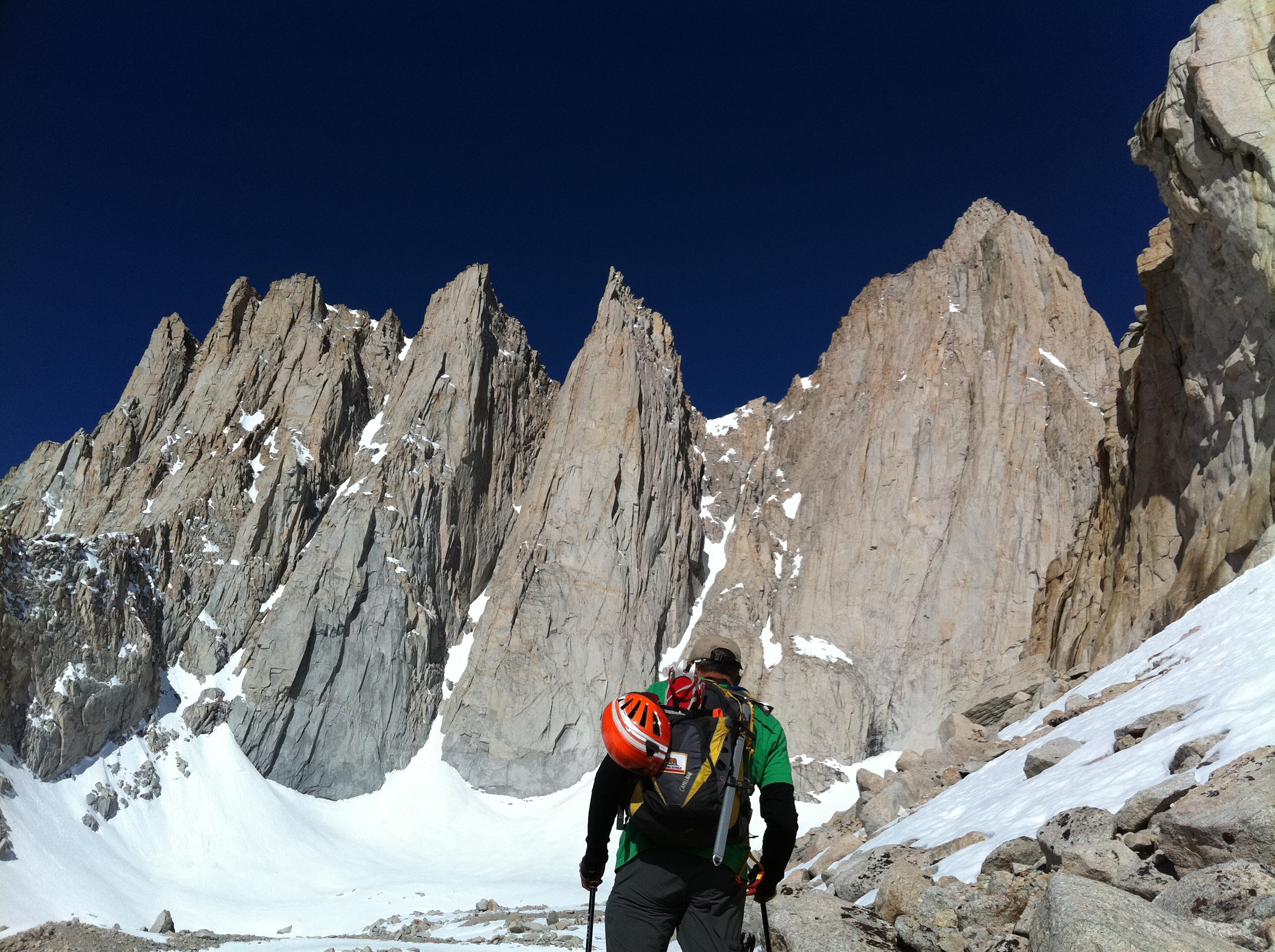
Waiting for Craig
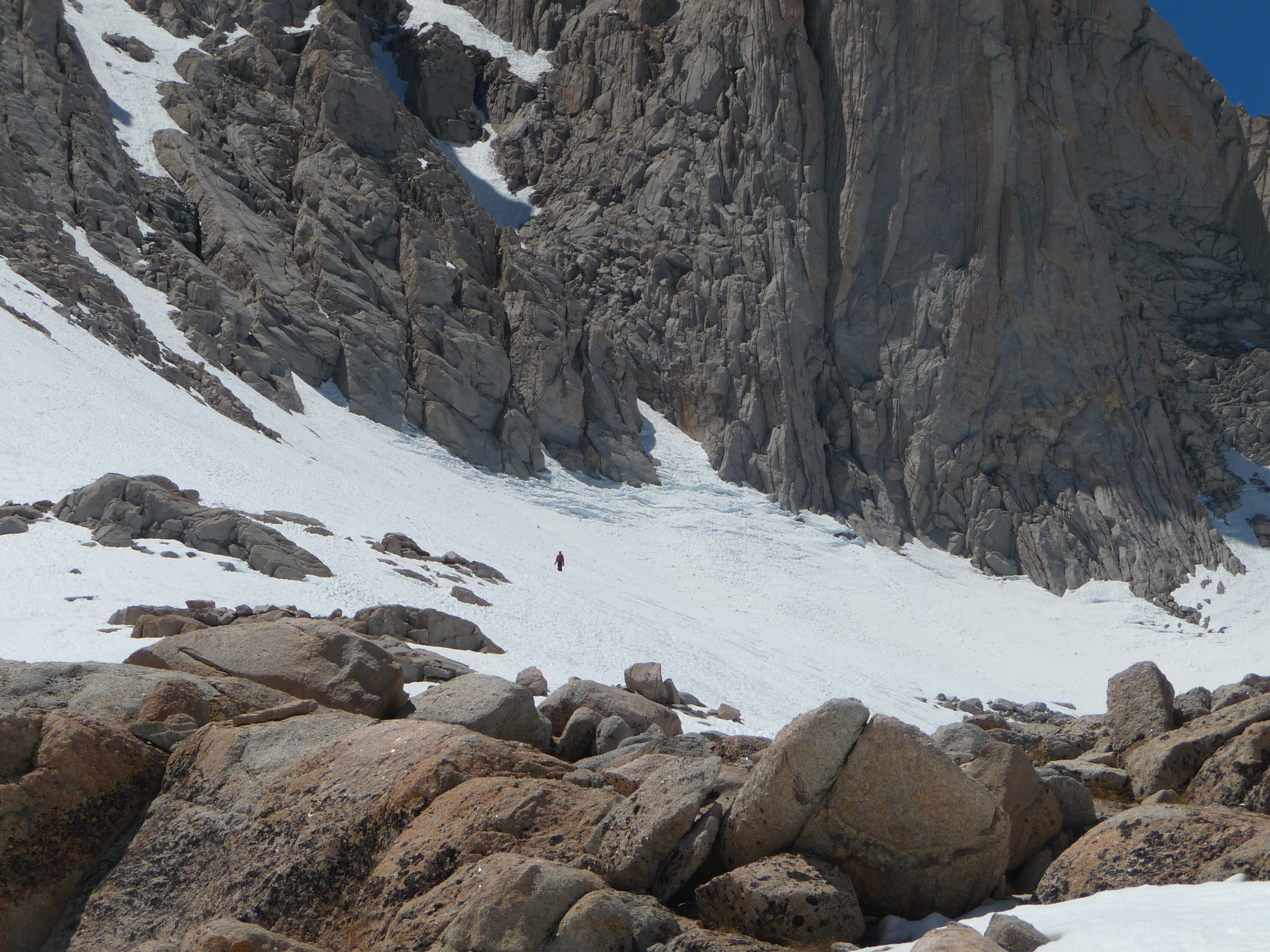 We waited for Craig, first in the chute, until the combination of the sun and its reflection off the snow made waiting unbearable, and then down below where we could see his return. We were concerned that he would run out of water, and began filling water bottles with snow and laying them in the sun to melt. Three hours later, an exhausted Craig was spotted sliding down the chute. We were significantly relieved to see him and he was just as happy to see that we had water for him, as he had run out. It always amazes me how much climbing dehydrates the body and how snow, unmelted, doesn’t solve the problem.

Going down
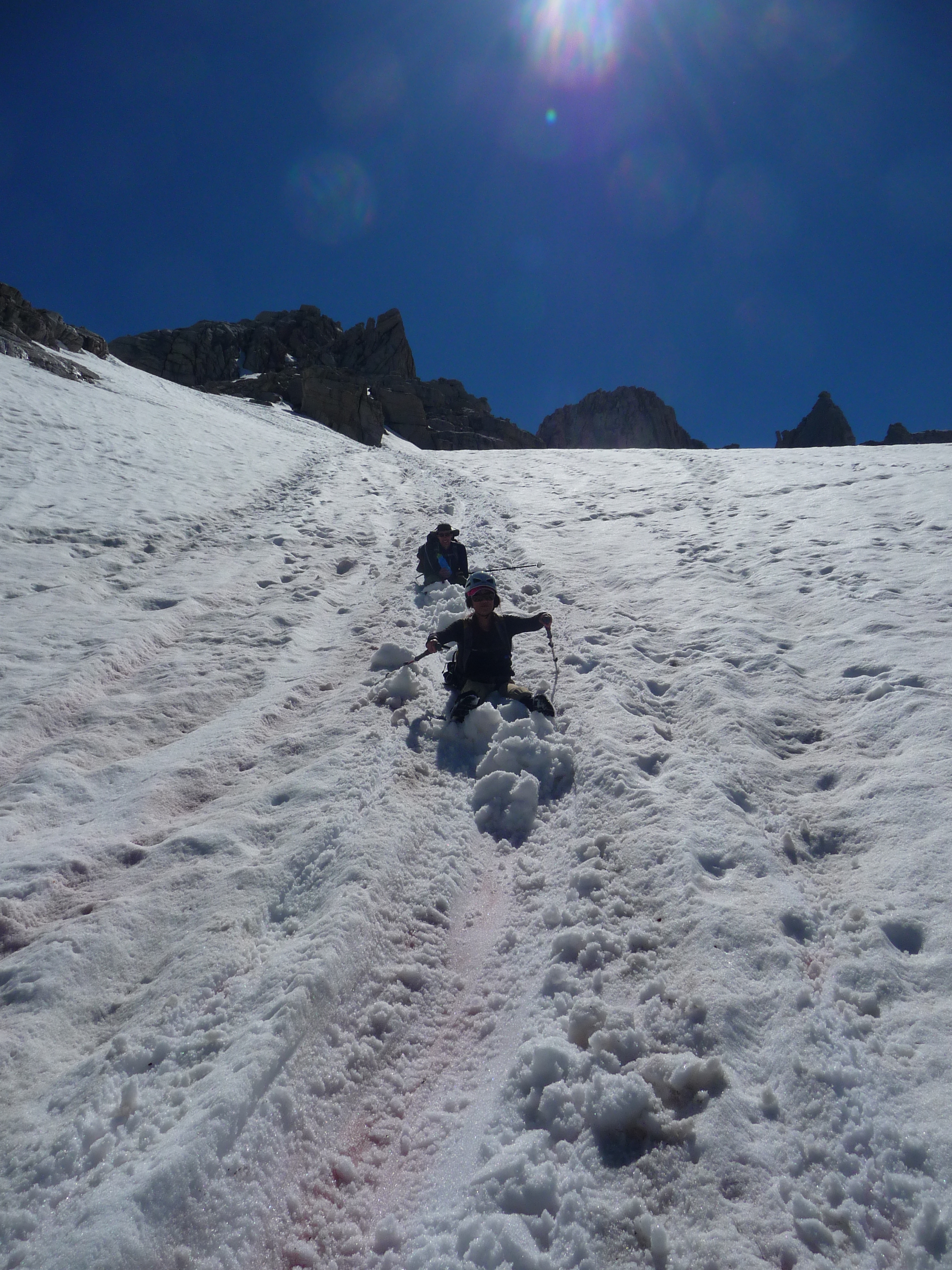 With more time than last year, the descent should have been an easy one, but the snow was so soft that at times we dropped into holes to our armpits, and only our backpacks slowed the drop. In the steepest sections, we could sit and slide down on the snow to save significant energy and time, but there were also sections that weren’t so steep and simply had to be negotiated with care, with each of us periodically letting out a yell as we dropped into a hole. Once we made it back to our campsite, we broke down our tent, repacked our backpacks and headed down the trail once again. The stream crossings were made more difficult by the higher volume of water gushing down from the extremely warm and snowy slopes above.
Back at the trailhead
We were back at our car by 7pm and exhausted. It had been another tough climb and for Jeanne and I, disappointing that our camp halfway and early start didn’t make the summit any more possible. We have no choice but to tackle it again.





 maximum adventure
June 17, 2011 at 10:36 am
Excellent trip with the Taylors!
My continuation up the mountain was one of bullish machismo and the need to complete the climb so “I would never have to climb this damn thing again”. That was my mantra on the ascent up the 1000 foot chute. Which I would like to here on out christen the “StairMaster from Hell” Thank the gods I did those three months of squats and thrusts to prepare.
The top was absolutely gorgeous though. At the notch i was treated to a 20-30 degree cooler breeze and a view of the western Sierras still covered in a record snow fall. Last year we climbed the Final 400 but this year, alone i was not that confident so I follwowed the steep ridge to the back side of the peak. The ridge is steep and dangerously high but the snow was hard on the North West face and was able to follow some previous climbers tracks.
The result of my efforts: absolutely alone on the peak. Not a person in site. What a rare treat. I took a picture, ate some celebratory dark chocolate and with an altitude headache coming on and water running low decided to head back down.
What took an hour and half to trudge up took 5 minutes to glissade down. That doesn’t seem fair but with the chute behind me, Chris and Jeanne in sight, I “postholed” my way back across iceberg lake flats to them and we continued on our merry way. Great time and I appreciate them waiting and allowing me to continue to the top.
Good times,
Craig