

The following is a continuation of Part 6: Rupina La to the Glacier.
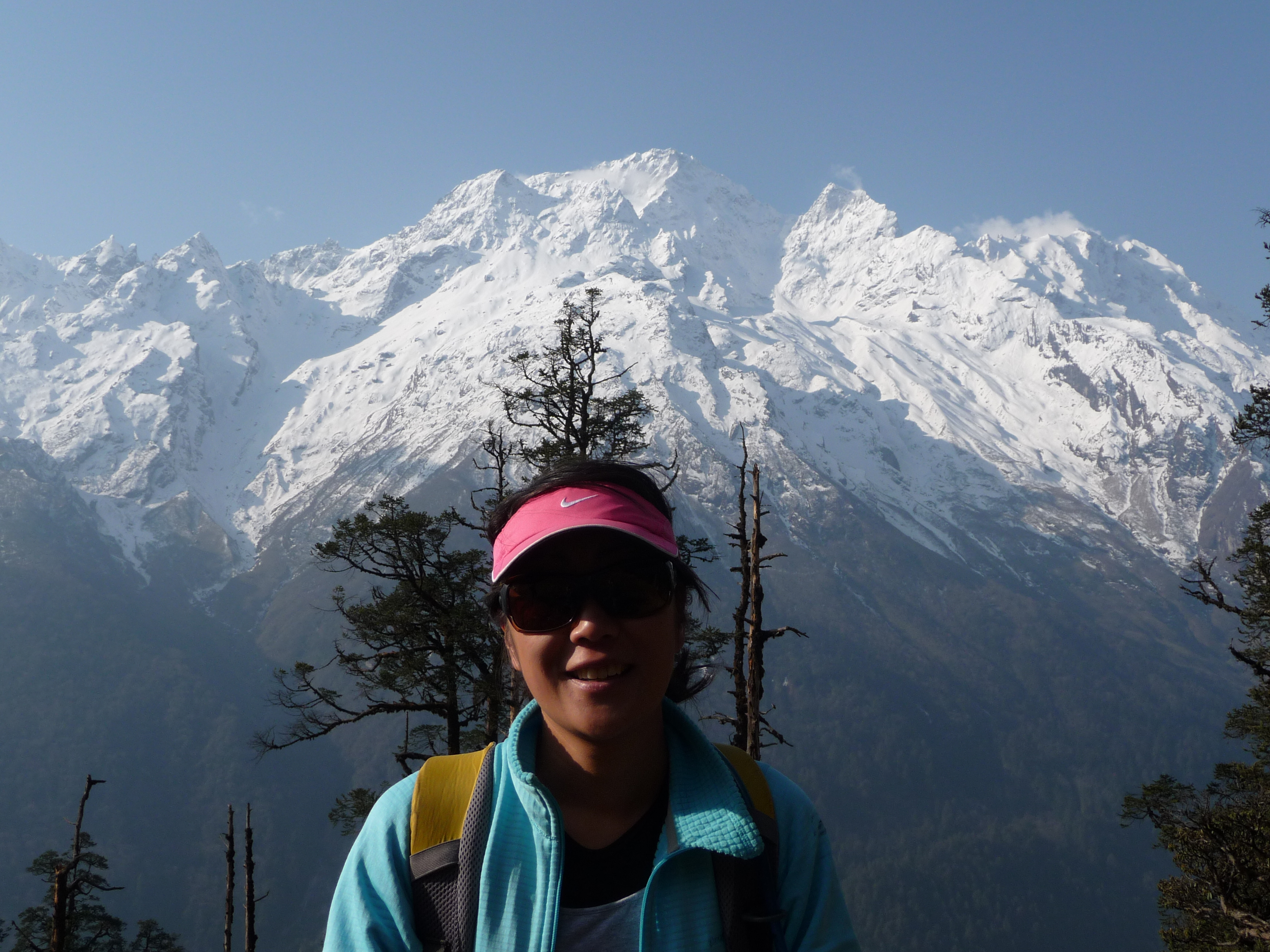 After the excitement of the Rupina La and the Baudha Himal Glacier, it was hard to imagine that our next day would be as interesting. Quite to the contrary, as we descended the valley, the incredible natural beauty of this part of Nepal was everywhere. We were staying fairly high on the northern side of an east-west valley while the valley floor continued to drop lower and lower until it was out of view over the shoulder of the mountain.
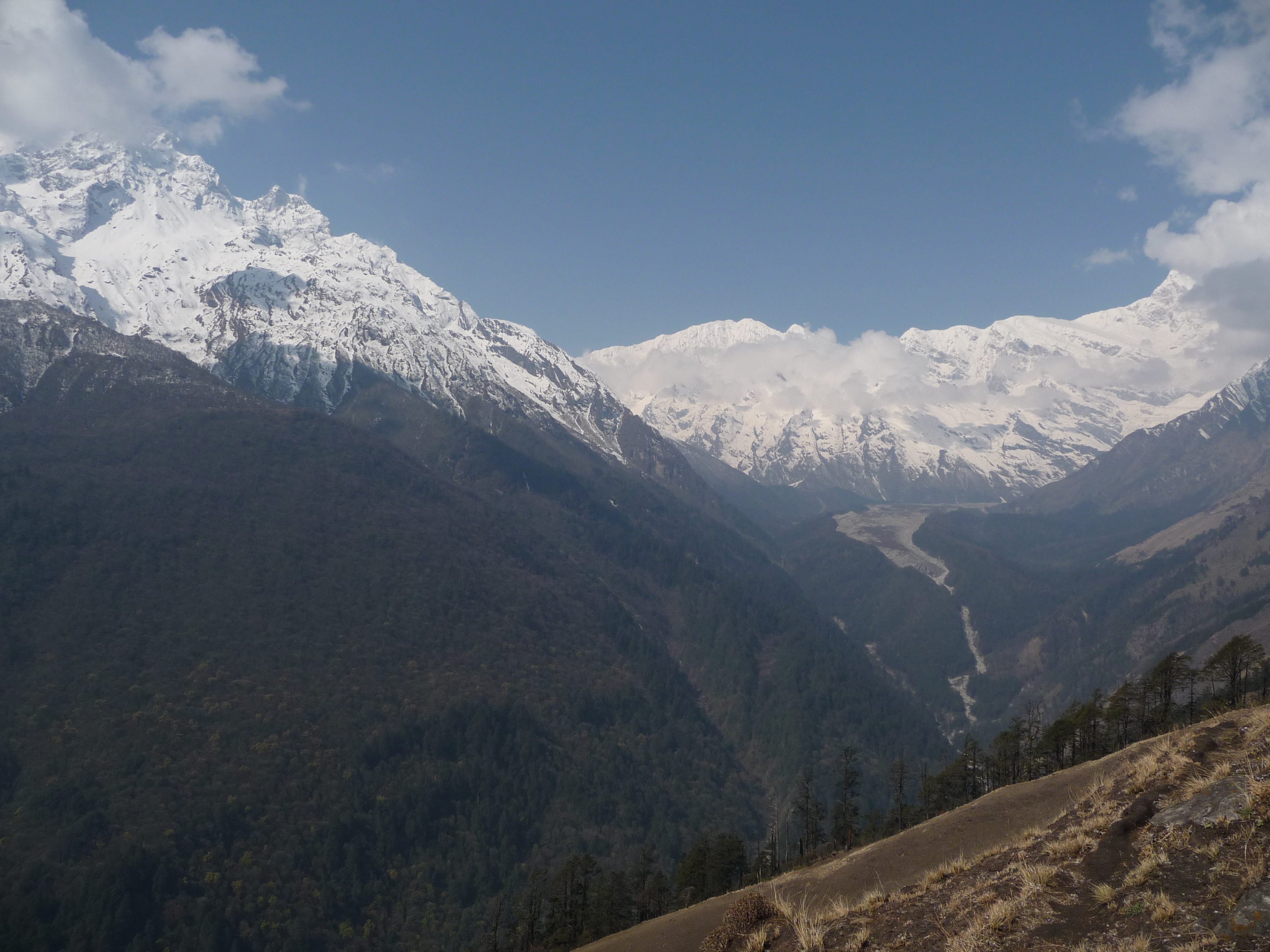
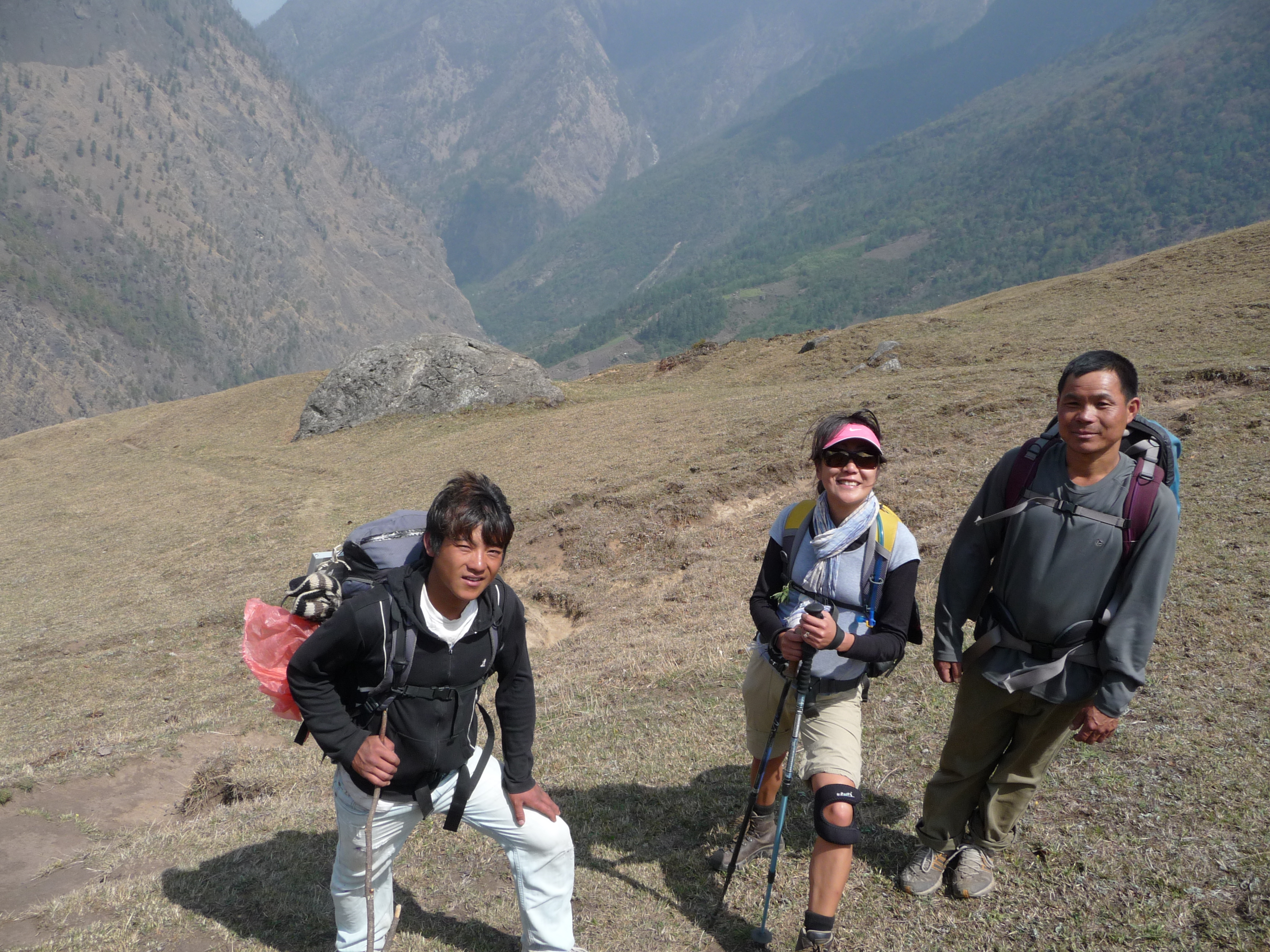
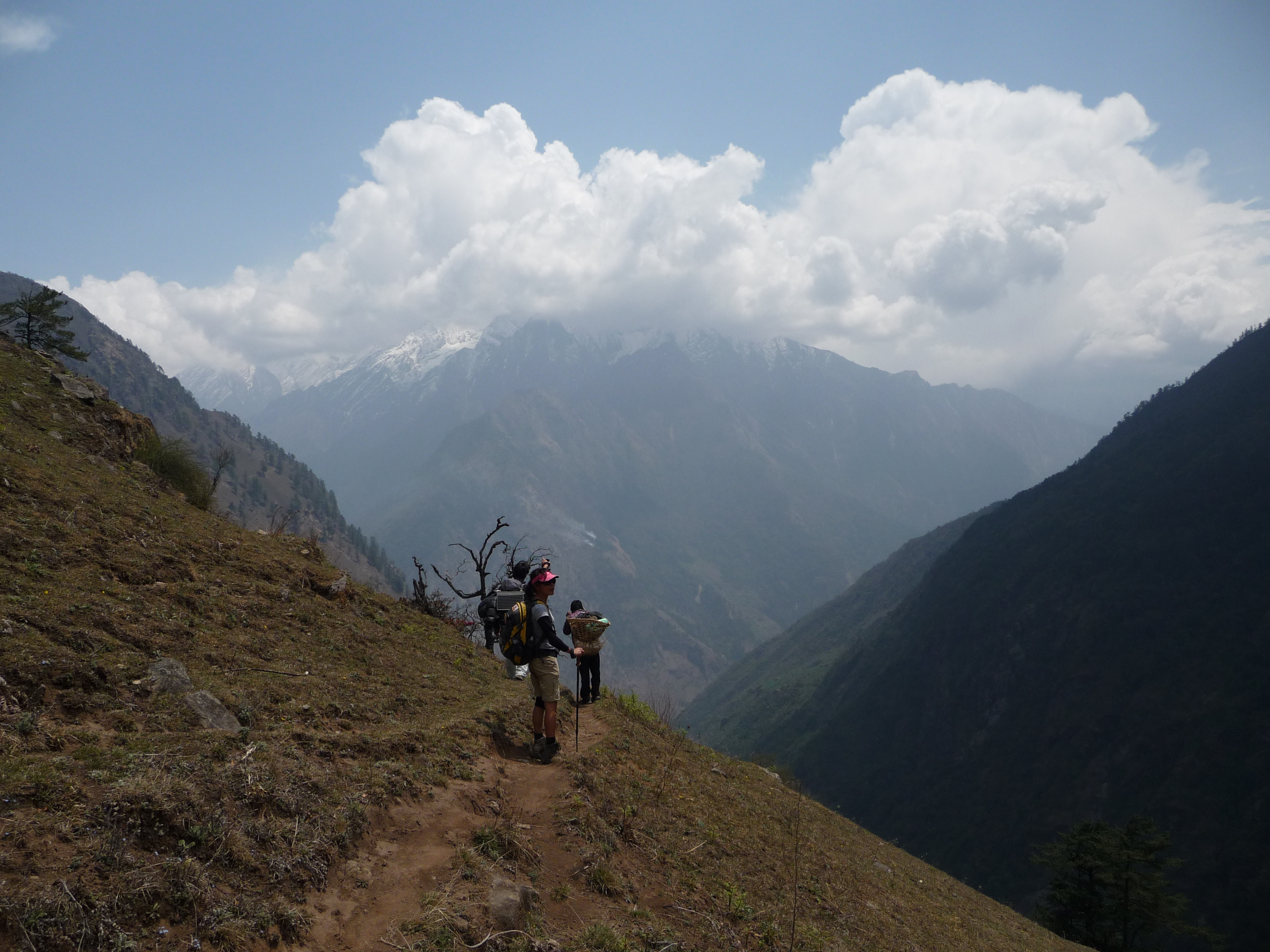 The large, grassy slopes we crossed gave us amazing views both ahead to where we were going as well as across the valley. Through the clouds, we could see the the snowy slopes of the Ganesh Himal far, far ahead of us. This range forms the southern rampart of the Tsum Valley that we would enter in two days. Between here and there, however, was an enormous descent to the Budhi Gandaki Khola (River) and then a matching climb up toward the Tsum.
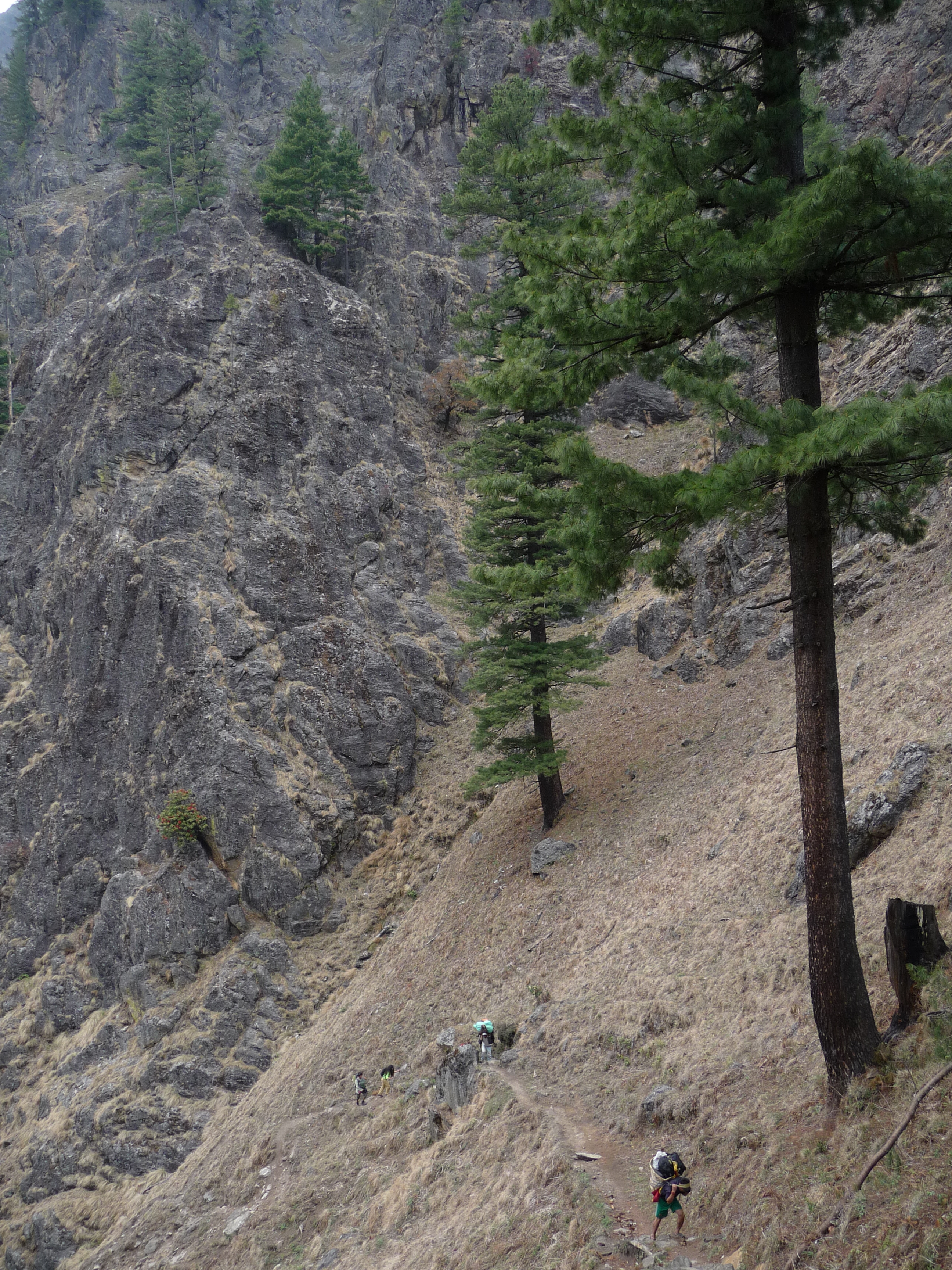 As we gradually made our way to the opening of the valley, it was amazing to consider that we hadn’t seen another human being in four days, and hadn’t passed through a permanent village in five days (since Barpak). That such beautiful places exist, so far from roads and cars and that we went through the effort to see them was one of the most rewarding feelings we’ve experienced in our lives. Each hour, the terrain changed until just before Nyak, we were walking rocky slopes with sparse cover of grass and the occasional pine tree. We were also at the latitude where marijuana grows naturally in Nepal, which always causes a double take when trekkers first realize what they are seeing.
Into Nyak
 Entering Nyak first meant making our way down through the water buffalo pastures that reached far up the mountain. The first humans we encountered were children, using long boards to sled on the steep, grassy slopes. They were having fun, unaware of how dirty they were, and how poor their surroundings. They were laughing no differently than a Western child who has every electronic convenience and doting, over-protective parents.
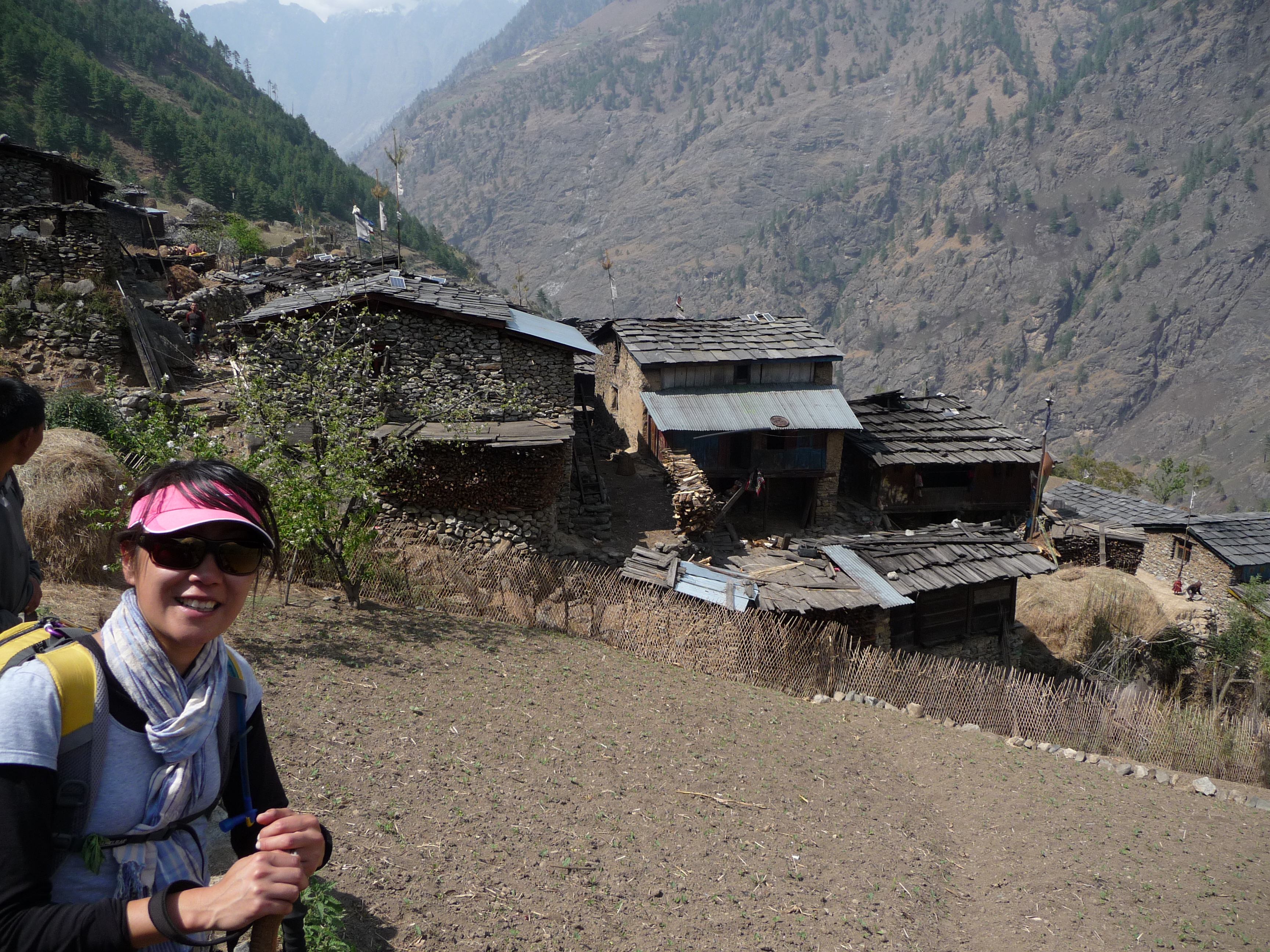 Nyak itself was a very small village of mud and stone houses that was a culture shock after so many days of unspoiled beauty. It is hard to come from so many days in nature into a place with the noise, smells and problems of humans. The people were obviously very poor and eeking out a living well off the traveled trekking routes. It is a sad fact in Nepal that towns that don’t see many trekkers are some of the poorest, and Nyak fell squarely into this category. We were back amongst people, though, and we quickly adapted and struck up conversations with locals. The men appeared be mostly tending to the livestock, and the women doing work weaving, caring for chickens, and minding the children. We were almost done with the day, but the toughest part was still ahead. Next up, Part 8: Nyak to Lakuwa.





 maximum adventure
Trackbacks/Pingbacks
[…] Maximum Adventure because life is a great adventure Skip to content HomeAbout UsBlogContact usUpcoming Adventures ← Trekking in Nepal in April 2011 – Part 7: Baudha Himal Glacier to Nyak […]