

The following is a continuation of Part 5: Crossing Rupina La.
 With the pass behind us, the next day found us continuing downward toward the Baudha Himal Glacier, which would join our path from a valley coming from our left. The weather warmed every hour as we descended and it was easy to feel that we had just walked out of winter and into spring. We crossed beautiful meadows that were just showing signs of grass and flowers and across snow melt rivers on the most rustic bridges imaginable. Other than the building we saw at the bottom of the pass, we saw no signs of human activity other than the bridges. After the difficulty of the pass, it was an easy morning.
The glacier
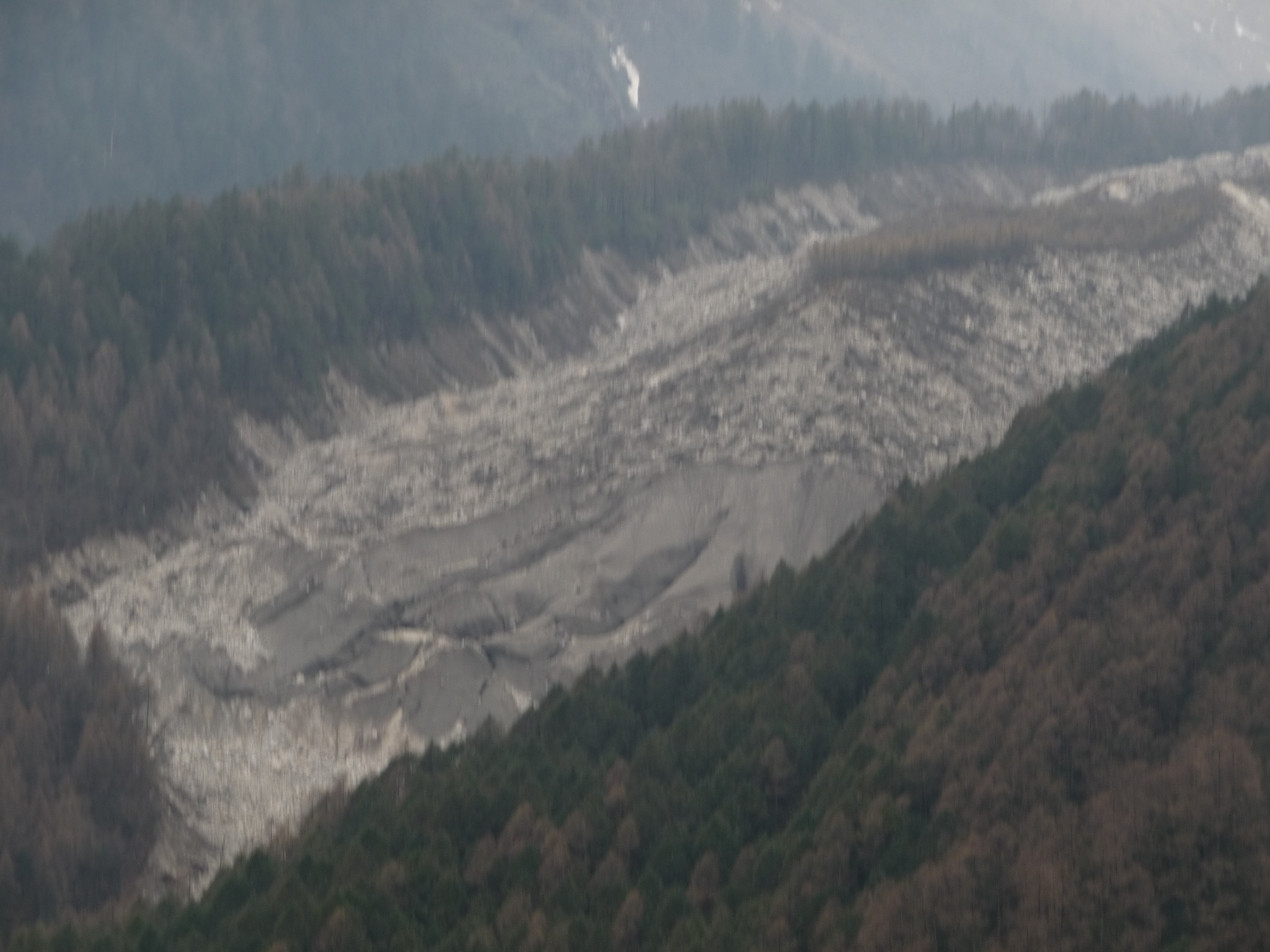
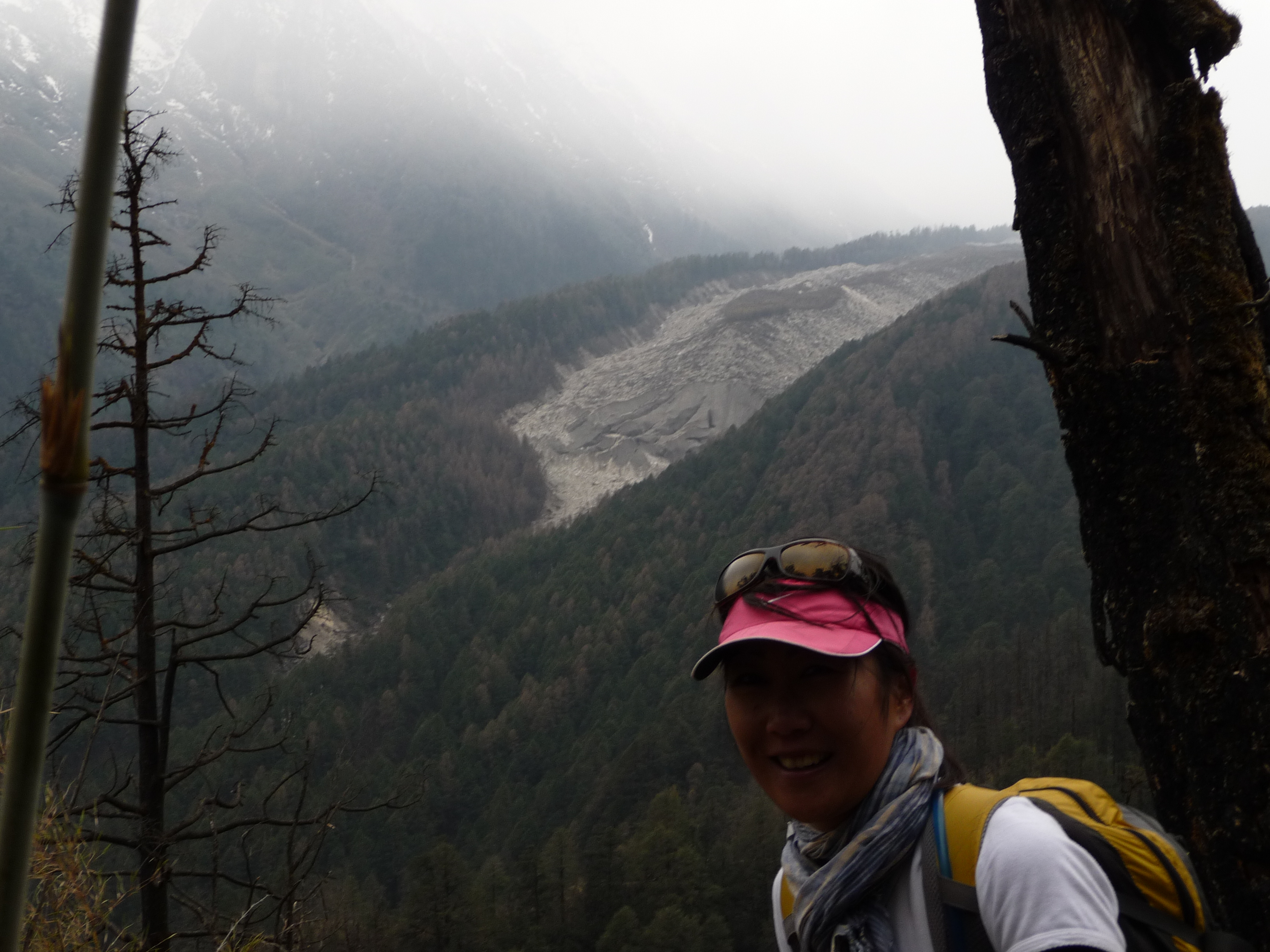
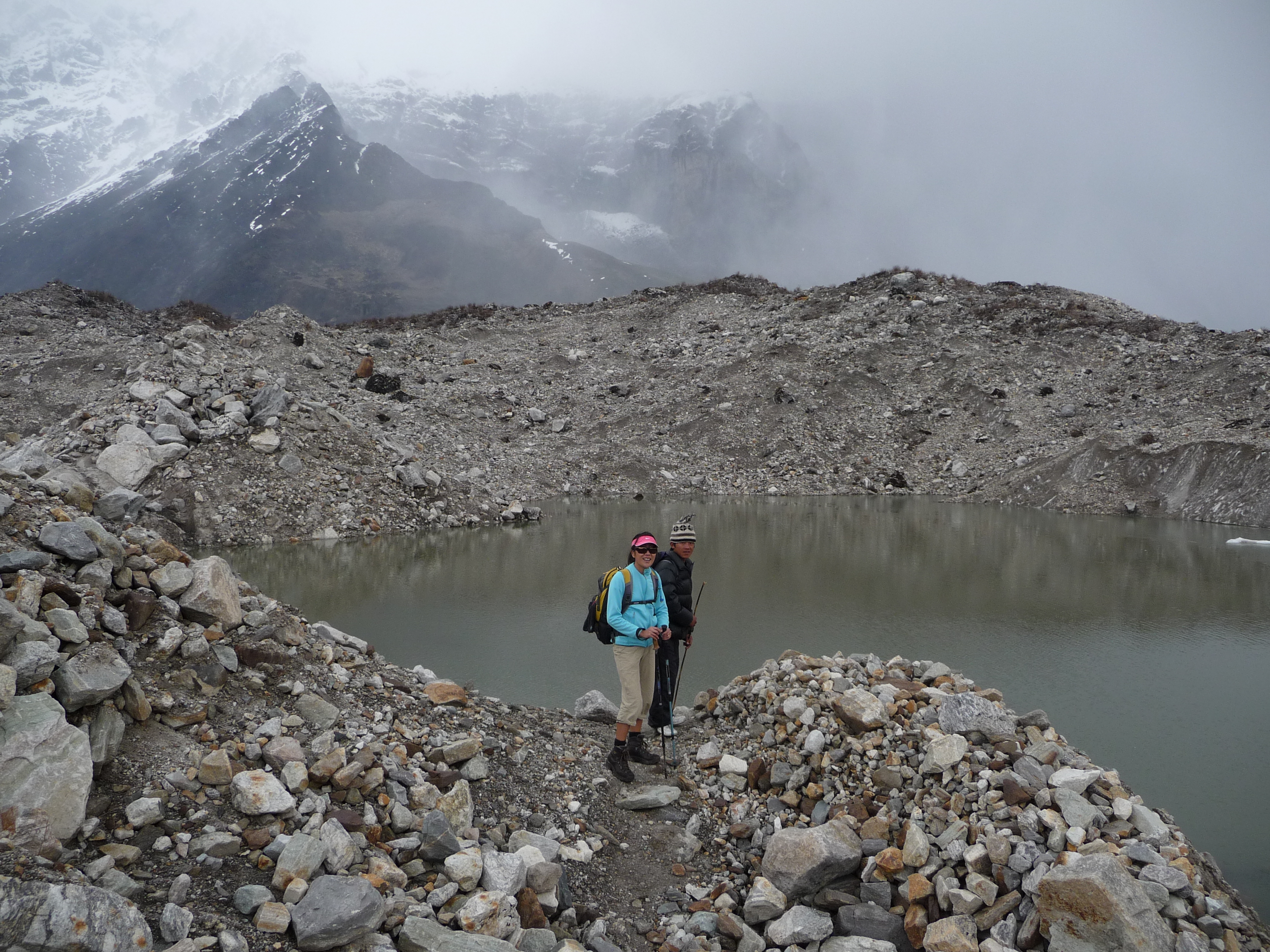 Rather than a valley filled side-to-side with ice, the glacier was instead a long, high ridge going down the valley center, and we were well below the sides…far below the sides. It was, in effect, a valley-within-a-valley. Reaching the glacier meant first climbing a 100 m., very steep hill dense with pine. At the crest, the glacier began immediately and was a bizarre landscape after hours of walking in fields and forests.
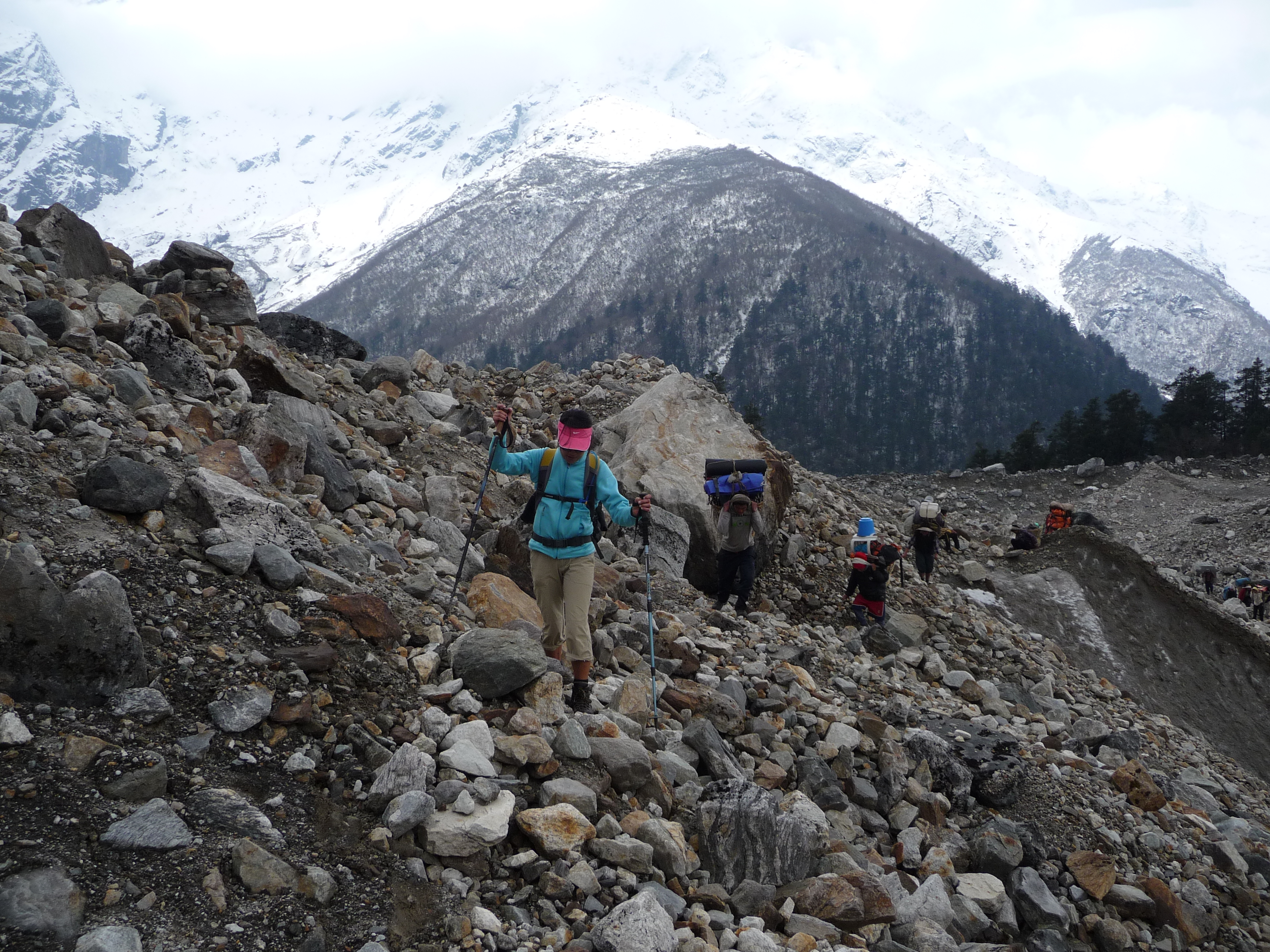 Once on the glacier, the going was very difficult, as the surface was not snow, but large and small boulders, piled indiscriminately and very unstable underfoot. It was like walking in a gravel pile, but with gravel that ranged from almost sand up to medium-sized boulders. Most amazing was the fact that the porters continued to move along with ease despite the weight on their backs and loose footing.
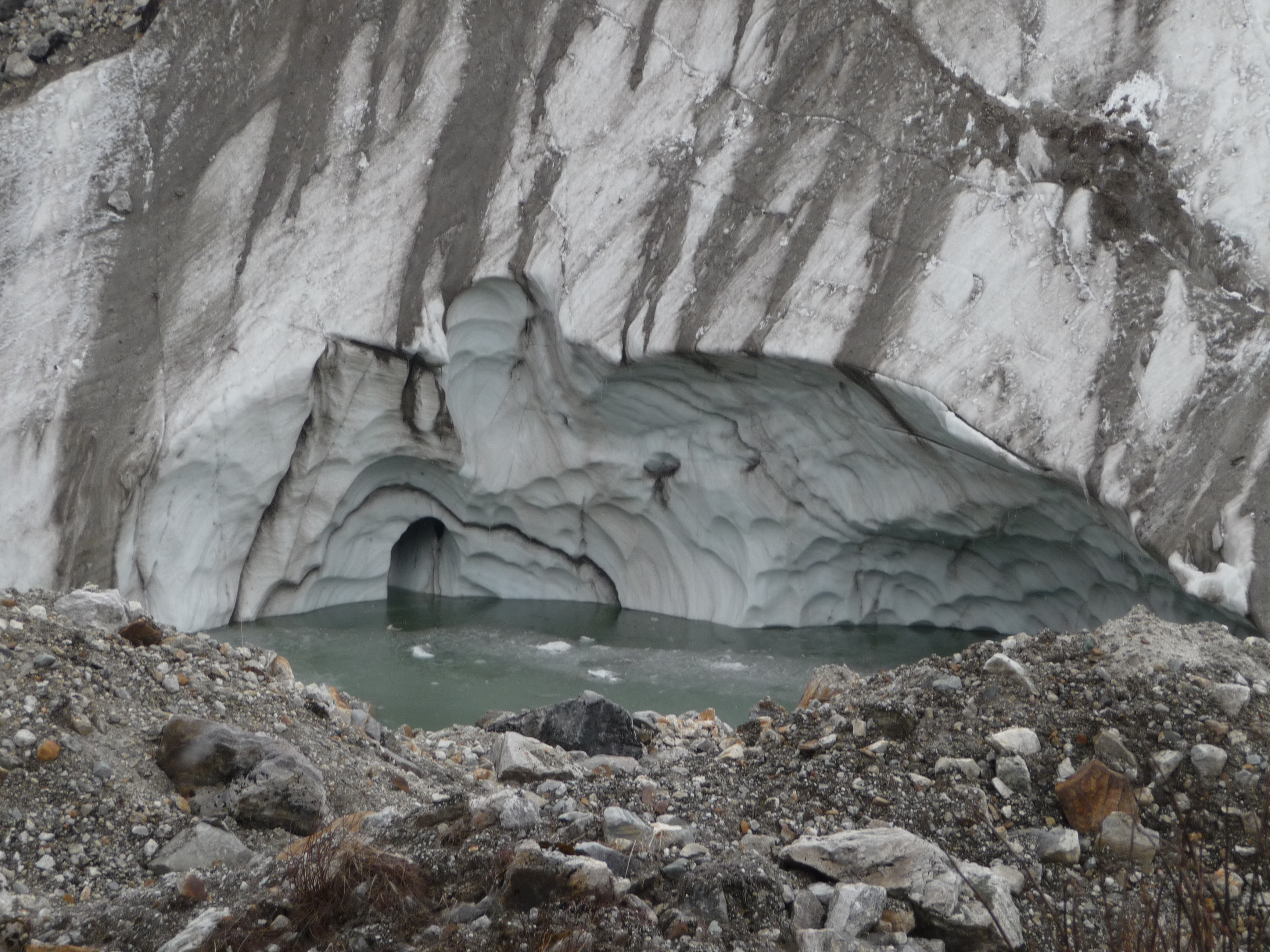 Beyond the footing, it was obvious that there were pockets below the surface that were only one footstep away from opening up and swallowing us. We would hear rocks shifting below as we stepped, and a few times, an actual hole opened and rocks could be heard to fall into water far below. It was a nerve-wracking walk, but beautiful to see a real glacier in the middle of doing its mountain-carving work.
It was surreal to see the terrain and all of its variation. The pools of water that were perfectly still on the surface of the glacier were turquoise blue, and here and there amongst the piles of rocks, could be seen patches of ice. It was impossible to know how deep the glacier was, but we assumed it was at least as high as the ridge we needed to climb to reach it, so 100m. or more. It was a great relief to again climb a hill on the far side of the glacier and to descend through another very steep pine forest before reaching the valley floor once again. Unless we were standing on the glacier itself, there was no evidence that this enormous river of ice was just behind us.
Spring in Nepal
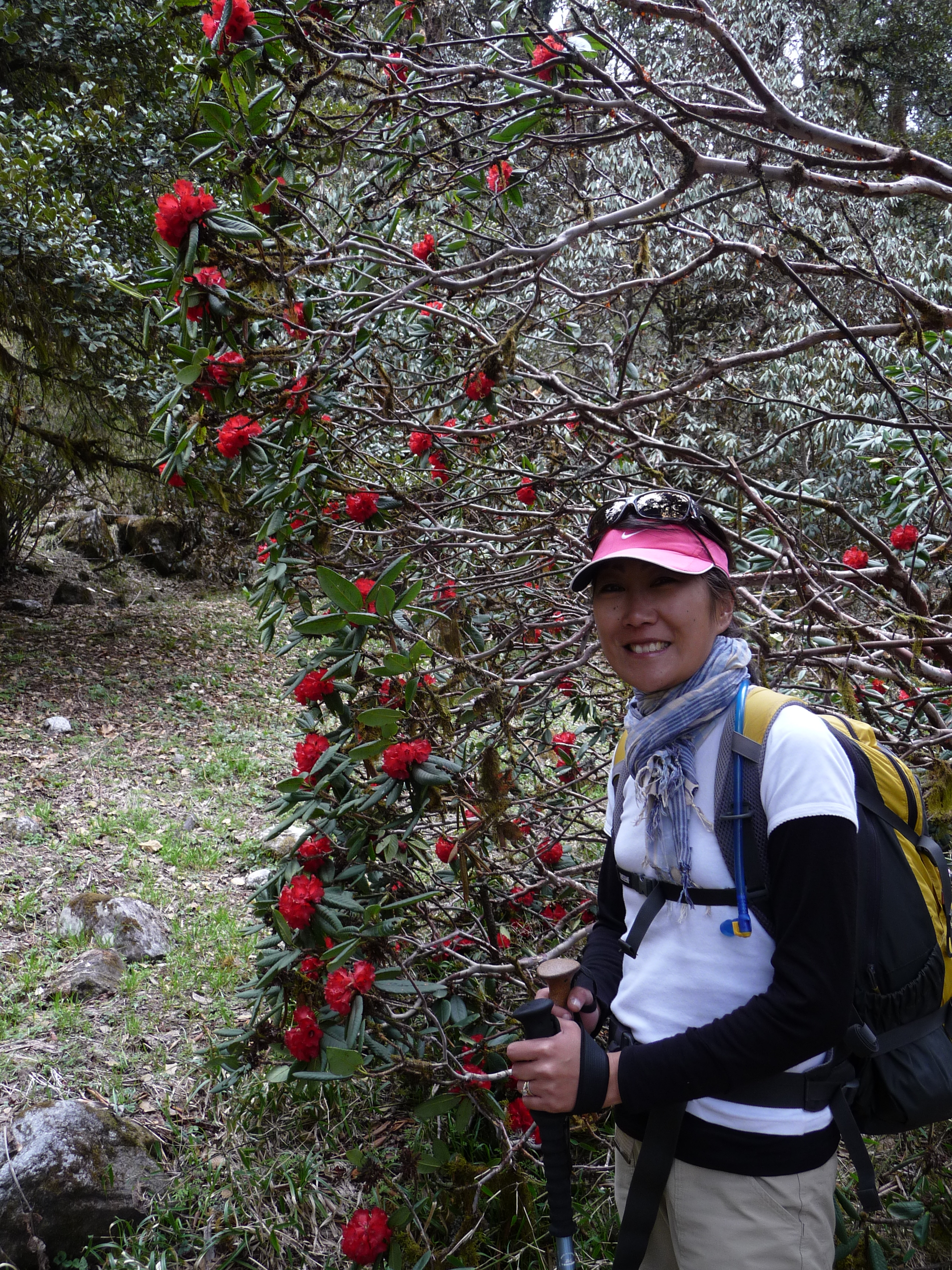 Once off the glacier, the remainder of the day was a very enjoyable walk through a Himalayan valley in Springtime. Flowers, grass and of course, many rhododendron trees with white, pink and red flowers. We see rhododendrons all over the world, but none as large and beautiful as the Himalayas. They grow as single trees but also as groves of tall, flowered trees that are unique in the World.
Looking back up the mountain gave an amazing view of what we had just crossed. Up next: Part 7: Baudha Himal Glacier to Nyak.





 maximum adventure
Trackbacks/Pingbacks
[…] Maximum Adventure Because life should be a great adventure Skip to content HomeAbout UsBlogContact usUpcoming Adventures ← Trekking Nepal in April 2011 – Part 4: Barpak to Rupina La Trekking Nepal in April 2011 – Part 6: Rupina La to the Glacier → […]
[…] Maximum Adventure because life is a great adventure Skip to content HomeAbout UsBlogContact usUpcoming Adventures ← Trekking Nepal in April 2011 – Part 6: Rupina La to the Glacier […]