

The following is a continuation of Part 3: Baluwa to Barpak.
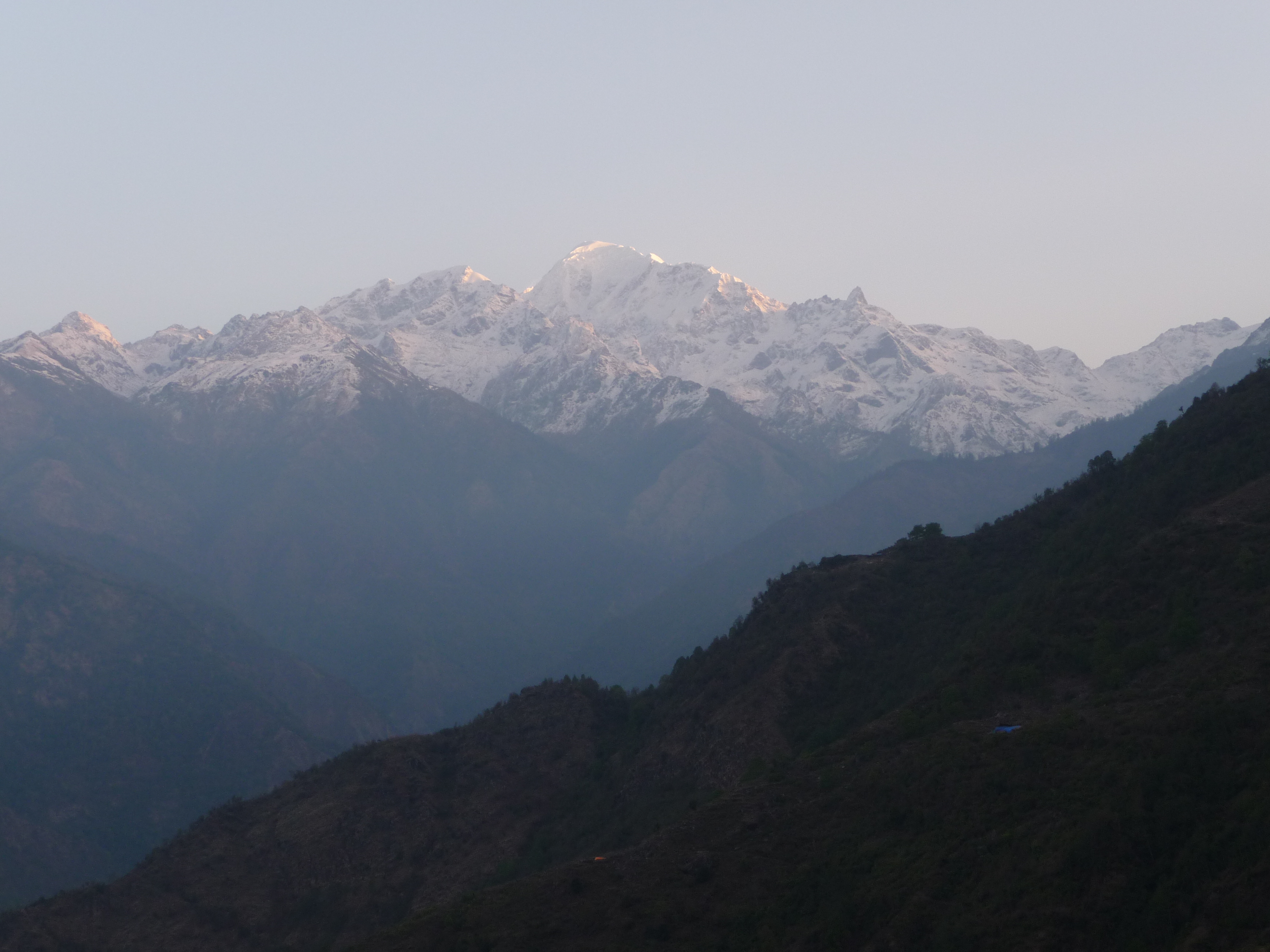 Little did we know as we left Barpak, but we wouldn’t be passing through any more villages for the next several days, and the only people we would see would be the occasional woodcutters working from remote camps in the gradually steeper and steeper mountains ahead. We wouldn’t be lonely…we were traveling with 18 guides, cooks and porters and it resembled our own version of a small village.
Acclimatization
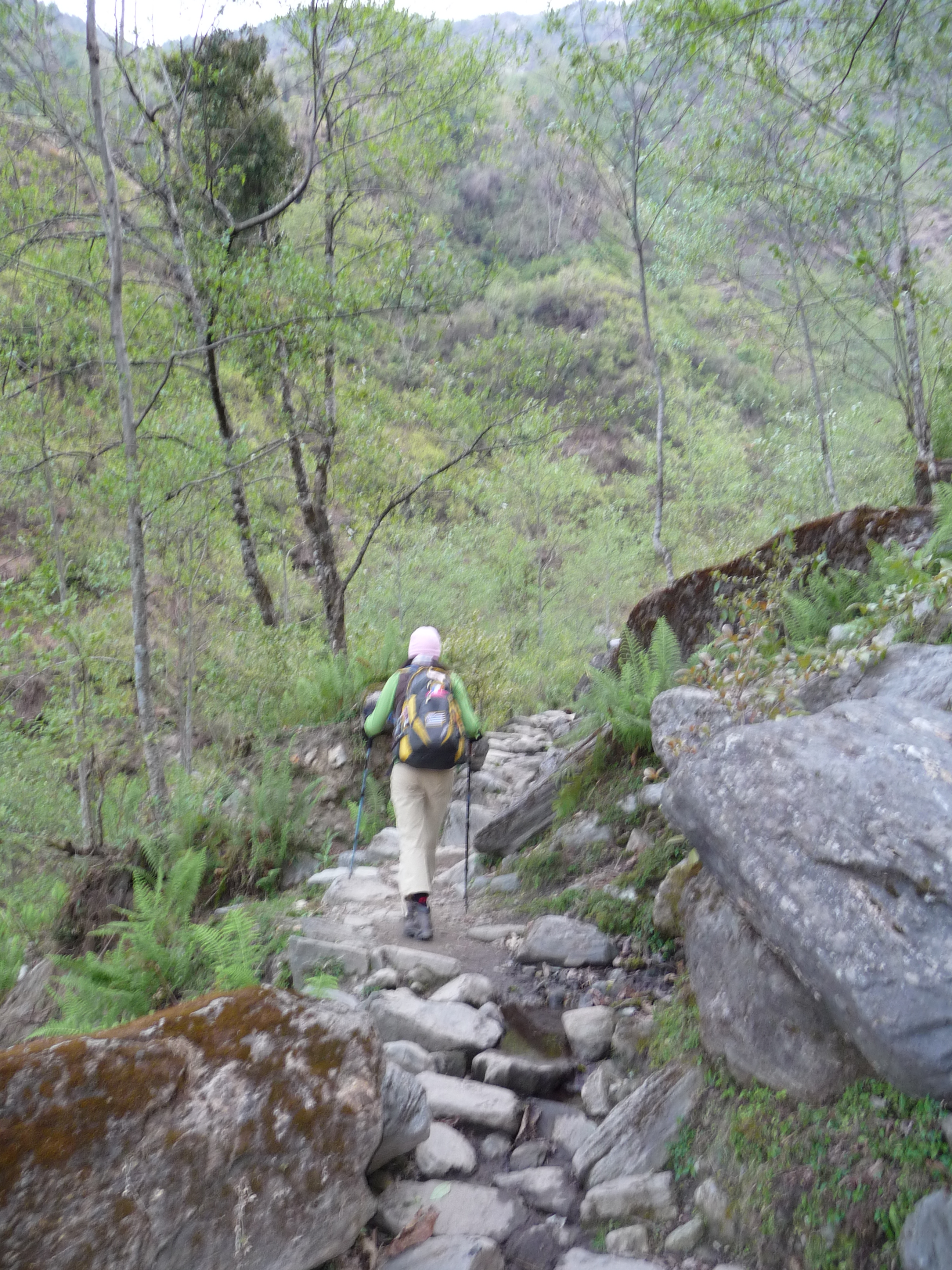 One of the greatest things about trekking trails in the Himalayas is their ability to acclimatize trekkers headed for higher elevations. The Nepalis are famously strong hikers and their trails reflect their efficient way of getting from place to place. They don’t make paths to keep the climb gradual or the ascending and descending to a minimum. Trails go the most direct route possible, which often involves going over a hill rather than around its base, and going down to a stream bed instead of going along the contours of a mountain. On the positive side, this up and down hiking does a wonderful job of preparing Westerners for the difficulties of going to higher elevations, both from a lung capacity and strength perspective.
Crossing Daraudi Khola
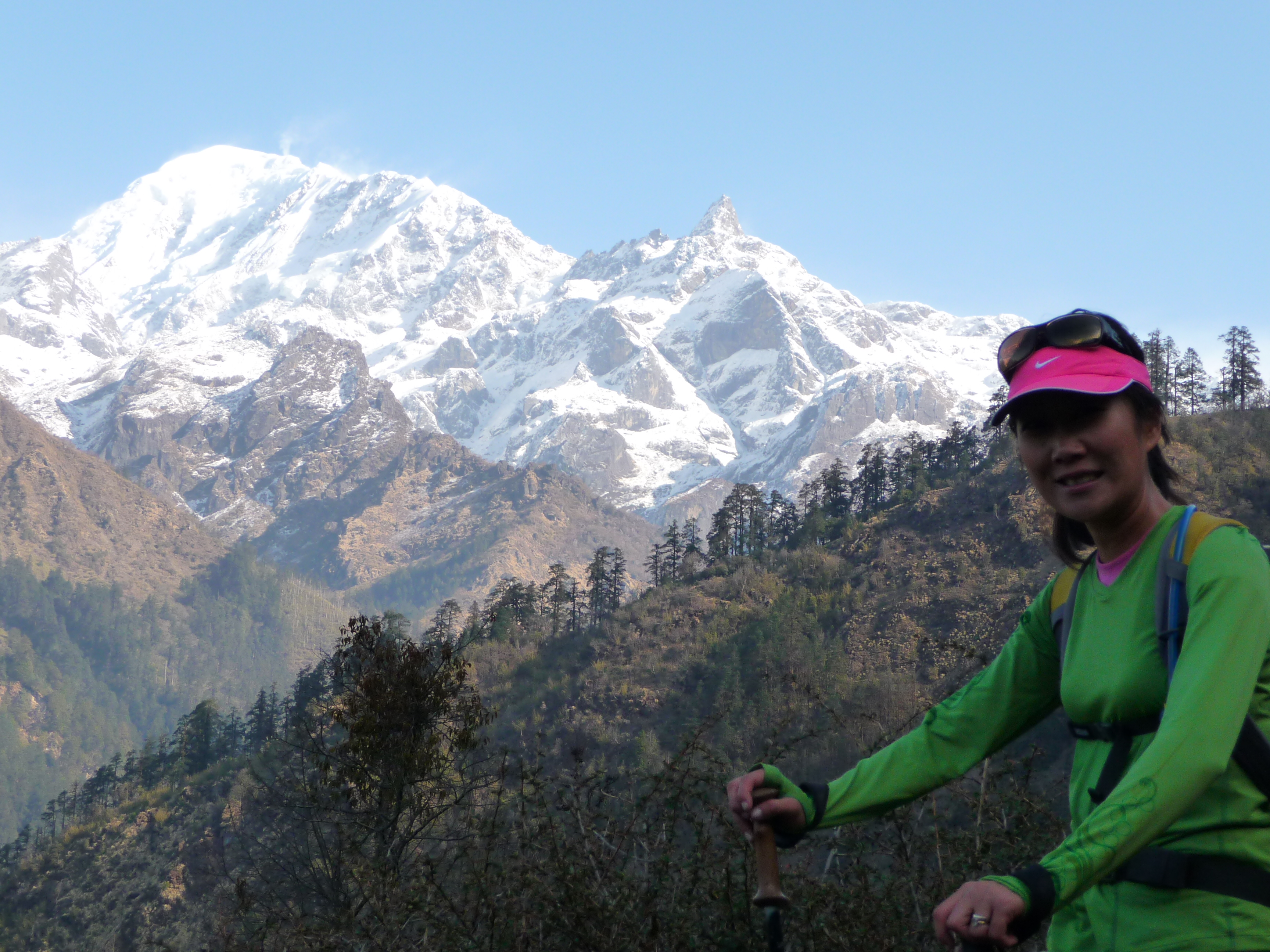
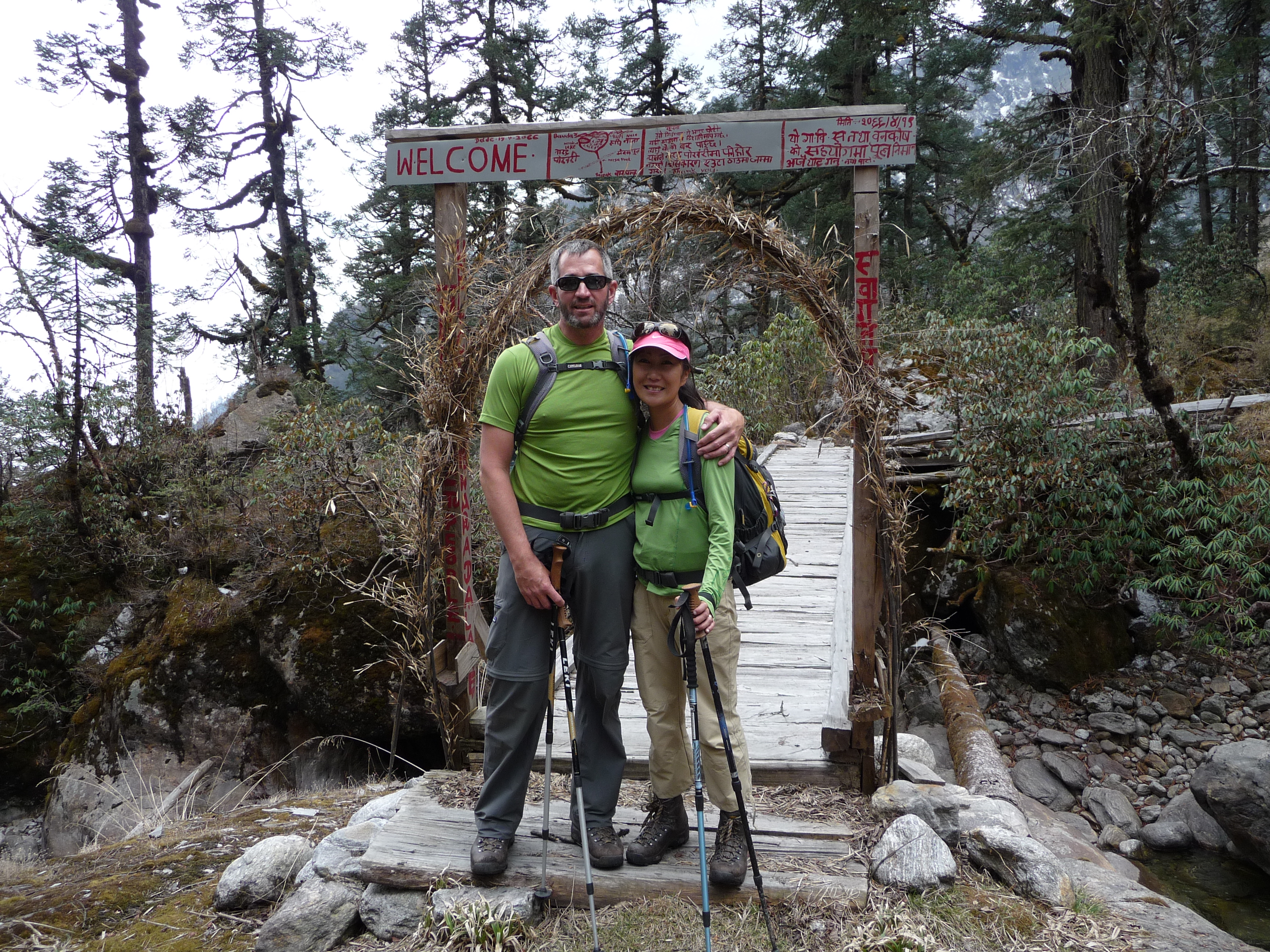 After miles of following the high hillsides above the River, we gradually made our way back down to the water to cross and make the final approaches to Rupina La. La means ‘Pass’ in Nepali and for thousands have years have represented the way to cross the largest mountains in the World. A pass in Nepal can be significantly higher than peaks anywhere else in the world, so ‘climbing a pass’ means much more.
Rupina La Base Camp
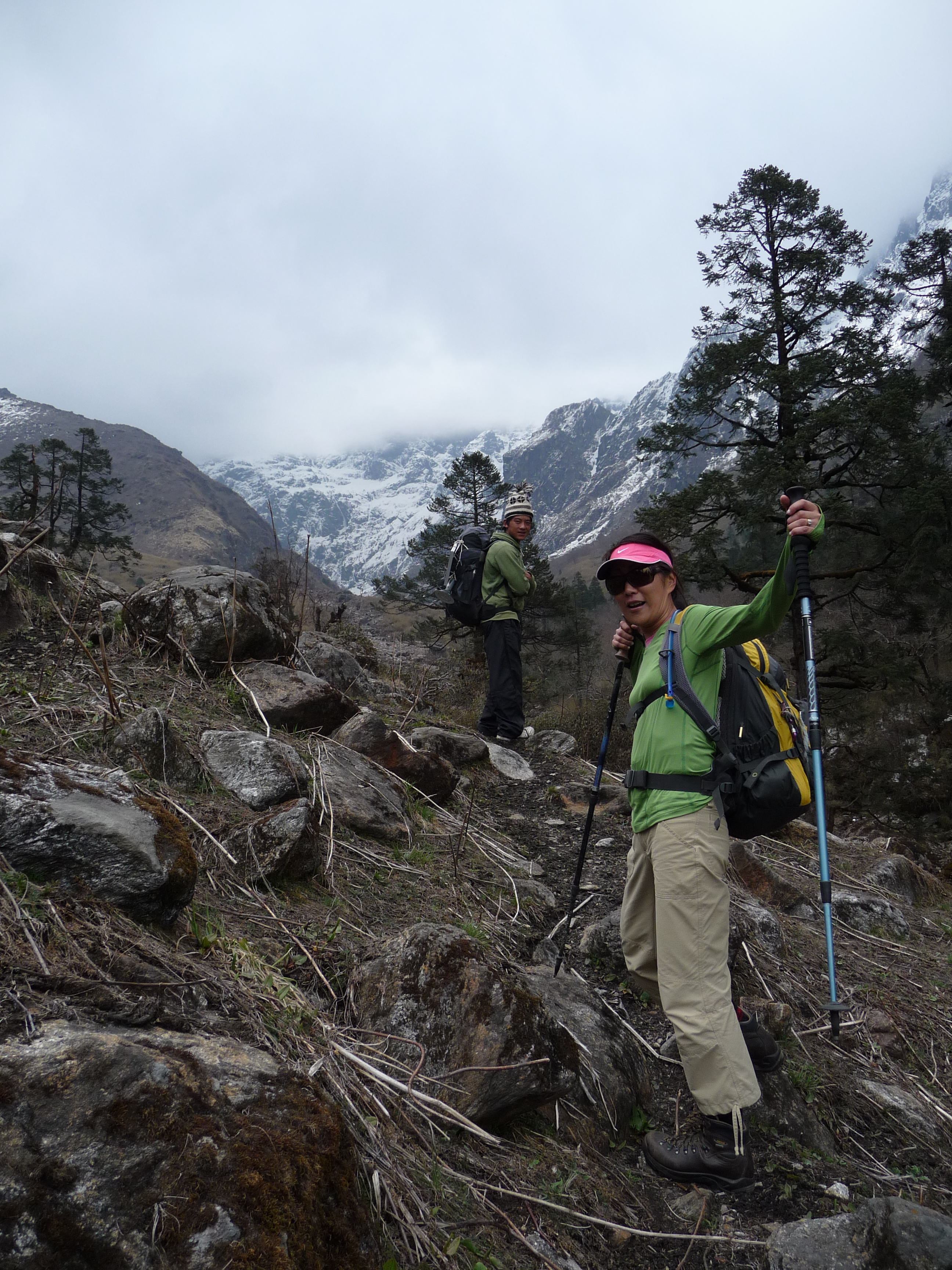 Once across the Daraudi Khola, the hike began to quickly climb through climate zones with differing vegetation at each level. From pine forest, we entered alpine meadows and the snowline began to get closer and closer until it was nearly at our level. It began to snow as we ascended the mountain, light at first but gradually becoming heavier. Amazingly, the porters and kitchen staff remained in sandals as we scrambled over wet and then snowy rocks. It became apparent that if not for cold, they would prefer a life in sandals. For the first time, we were no longer on a well-worn path but were instead picking our way over rocks and following a guide who was running ahead to determine the best route before we had to choose.
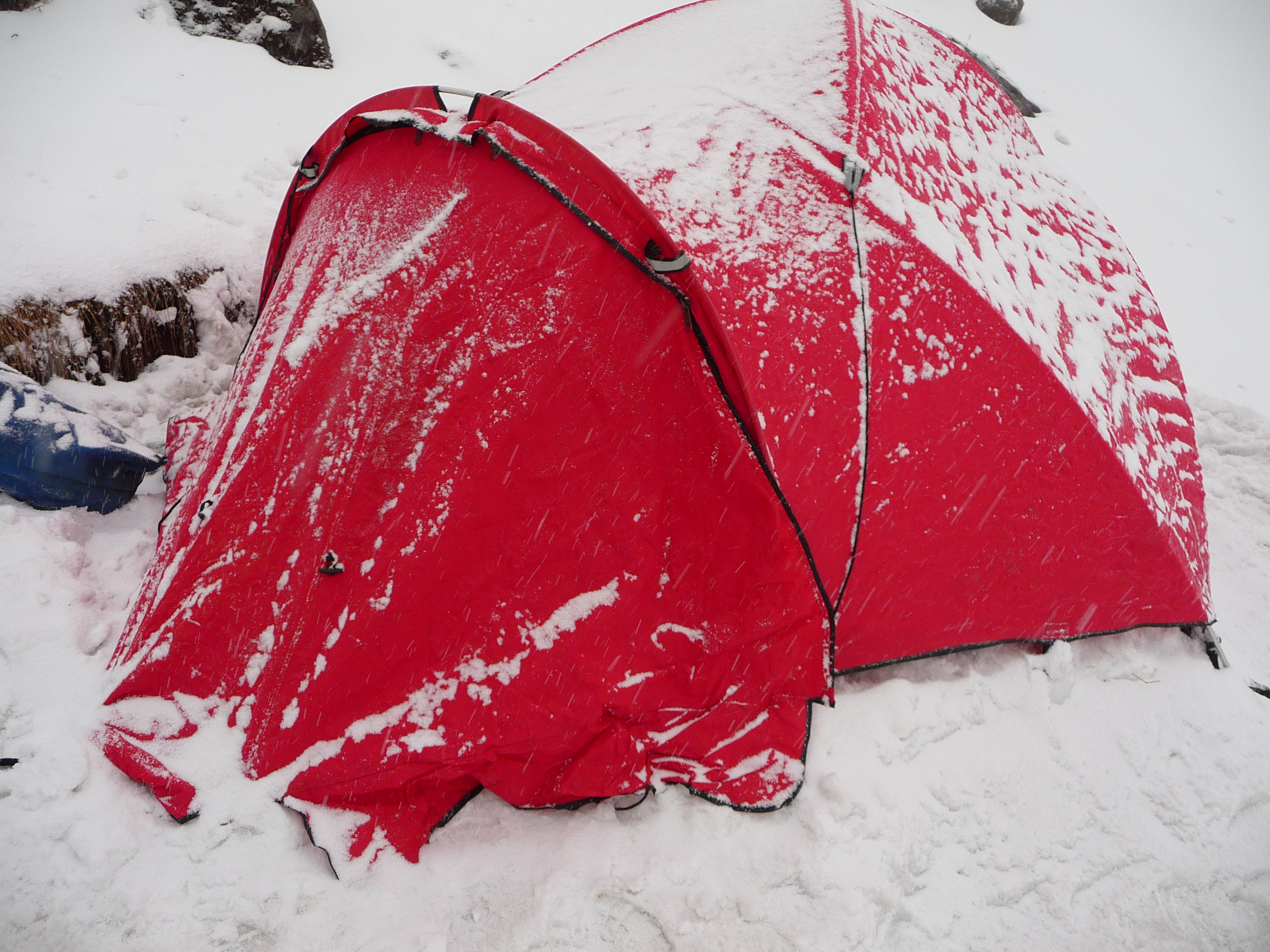
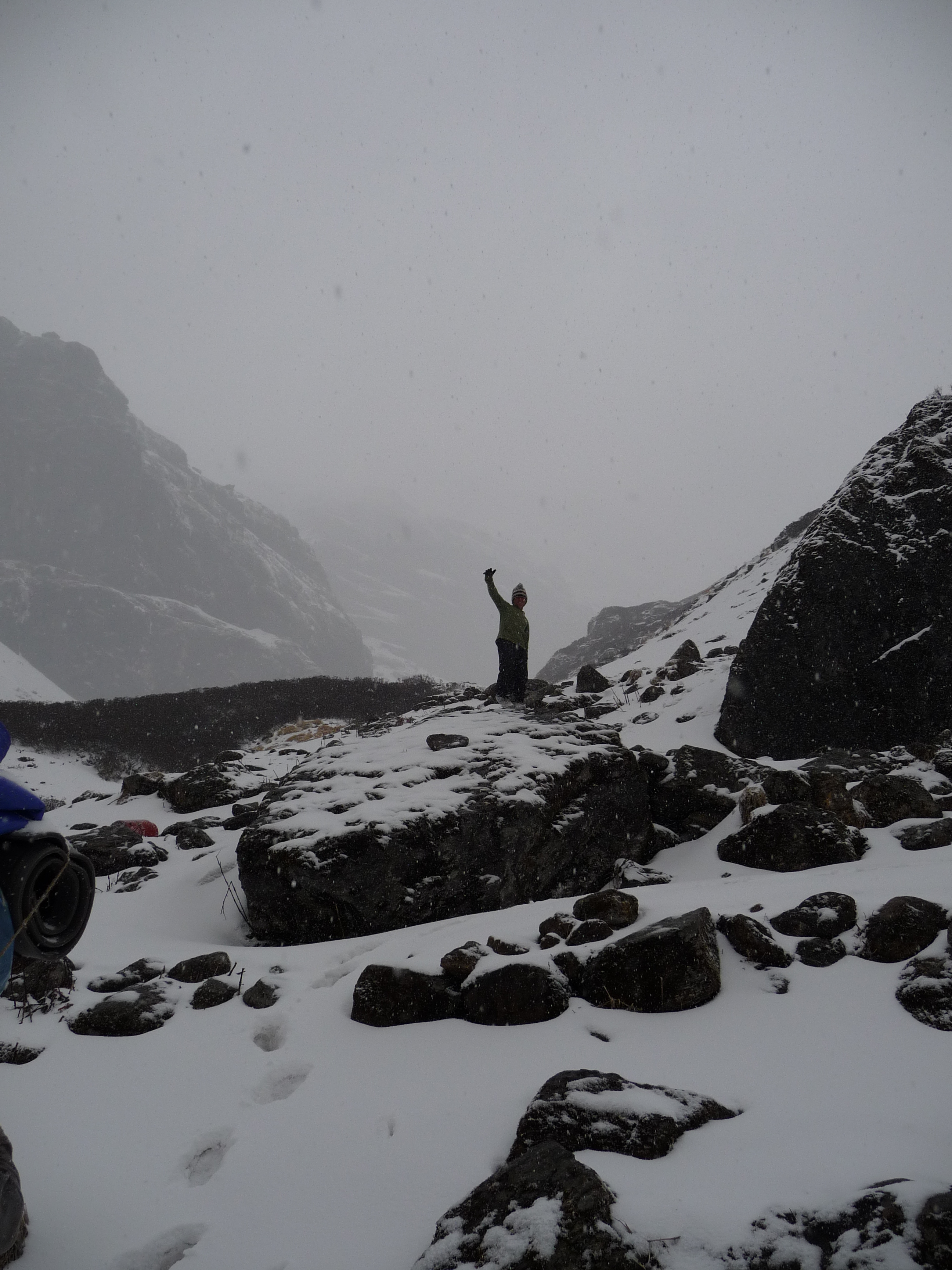 Just as we reached deeper snow and at the point where the snow was coming down the heaviest, we were told we had arrived at Rupina La Base Camp (4000 m., 13,123 ft.). It couldn’t have been at a better time, as it was beginning to get dark and we were concerned about setting up tents in a cold, snowy and dark place. For the first time, our tent was pitched on snow rather than grass or dirt, and we hurried inside to stay warm and wait for dinner. Dinner was served at the door by smiling, snow-covered kitchen staff, who never seem to mind the elements. We tucked in for the night, this time with Buddi in our tent with us so that the porters would have enough space to sleep indoors. We were very excited to cross the pass tomorrow. Next up, Part 5: Crossing Rupina La.






 maximum adventure
Trackbacks/Pingbacks
[…] Maximum Adventure Because life should be a great adventure Skip to content HomeAbout UsContact usUpcoming Adventures ← Trekking Nepal in April 2011 – Part 4: Barpak to Rupina La […]
[…] Maximum Adventure Because life should be a great adventure Skip to content HomeAbout UsContact usUpcoming Adventures ← Mt Whitney by the Mountaineer’s Route, June 2011 Trekking Nepal in April 2011 – Part 4: Barpak to Rupina La → […]