

The following is a continuation of Part 2, Gorkha to Baluwa.
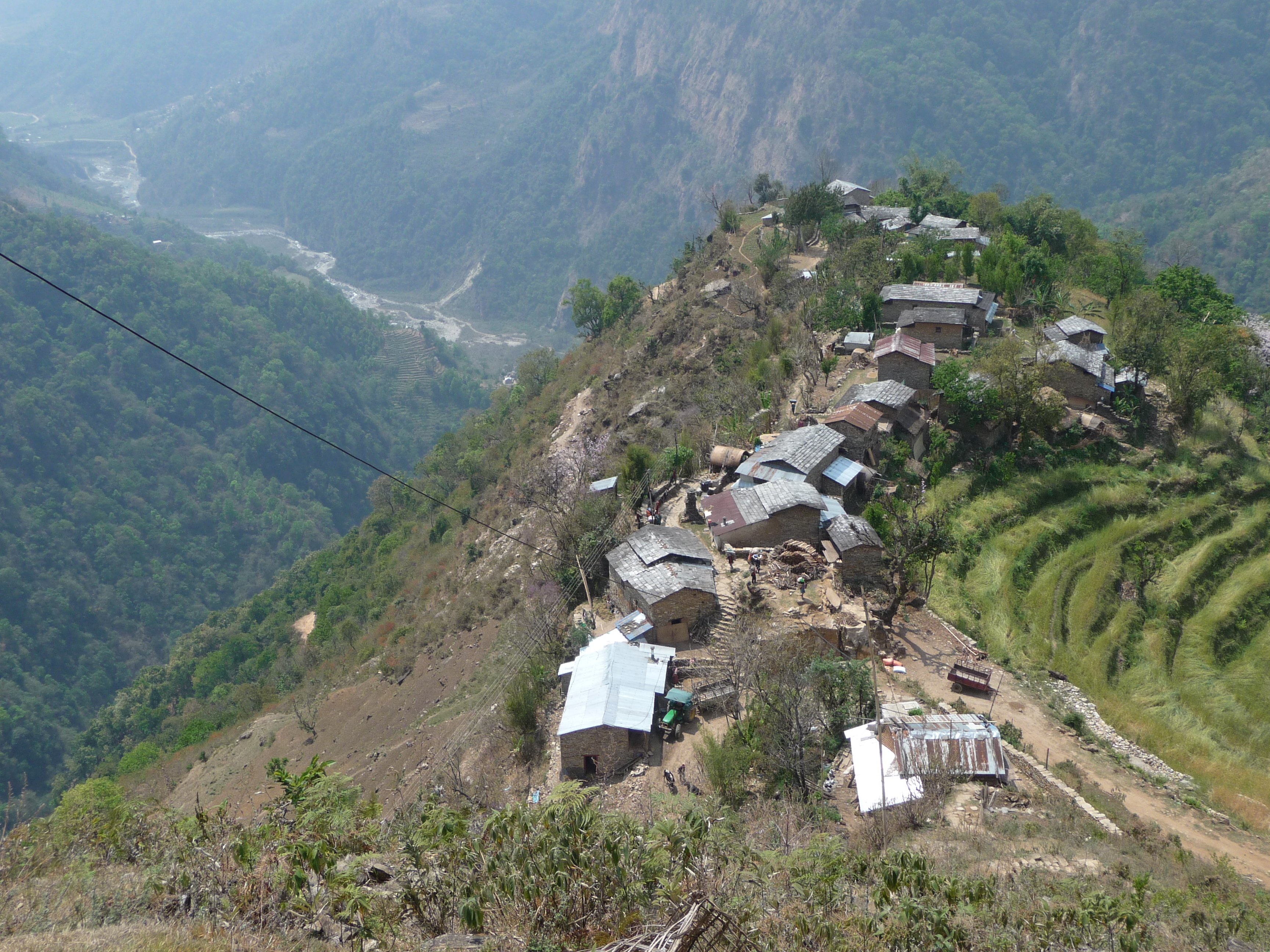 Leaving Baluwa meant leaving behind the winding riverbed of the Daraudi Khola where it branched at the Rangrung Khola and heading up our first significant mountain to the village of Mandre. We followed a steep and ancient trail with chortens, also called stupas (small Buddhist monuments), every 100 meters or so. It was wide and paved with flat stones and went through a cool, dense forest that made us feel like we in an Indiana Jones film. Compared to the narrower dirt tracks we had followed for the past few days, this was the Inca Trail, so that’s exactly what we called it. When it finally reached a small plateau on the hill, we sat down for lunch in another schoolyard, this time an empty one. Even so, the teacher, who often lives in the school as part of his pay package, came out to greet us and practice his English.
Lunch in Mandre
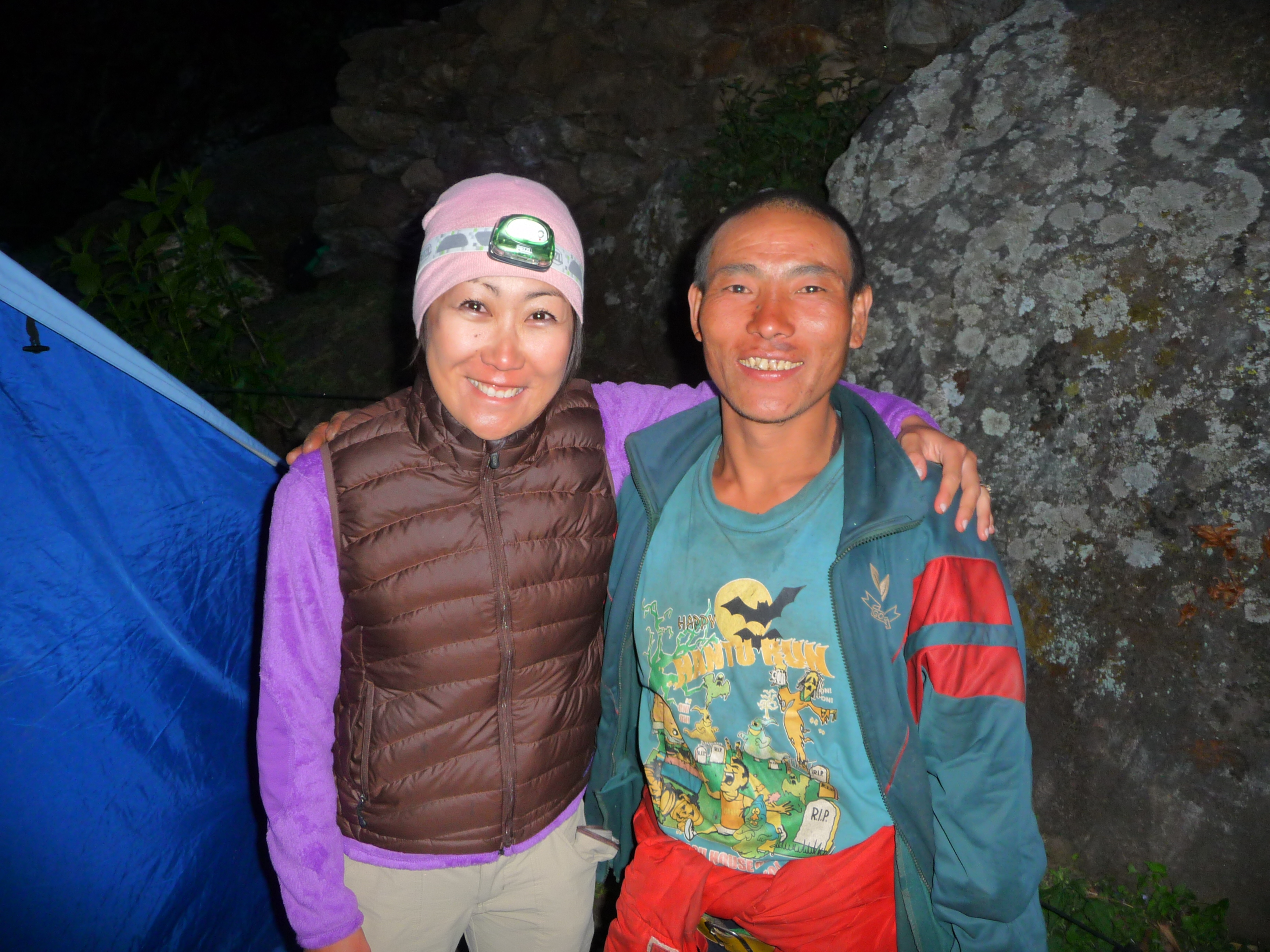 We waited a bit for our porters, who were struggling up the hill with extra weight as two of our porters had quit during the long march to Baluwa (they were laborers hired in Gorkha and weren’t from the Tamang or Rai tribe as the rest of our group was). While we ate lunch, a stone working crew of eight men came through with their chisels and hammers hanging from their belts. Our guide, Buddi, approached the group to see if we could replace our lost porters with two of these men. A negotiation took place in Nepali before two agreed to join us to cross the pass and had to head back to their nearby village to change their clothes and come with us. Surprisingly, when we next saw them, they hadn’t changed at all and only had grabbed two warm jackets.
On to Barpak
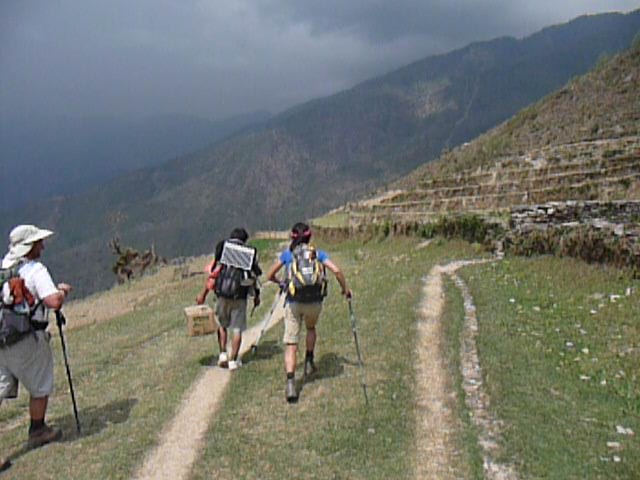 Lunch over, we welcomed our new porters and continued up the nose of the steep hill we had trekked all morning, but out of the forest now. At turns in the trail, we could catch glimpses of very high, snowy peaks to our north. As we approached Barpak, we could see that it was a substantial village compared to what we’d seen so far. In fact, the largest since Gorkha. Unfortunately, as we drew close, the most obvious sign of its size was the amount of trash near the trail and the unmistakeable smell of many humans in close proximity. We entered the center of the village and found that it was a market town with people loading and unloading bags of rice and other goods all around. It also wasn’t as friendly or innocent as the places where we’d been. Even the children had a ‘harder’ look than what we saw in Baluwa.
End of the day
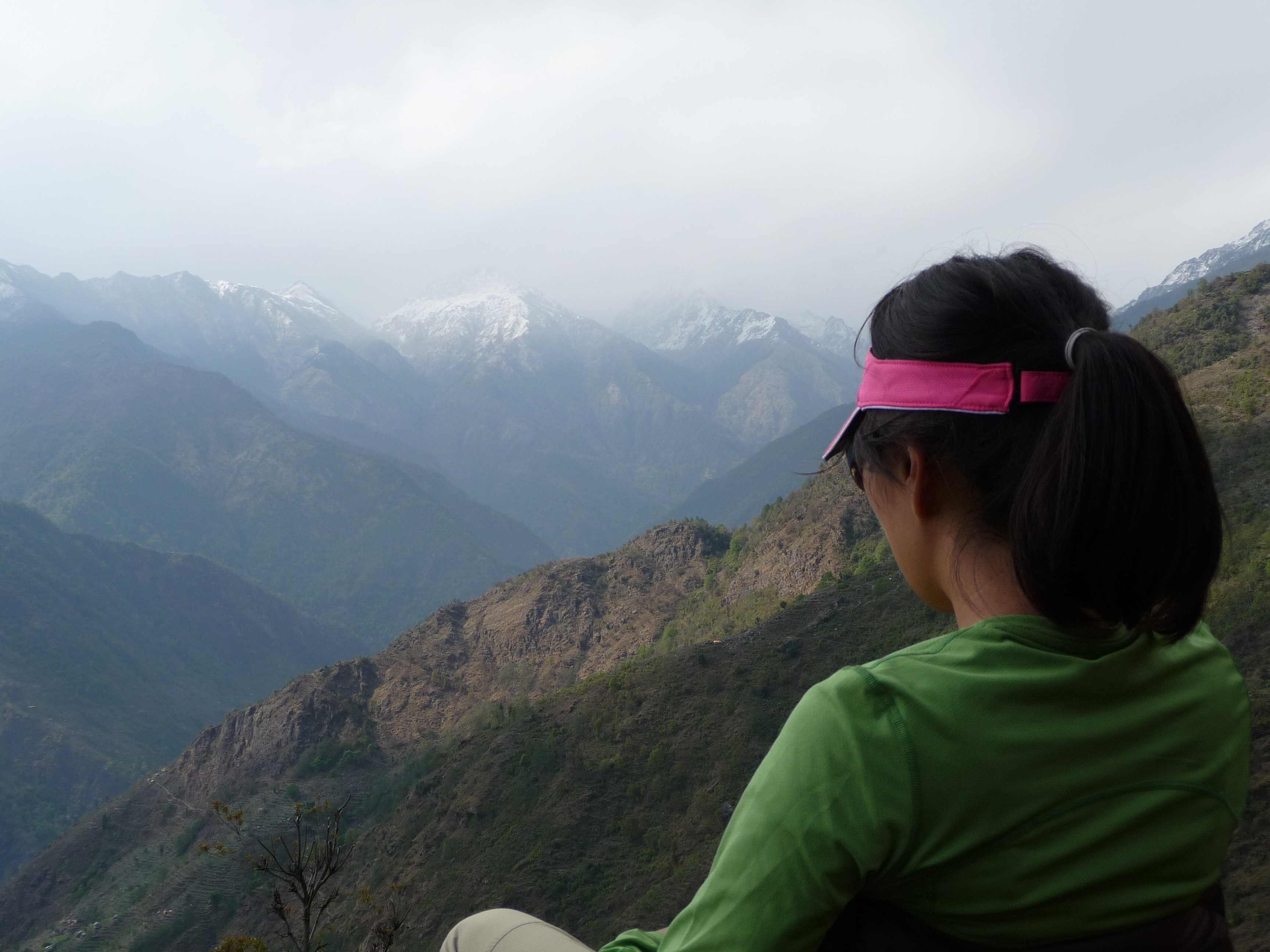
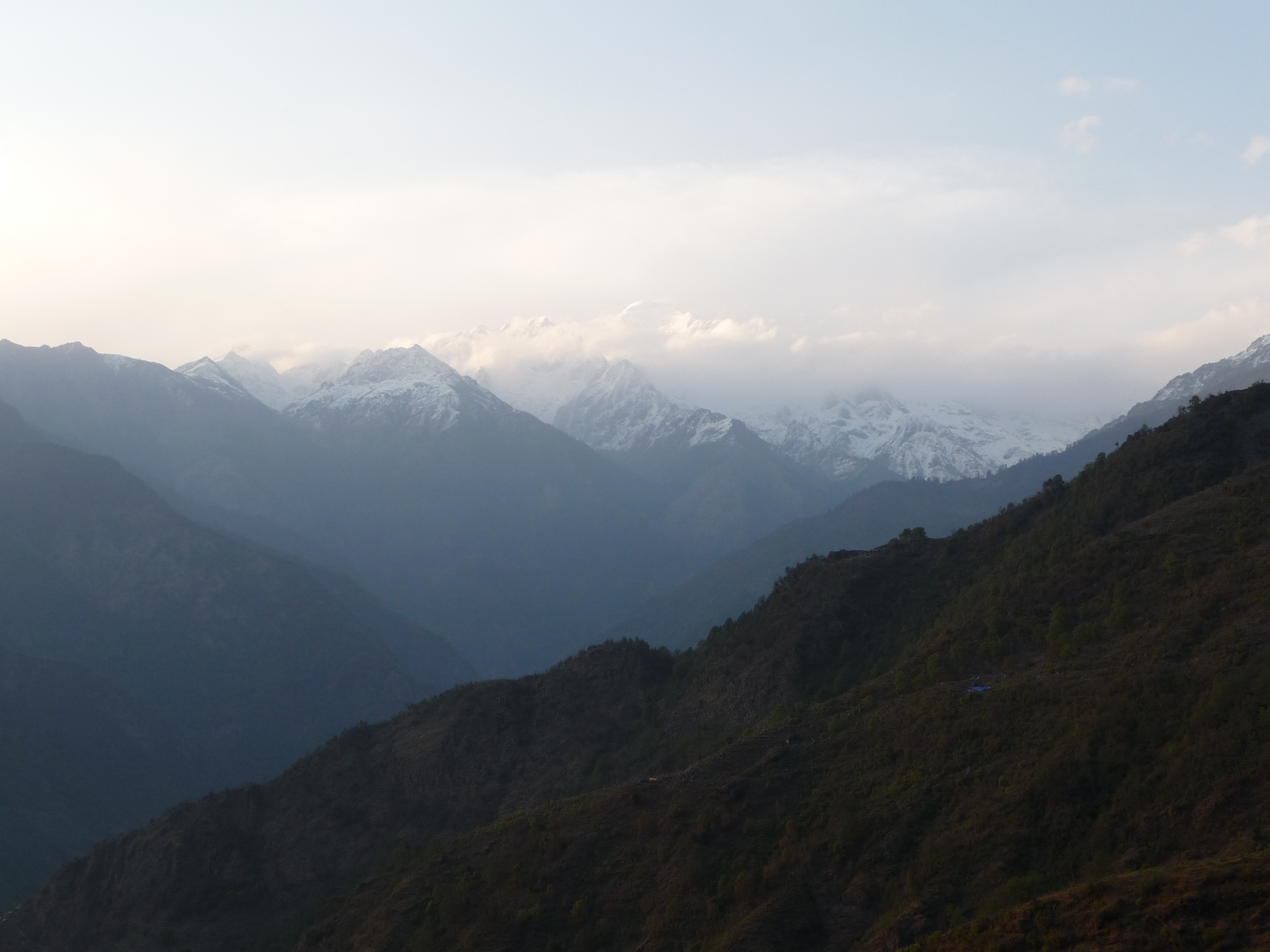
It was good to leave Barpak behind and to set up camp in a large, terraced pasture outside the town. The sky was gradually clearing after showers earlier that looked like snow in the higher elevations north of us (yes, this is foreshadowing). We were early enough in the day that we could relax and enjoy a well-earned moment just sitting in the chairs that were set up for us the moment we stopped. The team started food preparation, and asked us if we’d like to take a shower…it was shocking…we didn’t expect warm showers and we emphatically told them, “Yes!” After cleaning up, we sat and enjoyed our commanding view of the Gorkha Himal to our northwest, which rises very quickly to the peak of Baudha Himal (6672 m., 21,890 ft.). This was the first time we felt we were truly entering the Himalayas themselves, and it was thrilling. Next post: Part 4: Barpak to Rupina La.





 maximum adventure
Trackbacks/Pingbacks
[…] We left the river soon after leaving Baluwa, and left behind any doubts that this would be an easy trek. Next post: Part 3: Baluwa to Barpak. […]
[…] great adventure Skip to content HomeAbout UsContact usUpcoming Adventures ← Trekking Nepal in April 2011 – Part 3: Baluwa to Barpak Trekking Nepal in April 2011 – Part 5: Crossing Rupina La […]